Vowel Recognition Normal Letter Recognition Worksheets for Ages 5-6
3 filtered results
-
From - To
Enhance your child's early literacy skills with our Vowel Recognition Normal Letter Recognition Worksheets for ages 5-6. These engaging and educational worksheets are specifically designed to help young learners identify and differentiate between vowels and consonants. Each worksheet features fun activities, such as matching, coloring, and tracing, to reinforce vowel sounds and practice proper letter formation. Ideal for kindergarteners or first graders, these resources ensure a solid foundation in reading and writing, setting your child up for success in their educational journey. Discover the joy of learning with our interactive vowel recognition worksheets today!
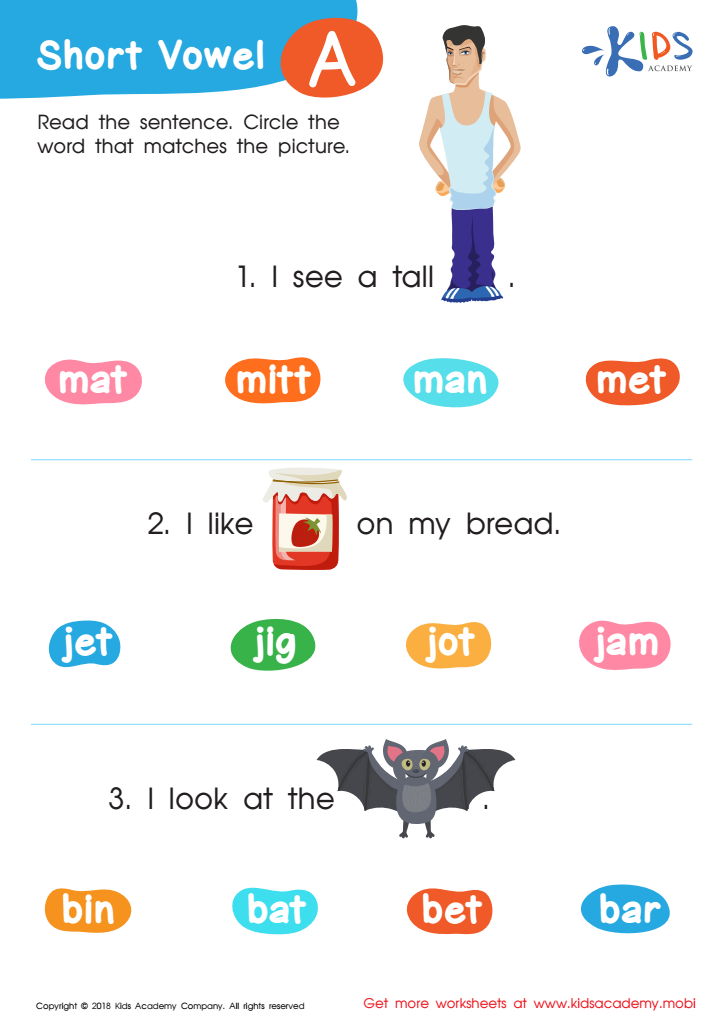
Short Vowel /a/ Worksheet
 Assign to My Students
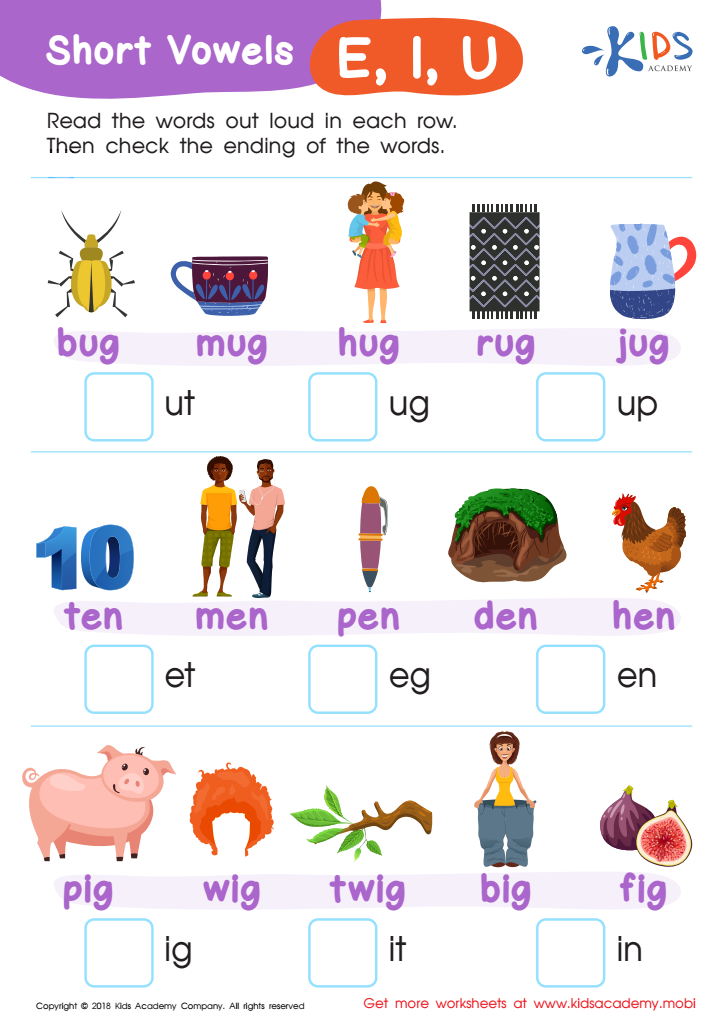
Short Vowels /e/, /i/, and /u/ Worksheet
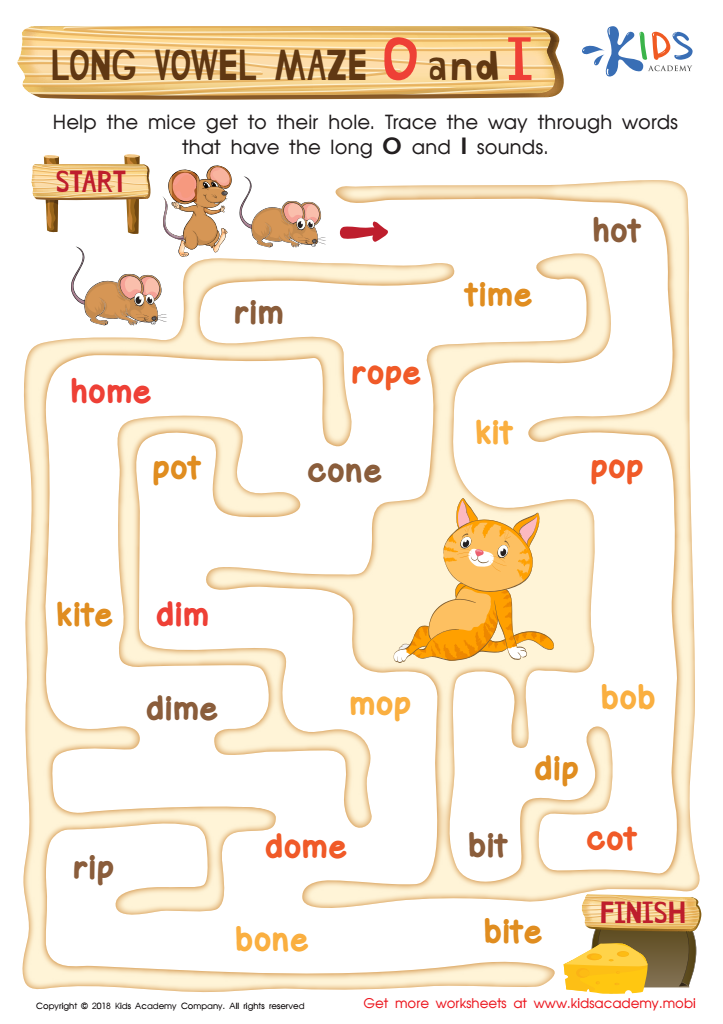
Long Vowel Maze /o/ and /i/ Worksheet








Parents and teachers should definitely focus on Vowel Recognition and Normal Letter Recognition for children ages 5-6 because these are foundational skills critical to early reading and writing development. At this age, children's brains are especially receptive to language acquisition. Vowel recognition is particularly important because vowels form the core sounds of words in the English language, and understanding them helps children decode new words, make sense of phonics, and enhance their pronunciation and spelling.
Normal letter recognition is equally important. Knowing both consonants and vowels allows children to identify individual sounds (phonemes) and letters (graphemes), thereby building words. This understanding lays the groundwork for phonemic awareness, which research has shown to be a strong predictor of later reading success. Proficiency in letter recognition helps young learners to progress to more complex literacy skills, such as blending sounds to read words and segmenting words into individual sounds for spelling.
Furthermore, mastering these skills promotes confidence, facilitates smoother transitions in learning phases, and ignites a lifelong love for reading. In environments where these skills are not adequately nurtured, children may experience reading difficulties and frustrations, which can hinder overall academic performance and self-esteem. Thus, focusing on vowel and letter recognition at an early age sets a solid foundation for all future learning endeavors.








