Phonics recognition Normal Letter Sounds Worksheets for Ages 5-6
5 filtered results
-
From - To
Enhance your child’s reading skills with our Phonics Recognition Normal Letter Sounds Worksheets, designed specifically for ages 5-6. These engaging and educational worksheets help young learners grasp the fundamentals of phonics through fun activities that reinforce identifying and pronouncing letter sounds. Each worksheet features vibrant illustrations and interactive exercises that keep kids motivated while building essential literacy skills. Perfect for both classroom and home use, these resources support early readers in developing confidence and fluency. Start your child on the journey to becoming a successful reader with our comprehensive collection of phonics worksheets today!
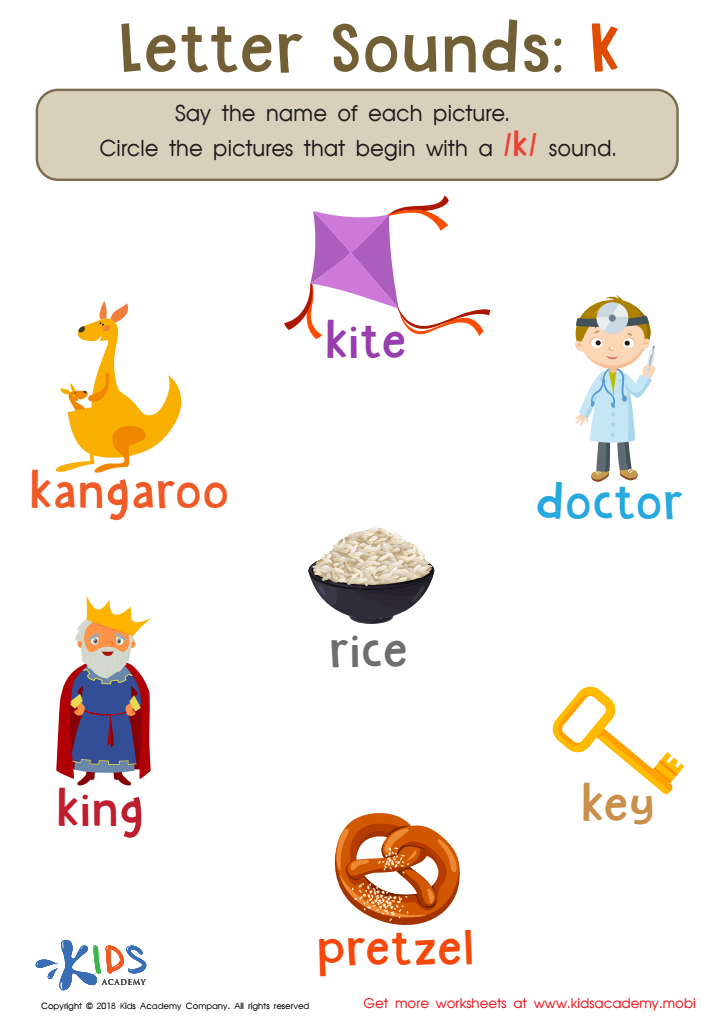
Letter K Sounds Worksheet
 Assign to My Students
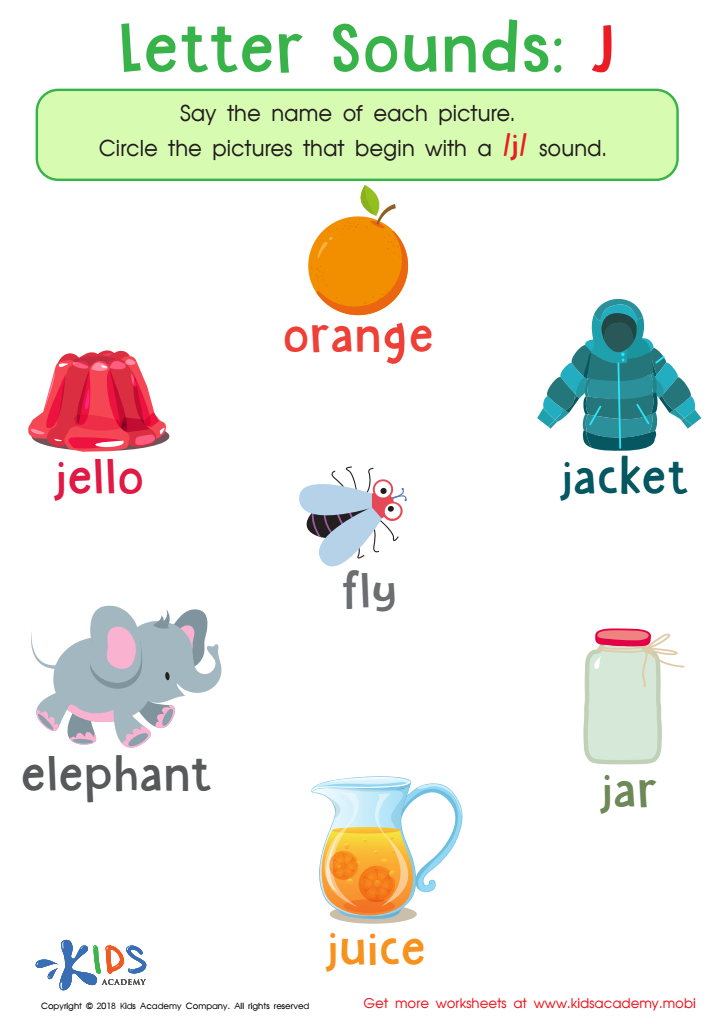
Letter Sounds: J Printable Worksheet
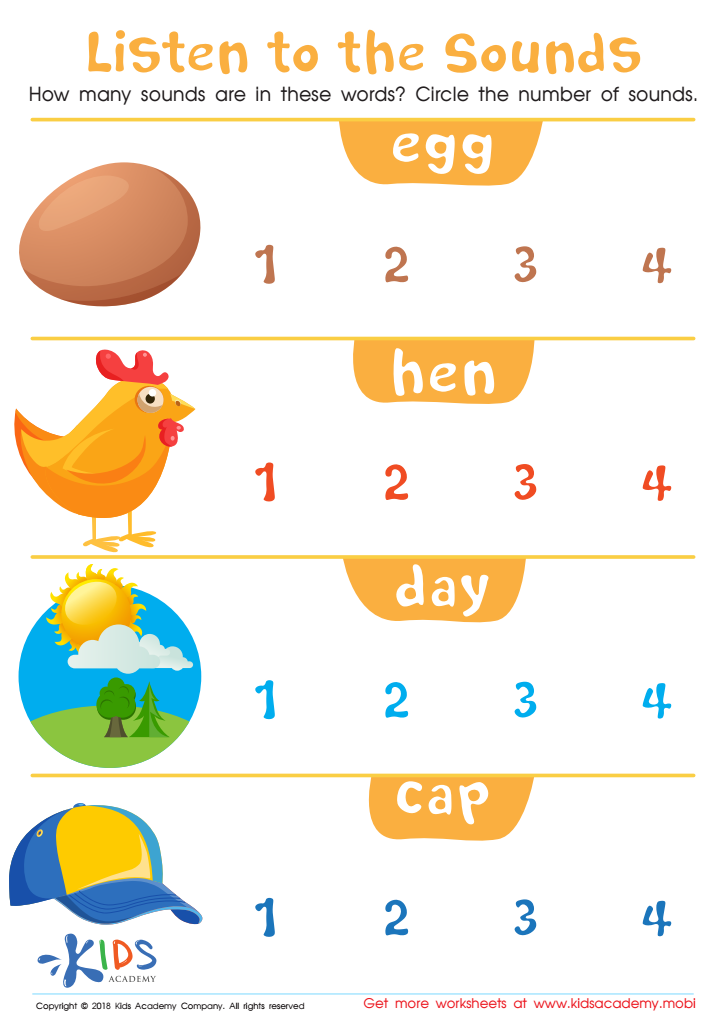
Listen to the Sounds Worksheet
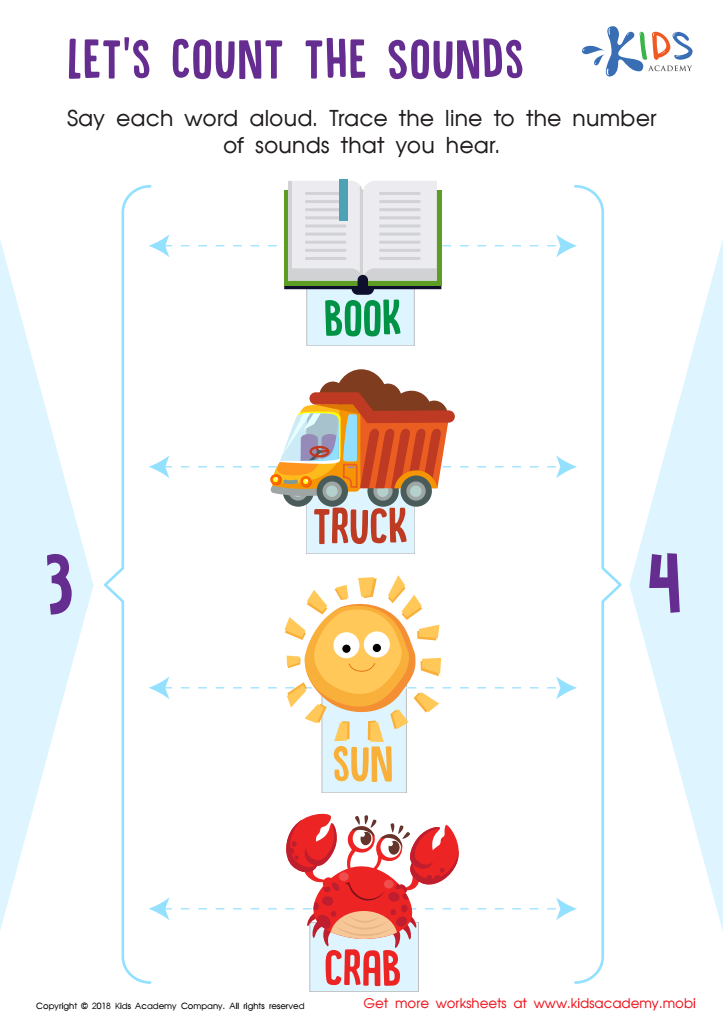
Let's Count the Sounds Worksheet
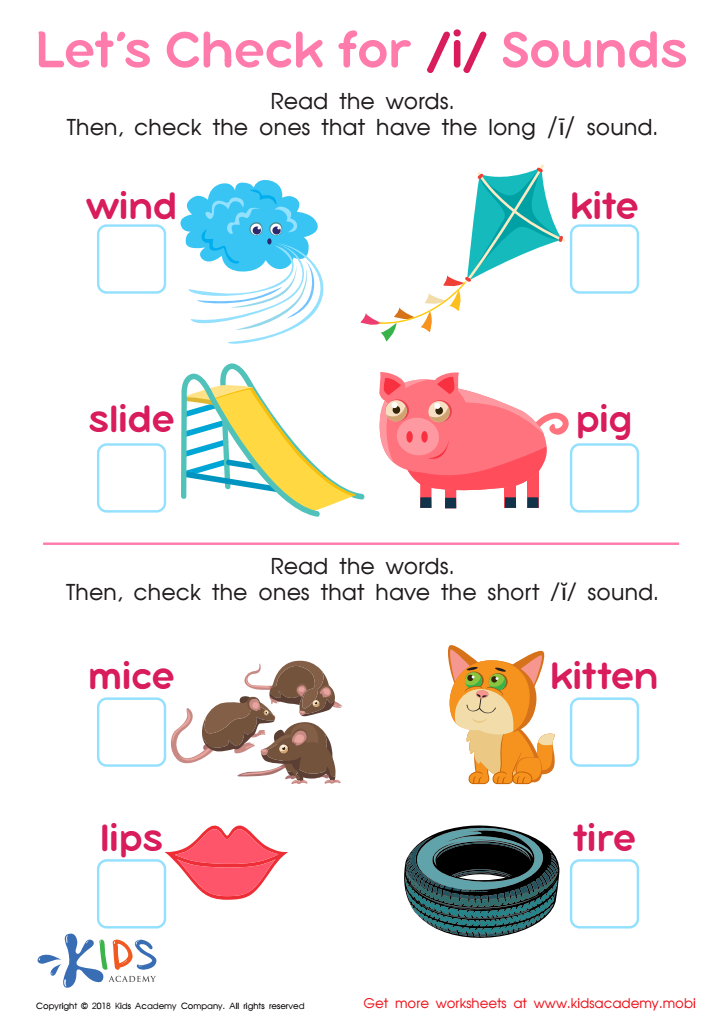
Let's Check for «i» Sounds Worksheet








Phonics recognition and understanding normal letter sounds are foundational skills vital for children aged 5-6 as they commence their reading journey. At this developmental stage, children are learning to connect sounds to letters, which lays the groundwork for early literacy.
When parents and teachers emphasize phonics, they not only help children decode words but also enhance their reading fluency and comprehension. Understanding normal letter sounds allows children to recognize familiar patterns in words, promoting confidence as they progress in their reading abilities. This skill is particularly crucial due to the dramatic impact that early reading has on a child’s overall academic success.
Furthermore, phonics instruction supports language development and enriches vocabulary. Engaging children with letter sounds fosters their ability to articulate thoughts and ideas clearly. Importantly, strong phonics skills can lead to a love for reading, encouraging lifelong learning and exploration.
By nurturing children’s phonics recognition, parents and teachers can better prepare them for future educational challenges, ensuring they build a strong lexicon and a passion for literacy that will serve them throughout their lives. In essence, phonics is a passport to effective communication and cognitive development.






