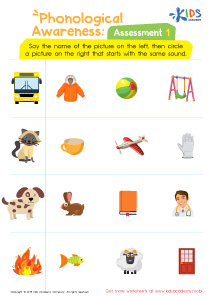
Reading comprehension Normal Rhyming Worksheets for Ages 5-6
5 filtered results
-
From - To
Enhance your child's reading skills with our "Normal Rhyming Worksheets" designed specifically for ages 5-6! These engaging and interactive worksheets focus on improving reading comprehension through the fun and rhythmic sounds of rhymes. Children will enjoy identifying rhyming words, completing sentences, and exploring vocabulary in an entertaining manner. Our worksheets promote critical thinking and listening skills while fostering a love for reading. Featuring colorful illustrations and age-appropriate exercises, these resources make learning enjoyable and effective. Perfect for home or classroom use, these worksheets will help your little ones build their confidence in reading while having a great time discovering the joy of rhymes!
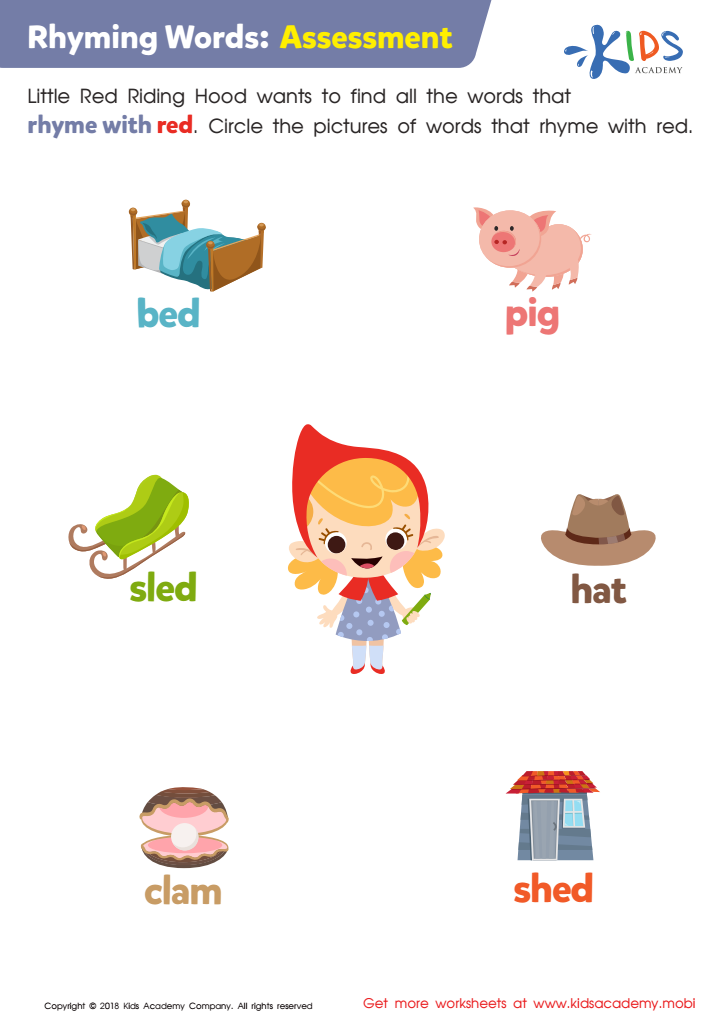
Rhyming Words: Assessment Worksheet
 Assign to My Students
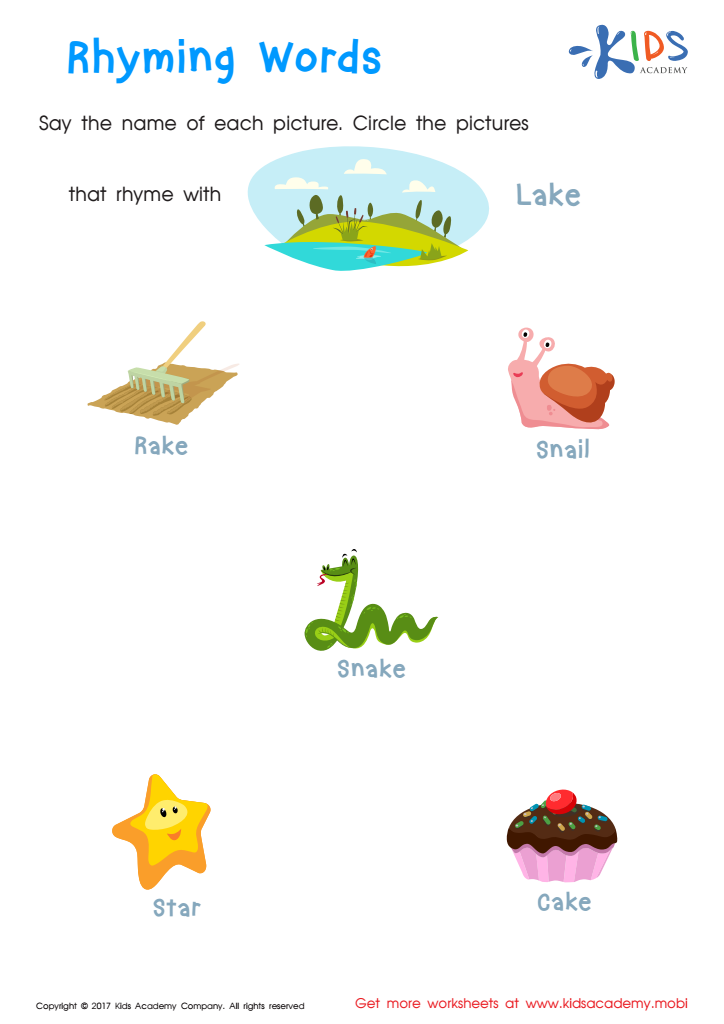
Rhyming Words Rhyming Worksheet
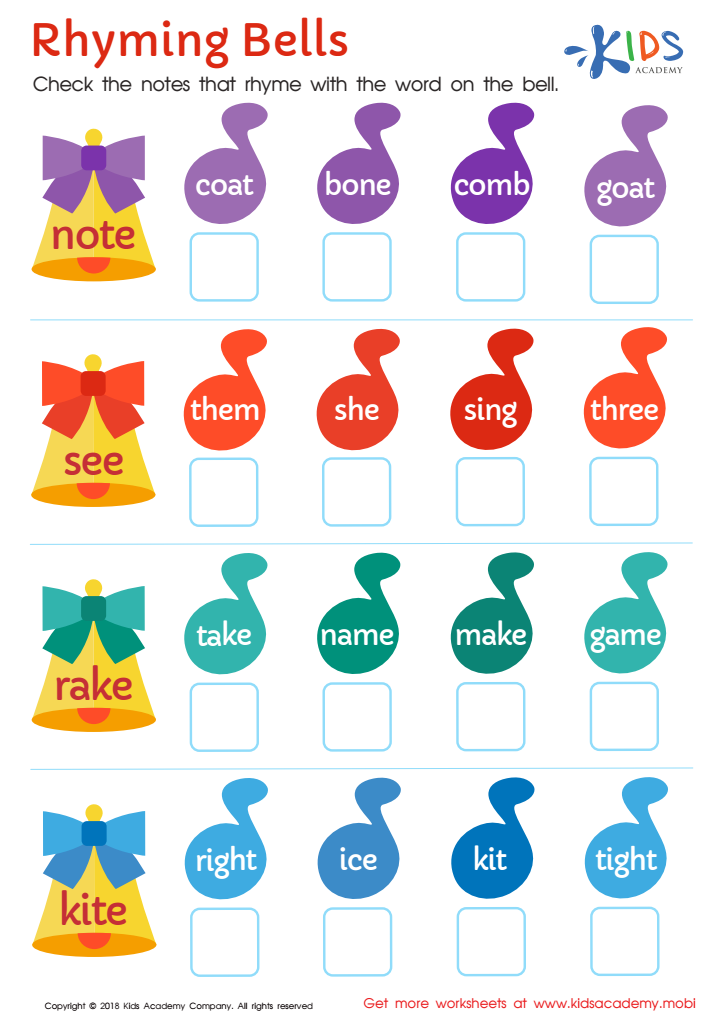
Rhyming Bells Worksheet
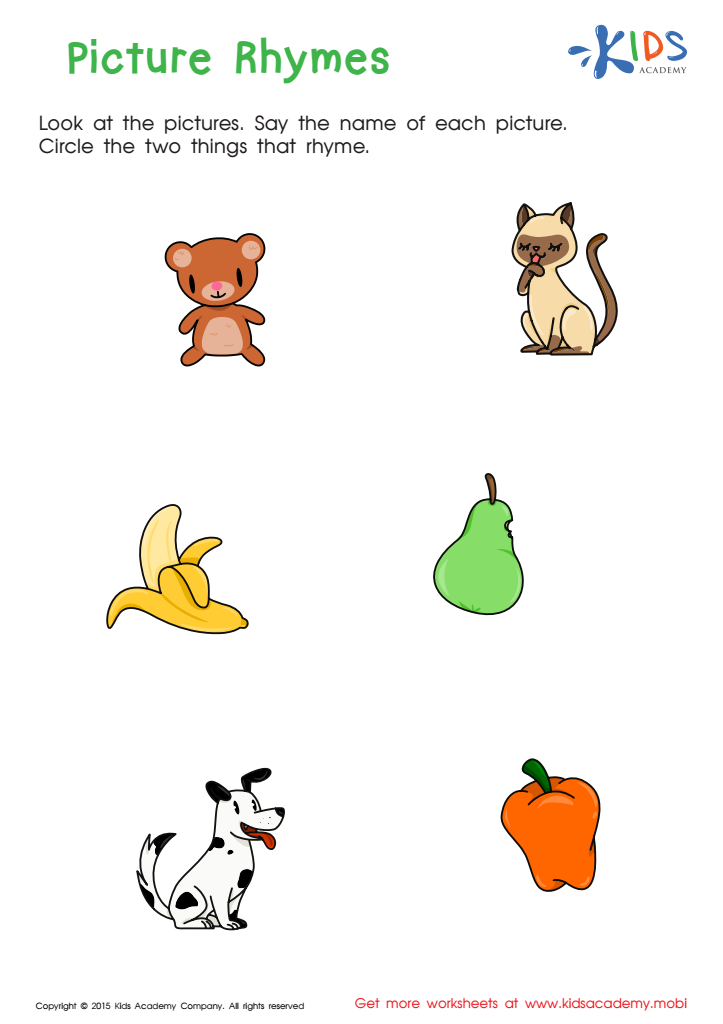
First Words: Picture Rhymes Worksheet
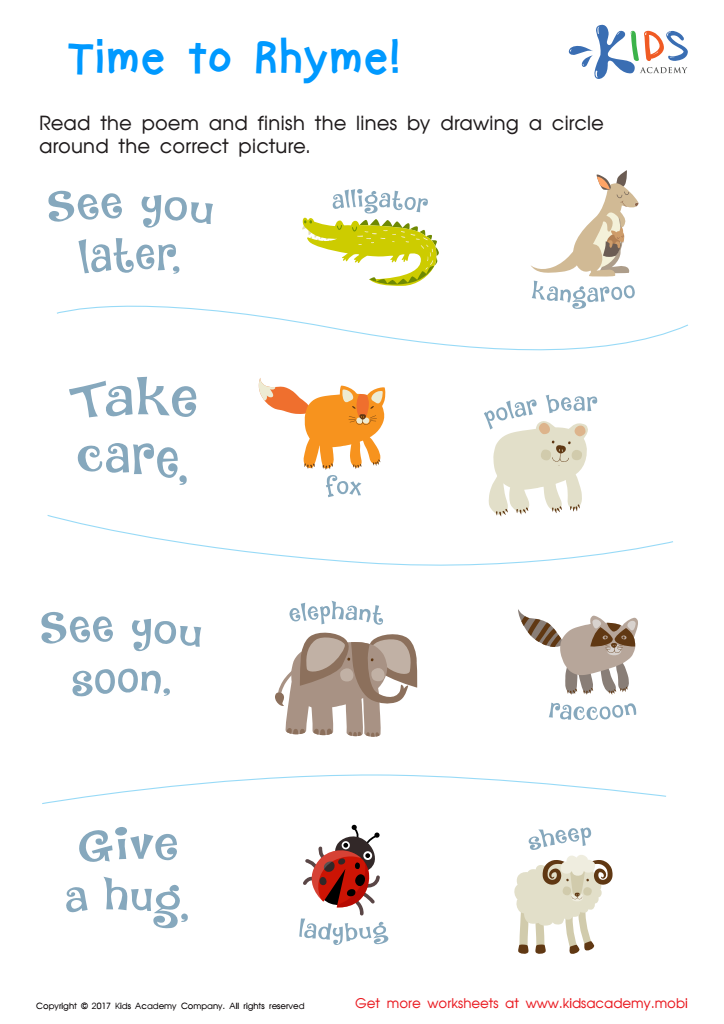
Time to Rhyme Rhyming Worksheet







Parents and teachers should prioritize reading comprehension with a focus on normal rhyming for children ages 5-6 because it sets the foundation for language development and literacy skills. At this age, children are particularly receptive to sounds, patterns, and rhythms in language, making rhyming an engaging and effective tool for learning.
When children recognize and work with rhyming words, they enhance their phonemic awareness, which is crucial for reading success. This early exposure helps them understand that words are made up of sounds, paving the way for decoding abilities as they progress in their reading journey.
Moreover, rhyming activities foster listening and oral language skills, encouraging children to experiment with sounds and vocabulary. These playful interactions not only make reading enjoyable but also promote critical thinking as they predict what comes next in a rhyme.
Additionally, a strong grasp of reading comprehension at this stage boosts children's confidence and enthusiasm towards reading, engaging them in stories and lessons. By nurturing these skills, parents and teachers equip children with the tools they need for academic success and a lifelong love for reading. Investing time in rhyming activities fosters curious, inspired learners ready to take on the world of literature.