Alphabet understanding Normal Upper & Lowercase Letters Worksheets for Ages 5-6
3 filtered results
-
From - To
Introducing our engaging "Alphabet Understanding Normal Upper & Lowercase Letters Worksheets" tailored for children ages 5-6! These interactive worksheets are designed to help young learners recognize and differentiate between uppercase and lowercase letters. Through fun activities, kids will enhance their letter identification skills, laying a solid foundation for reading and writing. With colorful illustrations and age-appropriate exercises, children will stay motivated while learning in a flexible format. Perfect for homeschooling or classroom use, our worksheets integrate easily into any curriculum. Empower your child's literacy journey today by exploring the exciting world of the alphabet with these creative and educational resources!
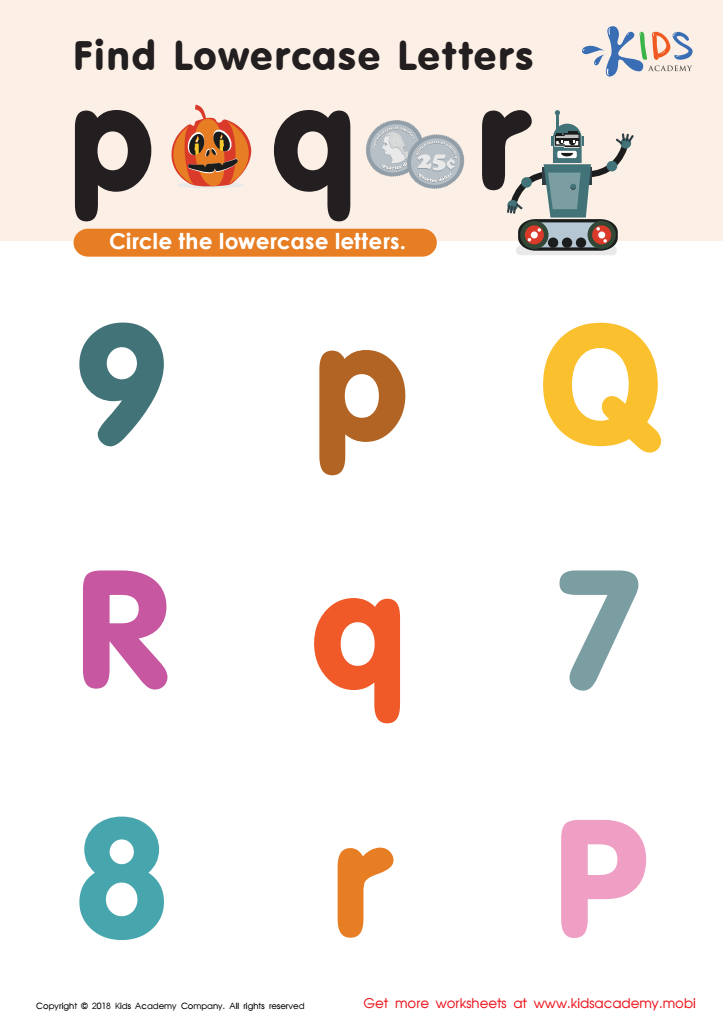
Find lowercase Letters p q r Worksheet
 Assign to My Students


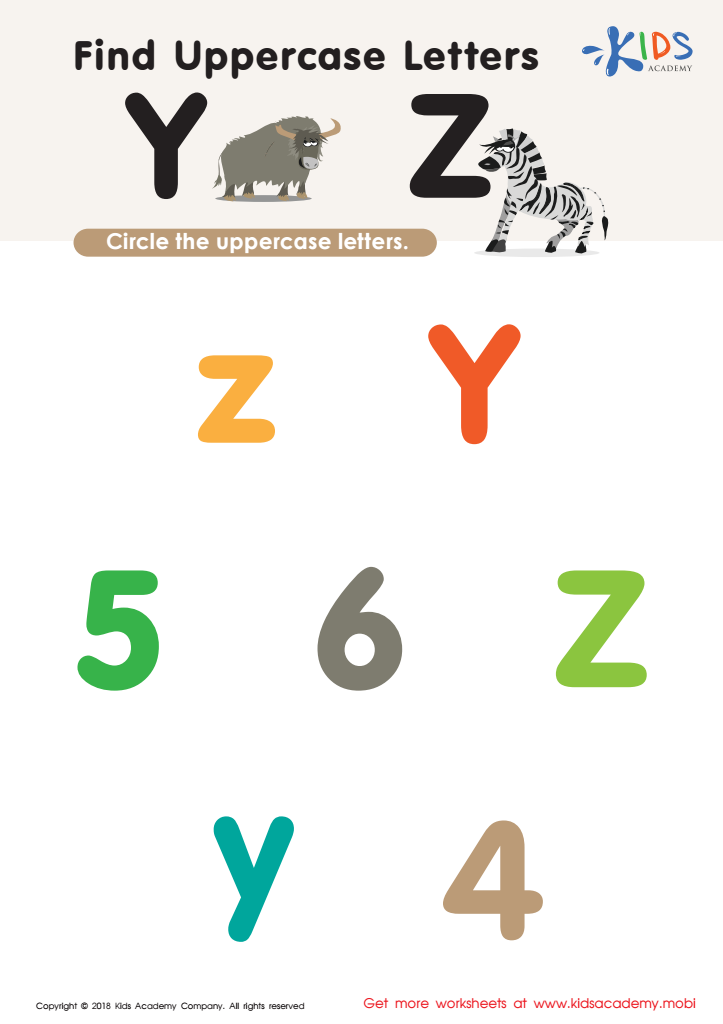
Find Uppercase Letters Y Z Worksheet

Find lowercase letters a b c Worksheet






Alphabet understanding, including recognition of both uppercase and lowercase letters, is crucial for children aged 5-6. At this developmental stage, children are transitioning from pre-literacy skills to more advanced reading and writing capabilities. Recognizing letters is foundational for decoding words, which is essential for reading fluency and comprehension.
Uppercase letters are often the first letters children encounter, commonly found at the beginning of names and sentences, while lowercase letters are more pervasive in texts. Understanding that both forms represent the same sound is vital for children’s literacy development. Additionally, the ability to distinguish between uppercase and lowercase forms aids in spelling, handwriting, and overall reading confidence.
Moreover, knowing letters interactively enhances children’s cognitive development, fine motor skills, and phonemic awareness. Parents and teachers play an essential role in reinforcing these skills through engaging activities like alphabet games, storytelling, and crafts. Doing so helps solidify letter recognition, making the learning process enjoyable.
Encouraging proficiency in both letter forms prepares children for academic success and fosters a love of reading. As children feel more competent, they are more likely to participate in classroom discussions and pursue independent reading, setting them on a path for lifelong learning.







