Letter Tracing Practice Normal Upper & Lowercase Letters Worksheets for Ages 5-6
3 filtered results
-
From - To
Enhance your child's writing skills with our engaging "Letter Tracing Practice Normal Upper & Lowercase Letters Worksheets" designed for ages 5-6. These printable worksheets provide a fun and interactive way for young learners to master letter formation, promoting both fine motor skills and confidence in writing. With clearly defined letters and ample space for practice, kids can easily trace and learn each character's shape. Perfect for home or classroom use, our worksheets cover all uppercase and lowercase letters, encouraging early literacy development. Start your child's educational journey today with these interactive and versatile tracing resources!
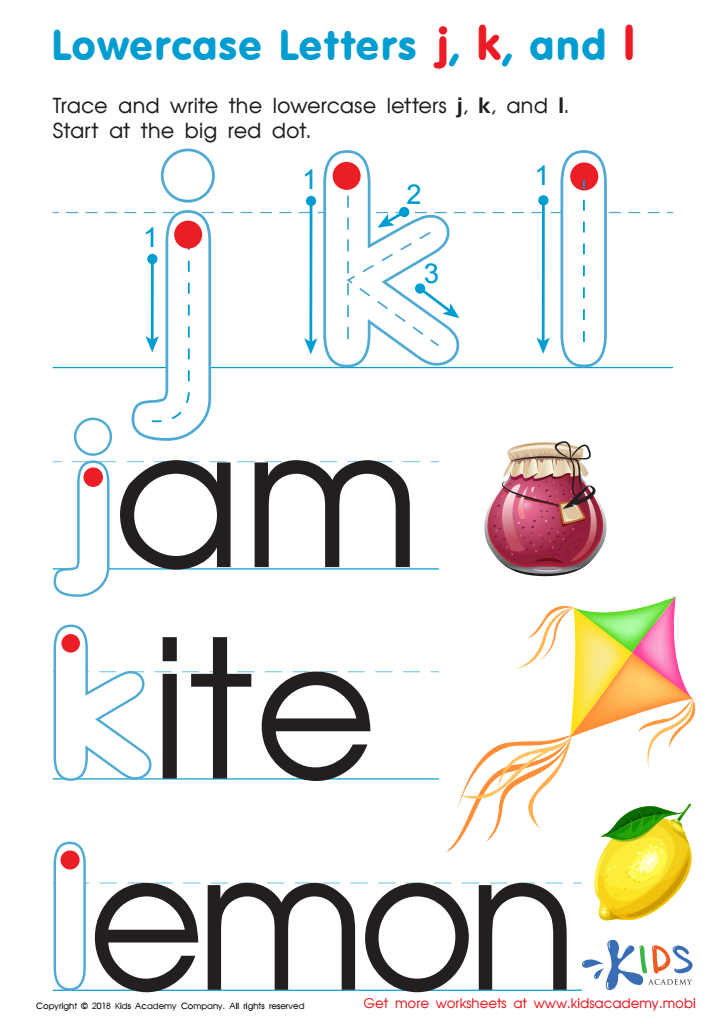
Lowercase Letters j k l Worksheet
 Assign to My Students

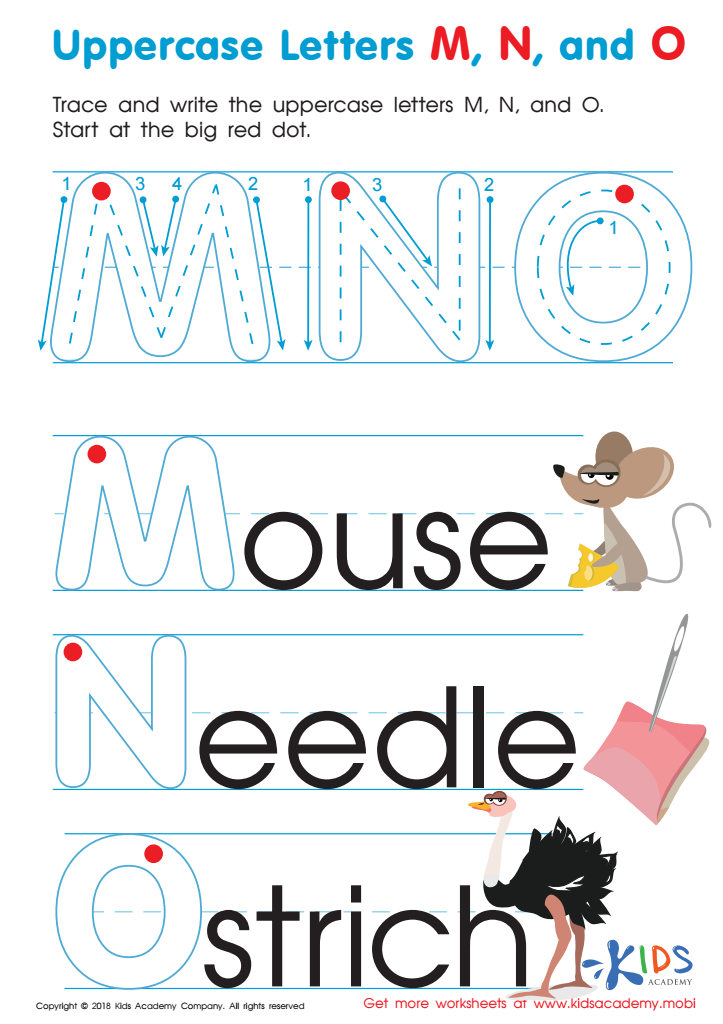
Uppercase Letters M, N, and O Worksheet
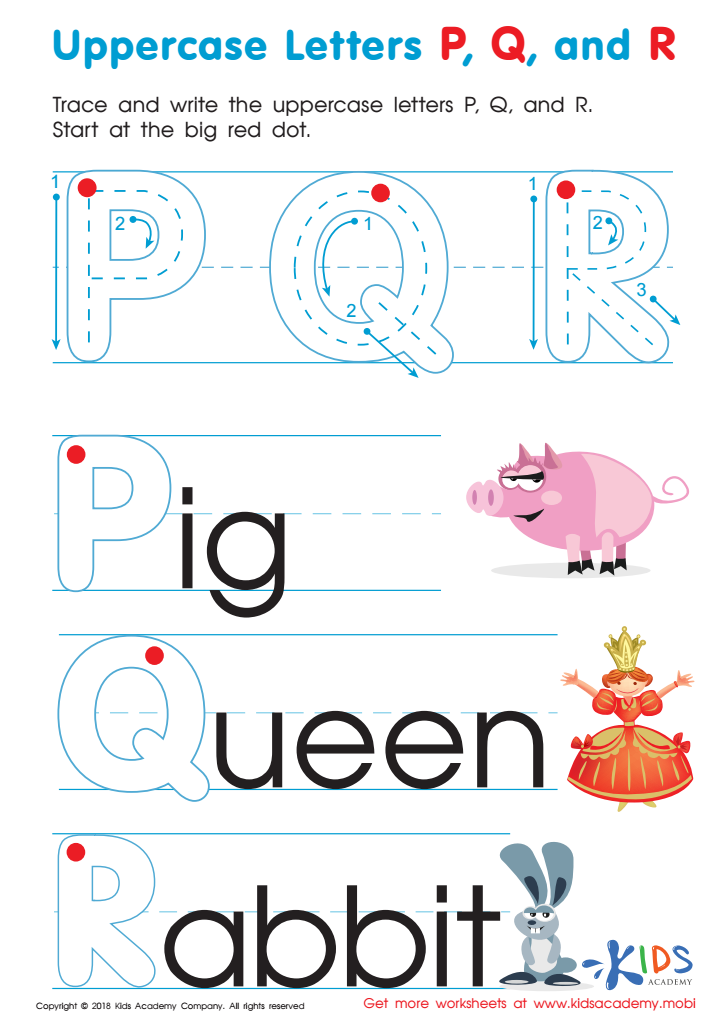
Uppercase Letters P, Q, and R Worksheet






Letter tracing practice for normal uppercase and lowercase letters is essential for children aged 5-6 as it lays the groundwork for lifelong literacy skills. At this developmental stage, children refine their fine motor skills and hand-eye coordination, both critical for writing. Tracing helps young learners recognize letter shapes and forms, promoting letter-sound associations that are fundamental to reading development.
When children trace letters, they engage both visually and kinesthetically, enhancing memory retention. This multisensory approach builds confidence, making the act of writing less intimidating. Furthermore, early practice in letter formation promotes proper grip and posture, which are vital for developing neat handwriting as they progress.
Beyond technical skills, letter tracing encourages focus and patience, important traits for academic success. Parents and teachers who provide tracing opportunities create an engaging learning environment that fosters curiosity and exploration. Establishing a strong foundation in letter recognition primes children for reading, writing, and comprehension, critical components of their overall academic journey. Ultimately, by prioritizing letter tracing, caregivers support children's cognitive, linguistic, and motor development, positioning them for success in school and beyond.







