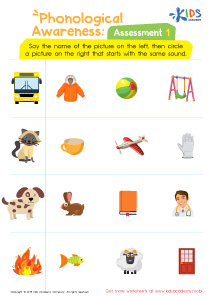
Spelling practice Normal Vowels and Consonants Worksheets for Ages 5-6
4 filtered results
Difficulty Level
Grade
Age
-
From - To
Subject
Activity
Standards
Enhance your child's spelling skills with our engaging Normal Vowels and Consonants Worksheets designed specifically for ages 5-6. These user-friendly worksheets provide a perfect balance of educational fun, enabling young learners to explore the basics of vowels and consonants while practicing essential spelling skills. Each activity encourages letter recognition, phonetic understanding, and confident reading, making learning a dynamic experience. Your child will enjoy completing colorful exercises that captivate their imagination and curiosity. Ideal for both classroom and home use, our worksheets support early literacy development, ensuring your little ones build a strong foundation in language skills. Start their spelling journey today!
Favorites
With answer key
Interactive
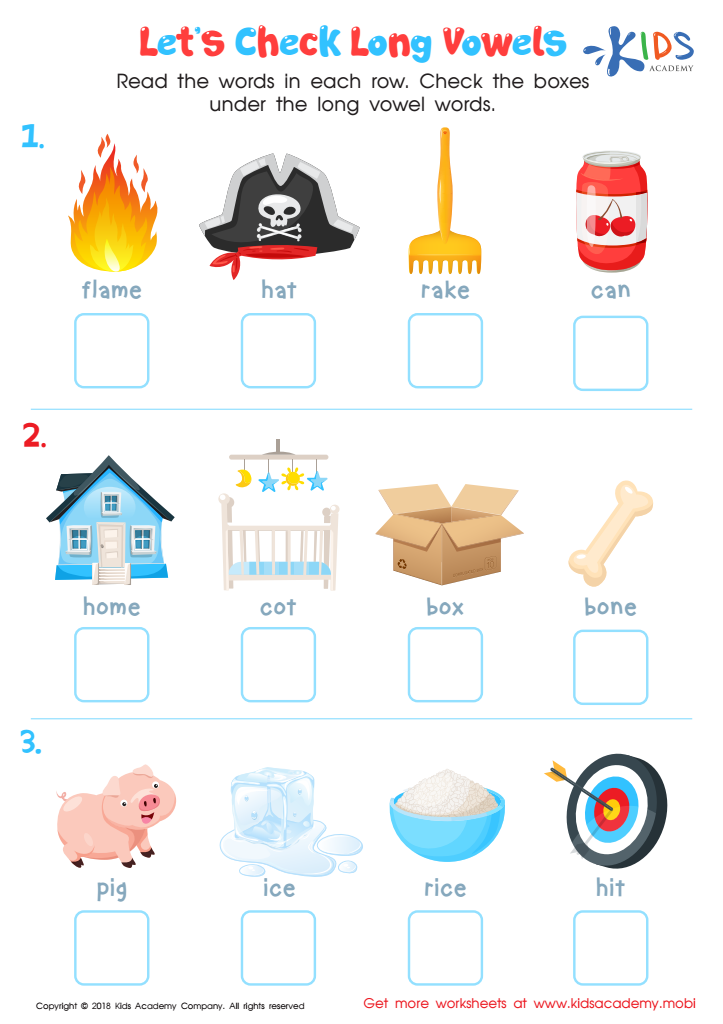
Let's Check Long Vowels: Assessment Worksheet
This worksheet helps your child identify objects and learn long vowel sounds. Ask them to say the names of the four objects in each row. Then, help them check the boxes to confirm they know the long vowel sounds. This will help them develop their reading skills.
 Assign to My Students
Let's Check Long Vowels: Assessment Worksheet
Worksheet
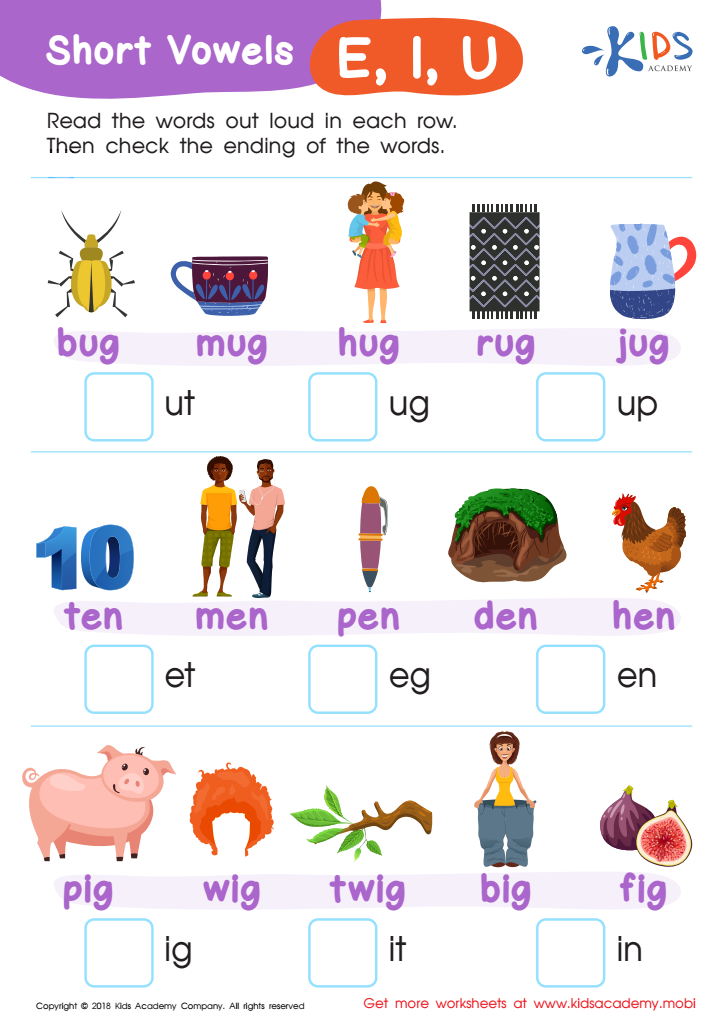
Short Vowels /e/, /i/, and /u/ Worksheet
Your emergent reader can have fun while practicing their short vowel sounds with this free, brightly colored worksheet. They'll identify one-syllable words by their pictures, then match the correct ending for each. They'll gain an understanding of how short vowel sounds vary in closed syllables with different endings, without even realizing it!
Short Vowels /e/, /i/, and /u/ Worksheet
Worksheet
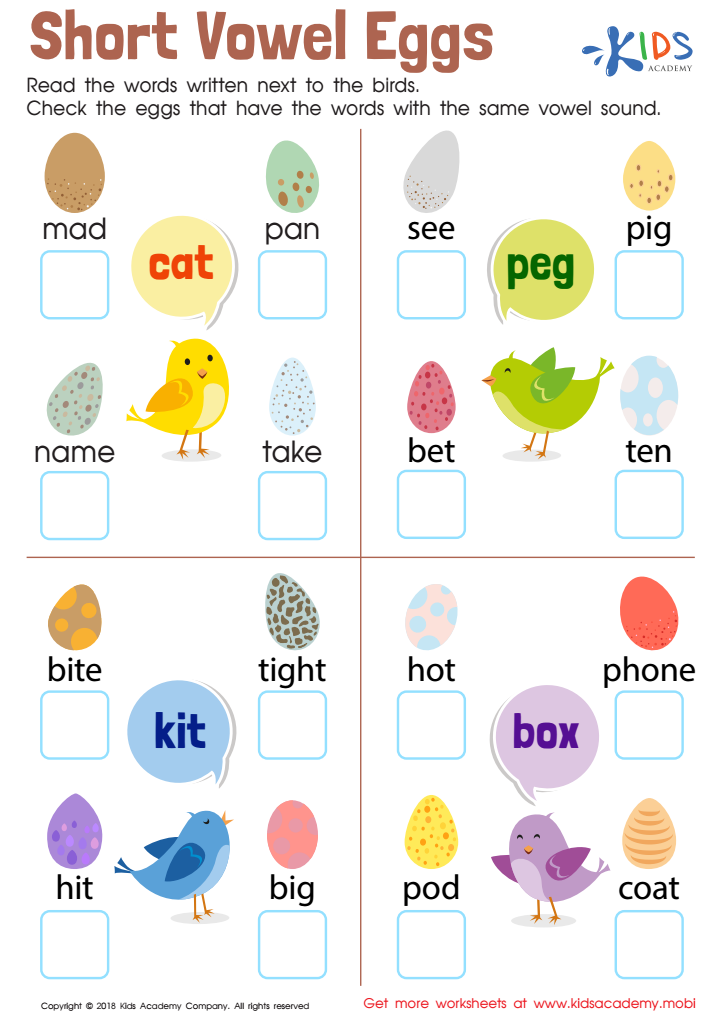
Short Vowel Eggs Worksheet
Your students will love helping these birdies pick the short vowel eggs! Have them read the words in the thought bubbles, then check off the boxes with the same short vowel sounds. The bright colors of this free Worksheet will draw them in and get them practicing their vowels!
Short Vowel Eggs Worksheet
Worksheet
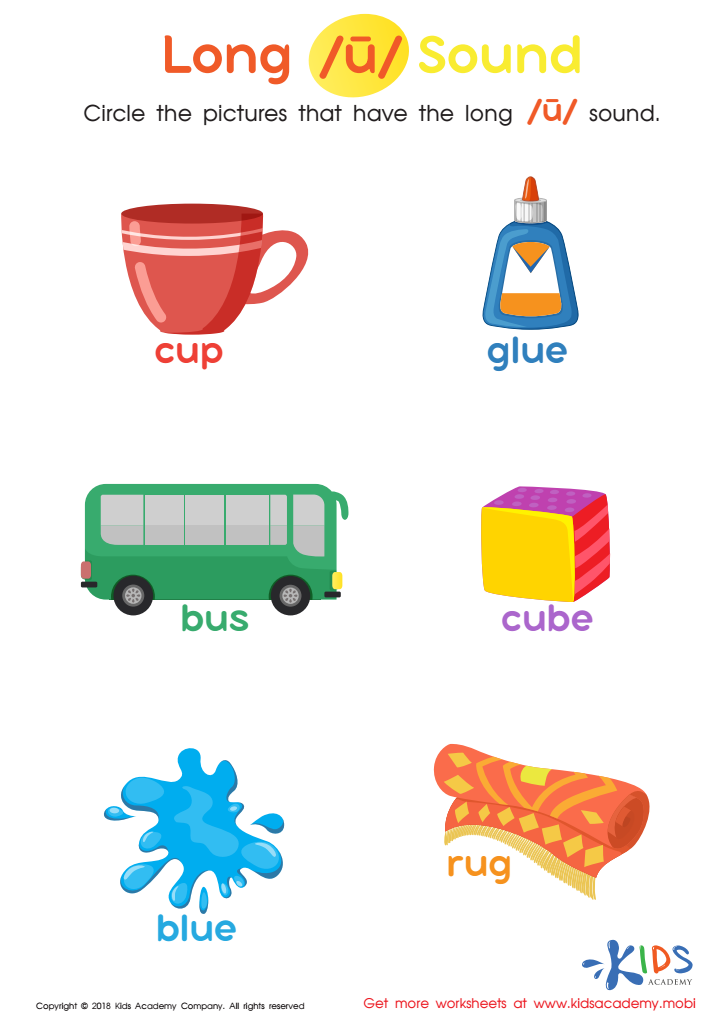
Long «u» Sound Worksheet
This fun and engaging free PDF worksheet teaches kids to differentiate between long and short «u» sounds. Through tracing circles around the correct words, they'll practice their fine motor skills while also recognizing patterns (silent-e for «ū» sound) in closed-syllable words. Bright and cheery pictures make it a great confidence booster for new readers!
Long «u» Sound Worksheet
Worksheet
Join Kids Academy for Free
Who is primarily going to use this learning content?



Spelling practice focused on normal vowels and consonants is essential for children ages 5-6 as it lays the groundwork for crucial literacy skills. At this developmental stage, children are beginning to understand the relationships between letters and sounds, which is fundamental in mastering reading and writing. Normal vowels and consonants constitute the building blocks of words, making it vital for parents and teachers to provide targeted practice.
Engaging in early spelling activities not only enhances phonemic awareness but also boosts vocabulary acquisition. Children learn how different letters can alter word meanings and pronunciations. This practice fosters comprehension skills that are necessary as they progress in their education.
Moreover, consistent spelling practice builds confidence and independence in young learners. Children who can spell simple words are often more willing to attempt writing sentences, helping develop their expressive language skills.
Additionally, spelling games and activities stimulate cognitive development, encouraging problem-solving and critical thinking. By prioritizing spelling practice at this early age, parents and teachers play a pivotal role in supporting literacy development, paving the way for successful academic journeys and a lifelong love of reading and writing.