Vocabulary development Normal Building Vocabulary Worksheets for Ages 5-6
3 filtered results
-
From - To
Enhance your child's language skills with our Vocabulary Development Normal Building Vocabulary Worksheets for ages 5-6. At Kids Academy, we offer a superb range of engaging, printable worksheets designed to introduce young learners to essential vocabulary. Each worksheet is crafted to improve critical thinking and comprehension through fun and interactive activities. Our exercises cover various themes, ensuring children remain interested and motivated. By incorporating our worksheets into your child's routine, you can support their vocabulary growth and lay a strong foundation for future language success. Visit Kids Academy to empower your child's journey in reading and vocabulary development today!
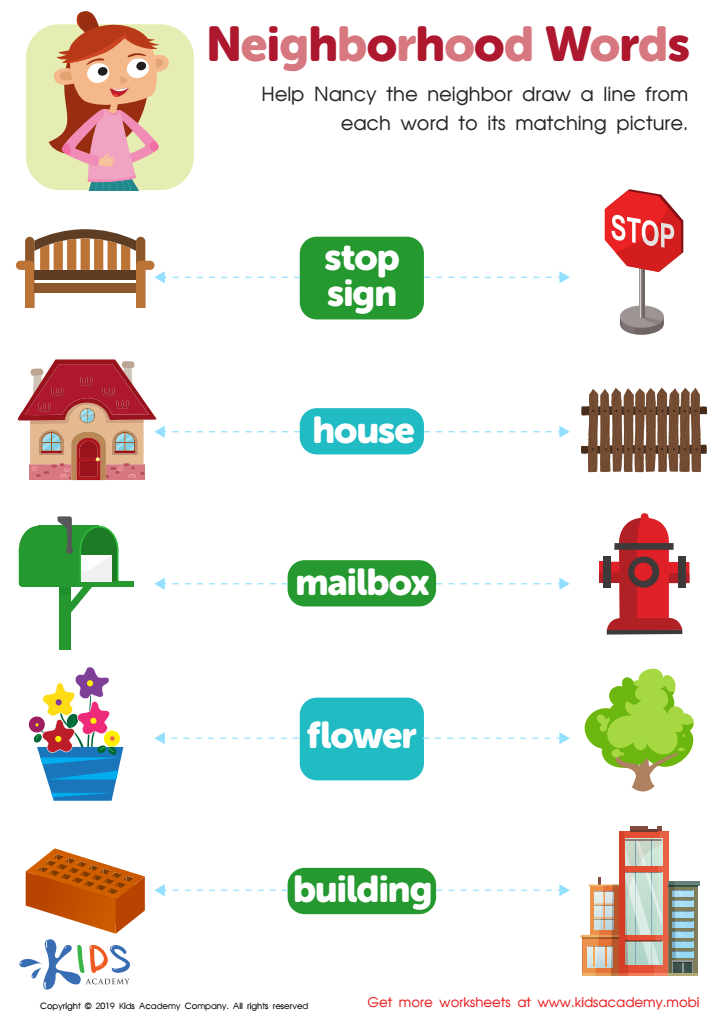
Neighborhood Words Worksheet
 Assign to My Students











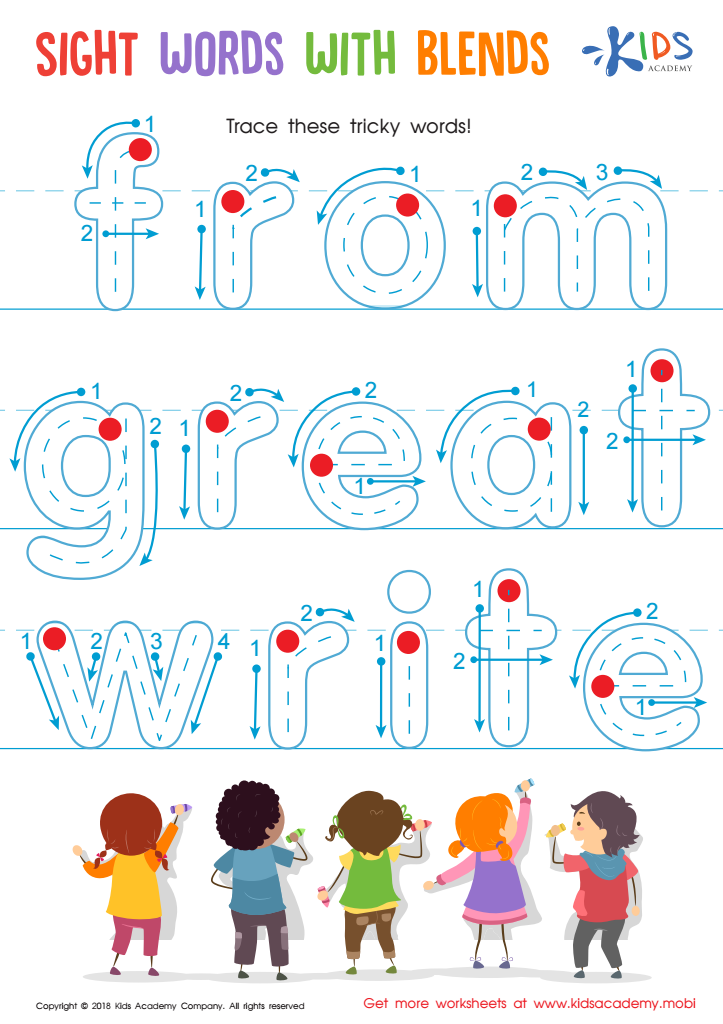
Sight Words with Blends Worksheet
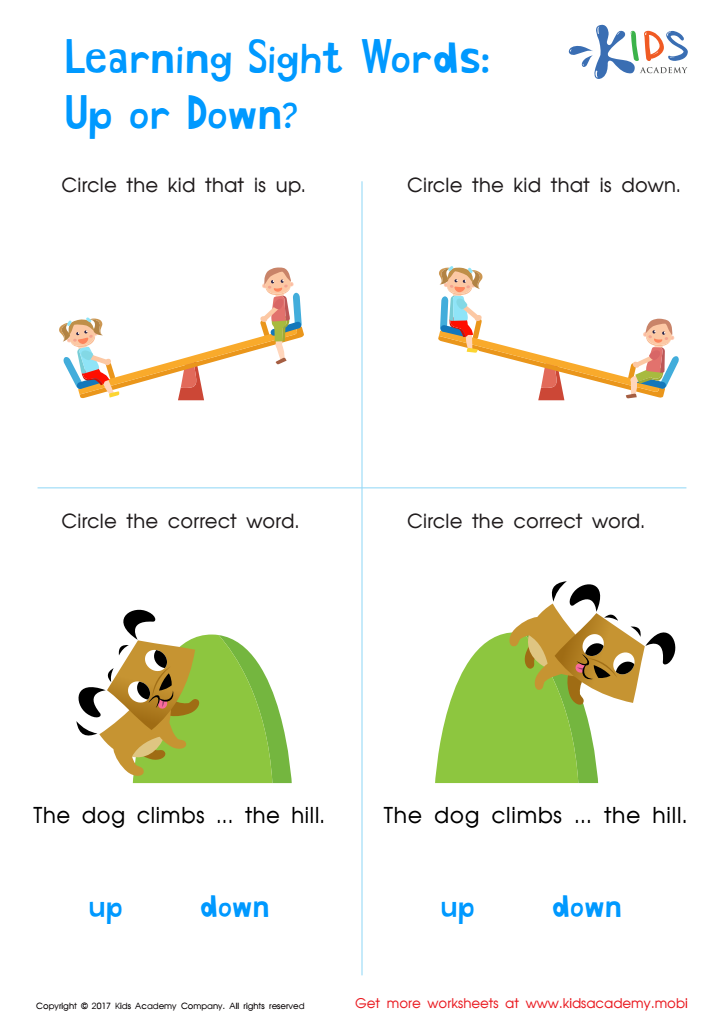
Up or Down Printable Sight Words Worksheet








Vocabulary development is a fundamental aspect of early childhood education that parents and teachers should prioritize, especially for children aged 5-6. This period is highly crucial as it aligns with a critical window of linguistic and cognitive growth. At this age, children begin to transition from recognizing simple words to understanding more complex language structures, which forms the foundation for all future communication and academic skills.
Expanding a child's vocabulary enhances their ability to express thoughts, feelings, and ideas more clearly and effectively. A robust vocabulary supports better comprehension skills, essential for reading and overall academic achievement. Children who have a strong start in vocabulary are often more adept at grasping new concepts and performing well across various subjects in school.
Additionally, vocabulary development at this age fosters social-emotional development. Children with a richer language repertoire can navigate social interactions more easily, articulate their emotions, and understand others better, leading to healthier relationships and improved empathy.
Moreover, building vocabulary in early years stimulates cognitive processes like memory, critical thinking, and problem-solving. Parents and teachers can significantly influence this aspect by engaging children in conversations, reading aloud, and introducing them to new words in contextually meaningful ways. Investing effort in vocabulary development lays a strong foundation for lifelong learning and success.








