
Logical Reasoning Normal Reading Comprehension Worksheets for Ages 5-6
4 filtered results
Difficulty Level
Grade
Age
-
From - To
Subject
Activity
Standards
Boost your child's reading skills with our engaging Logical Reasoning Normal Reading Comprehension Worksheets designed for ages 5-6. These worksheets foster critical thinking through age-appropriate stories and questions, helping young learners enhance their understanding and inference skills. Packed with vibrant illustrations and fun activities, each worksheet keeps kids entertained while improving their logical reasoning and comprehension abilities. Perfect for classroom use or home practice, these worksheets support early literacy development and prepare children for more advanced reading tasks. Help your child build a strong foundation in reading and logical thinking with Kids Academy's specially crafted resources.
Favorites
With answer key
Interactive
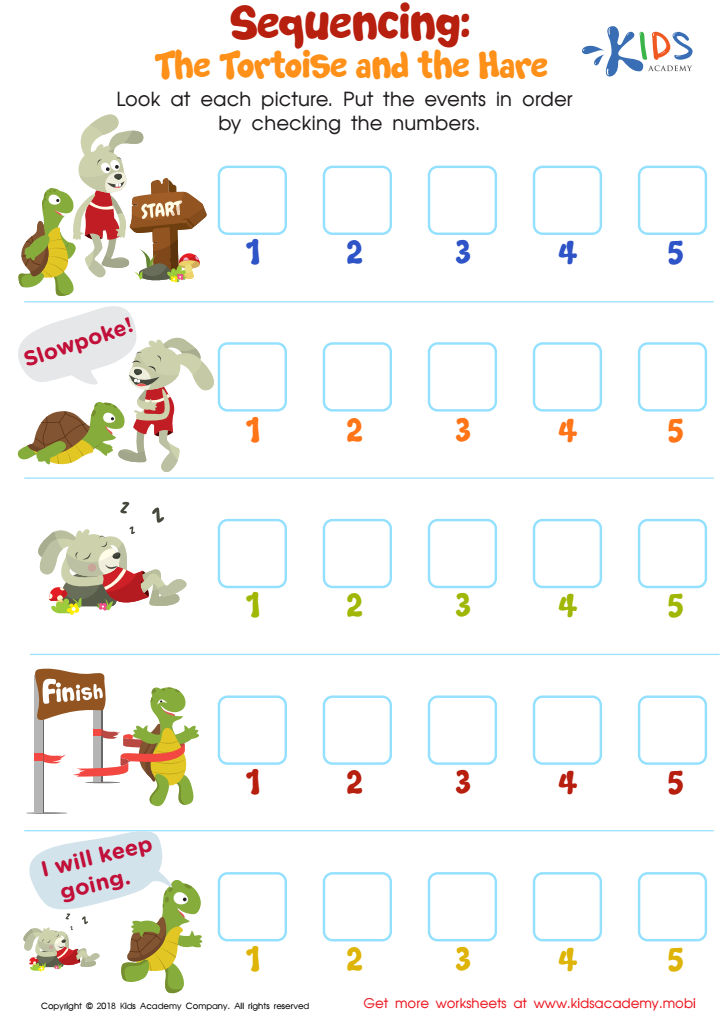
Sequencing: The Tortoise and the Hare Worksheet
Help your child become an independent reader and critical thinker with a sequencing worksheet from Kids Academy! Have them read the classic tale of the tortoise and the hare and use the accompanying worksheet to check their understanding of the story's sequence of events. Have kids identify the correct order of events by selecting the box next to the correct number for each image!
 Assign to My Students
Sequencing: The Tortoise and the Hare Worksheet
Worksheet
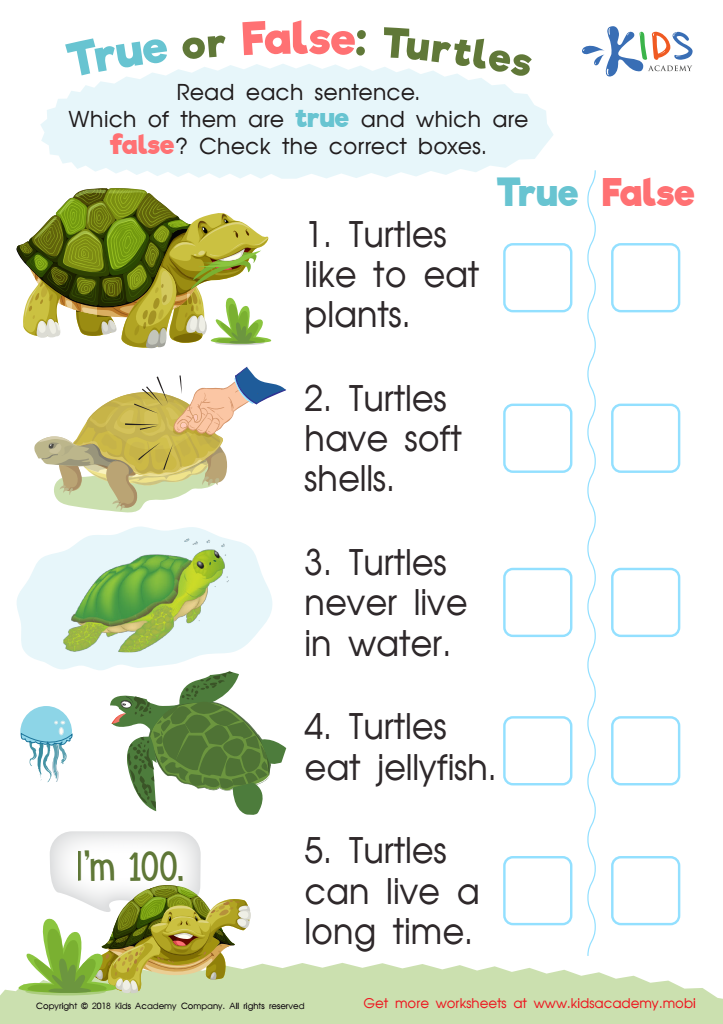
True or False: Turtles Worksheet
Print this free downloadable worksheet to strengthen your child's reading comprehension. Assist them to read each sentence and recall facts about turtles. Check true or false for each statement to verify their knowledge. Perfect for early learners!
True or False: Turtles Worksheet
Worksheet
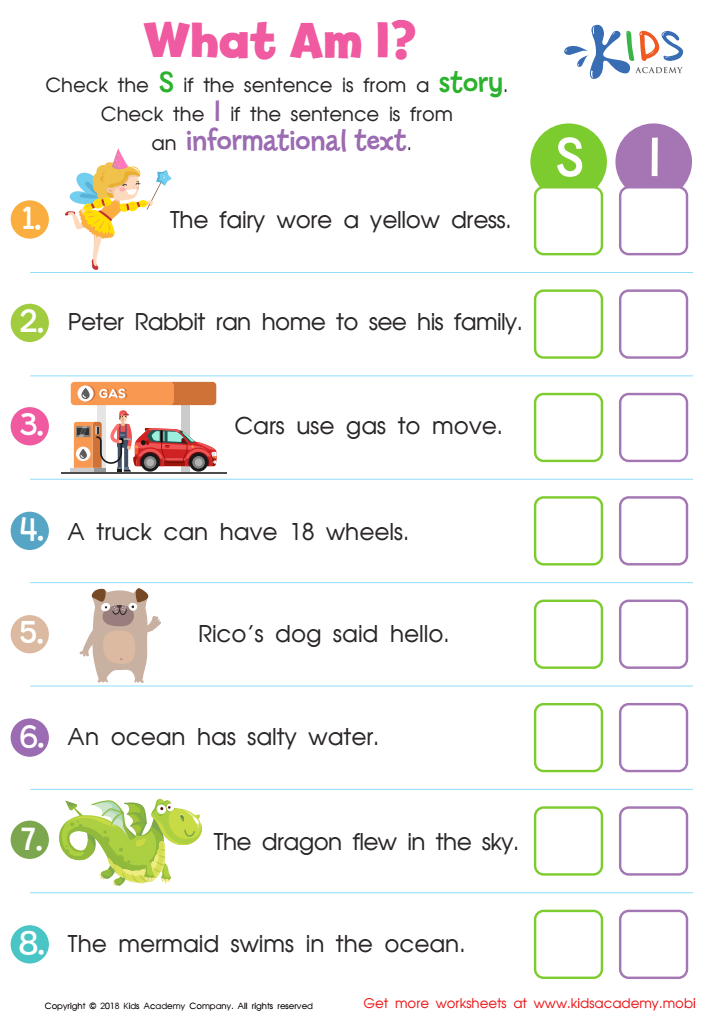
What Am I? Worksheet
This worksheet assesses students' ability to differentiate between stories and texts they read for facts. Students learn to distinguish between reading for pleasure and reading for information. It includes statements from both a story and an informational text, and students must decide what type of text it is.
What Am I? Worksheet
Worksheet
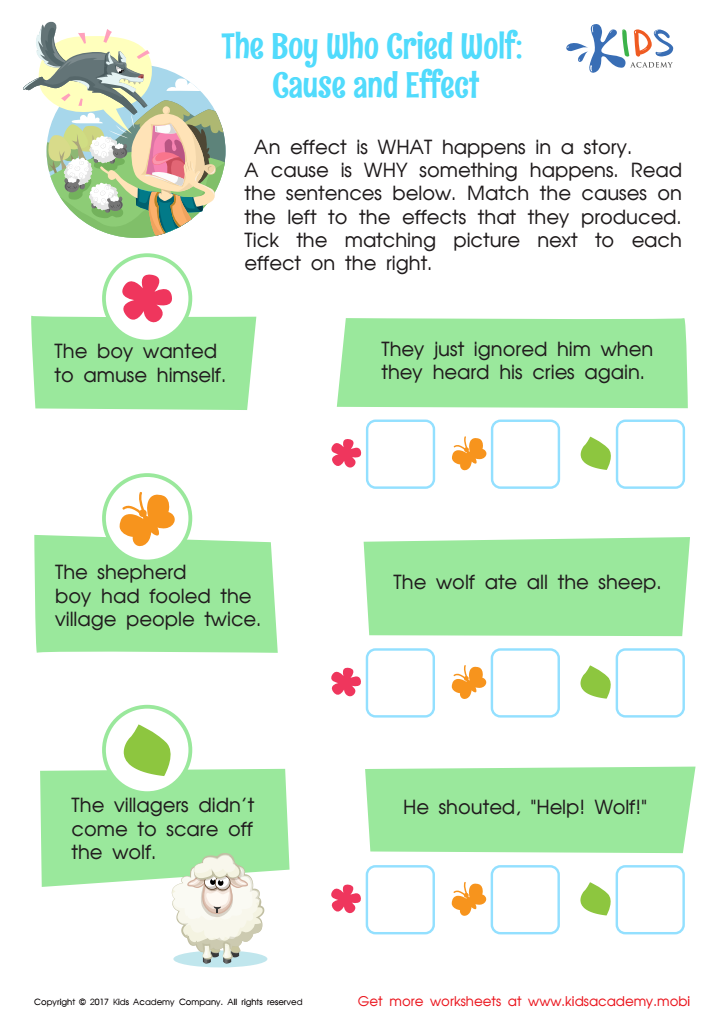
The Boy Who Cried Wolf: Cause and Effect Worksheet
With classic stories and fables, learning reading comprehension is easy - and fun!
The Boy Who Cried Wolf: Cause and Effect Worksheet
Worksheet
Join Kids Academy for Free
Who is primarily going to use this learning content?







Parents and teachers should care about logical reasoning and normal reading comprehension for ages 5-6 because they lay the foundation for cognitive development, critical thinking, and academic success. At this age, children's brains are highly receptive to new information, making it an ideal time to nurture these essential skills.
Logical reasoning helps children understand cause and effect, make connections, and solve problems systematically. It encourages them to think independently and helps in the development of early math and science skills. For example, by sorting objects by color or shape, children begin to grasp categorization and sequences, which are critical thinking aspects.
Reading comprehension, on the other hand, is fundamental for language development, communication skills, and overall literacy. When children understand what they read, they are more likely to enjoy reading, which fosters a lifelong love of learning. Reading comprehension also enhances vocabulary, listening skills, and empathy as children are exposed to different characters, cultures, and situations in stories.
By fostering logical reasoning and reading comprehension, parents and teachers prepare children for future academic challenges, help them become more curious and eager learners, and contribute to their overall intellectual growth. The skills developed at this early stage are building blocks for more complex learning in later years, ensuring children are well-equipped for success in school and beyond.








