Filters

6 filtered results

Clear all filters
Favorites
With answer key
Interactive

6 filtered results

Difficulty Level

Grade


Discover our engaging Reading Comprehension Normal Rhyming Words Worksheets, designed specifically for children ages 5-6. These educational resources help young learners enhance their reading skills while enjoying the rhythm of rhymes. Each worksheet encourages critical thinking, allowing kids to identify, match, and create rhyming words, fostering phonemic awareness and vocabulary development. With colorful illustrations and age-appropriate activities, these worksheets make learning fun and interactive. Perfect for classroom use or at-home practice, our rhyming word sheets promote literacy success while developing essential comprehension skills. Transform your child's reading journey today with our delightful and effective worksheets!

Check out this FREE Trial Lesson on Rhyming Words for age 5-6!

Recognize Words that Rhyme

Favorites
With answer key
Interactive
  • 5-6
  • Reading comprehension
  • Rhyming Words
  • Normal
Poem: My New Kite Worksheet

Poem: My New Kite Worksheet

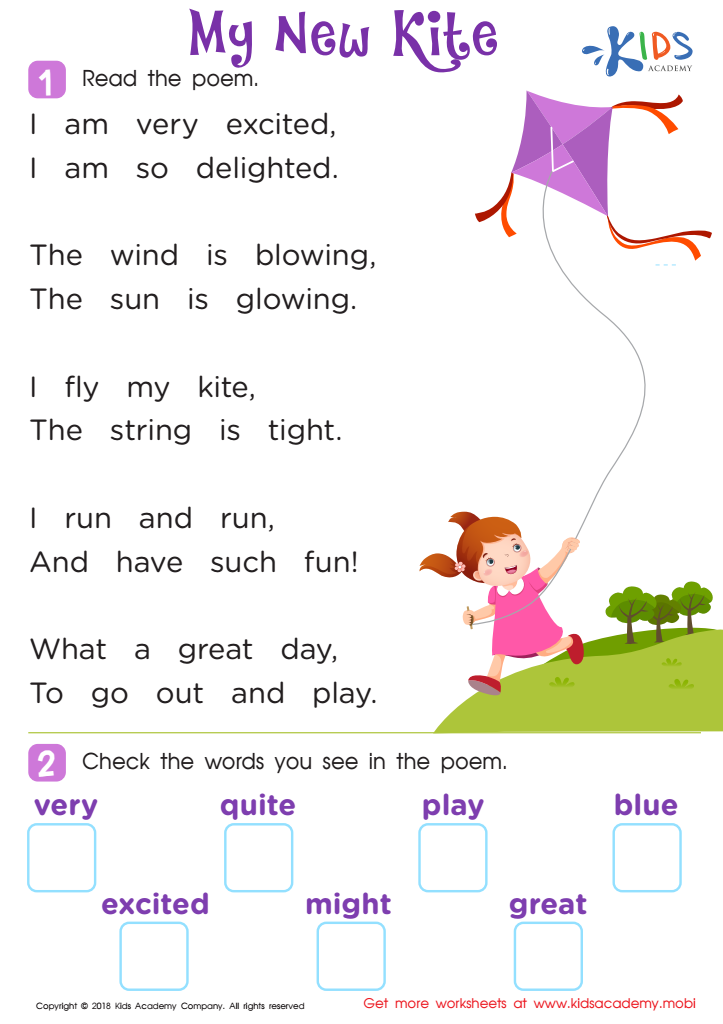
Read a cheerful poem with your child and have them check the boxes next to the words that appear. Then, ask them to identify rhyming words, noting that these won't appear at the bottom of the page. This is a delightful reading activity to help your child remember what they read.
Poem: My New Kite Worksheet
Worksheet
Rhyming Words Worksheet PDF

Rhyming Words Rhyming Worksheet

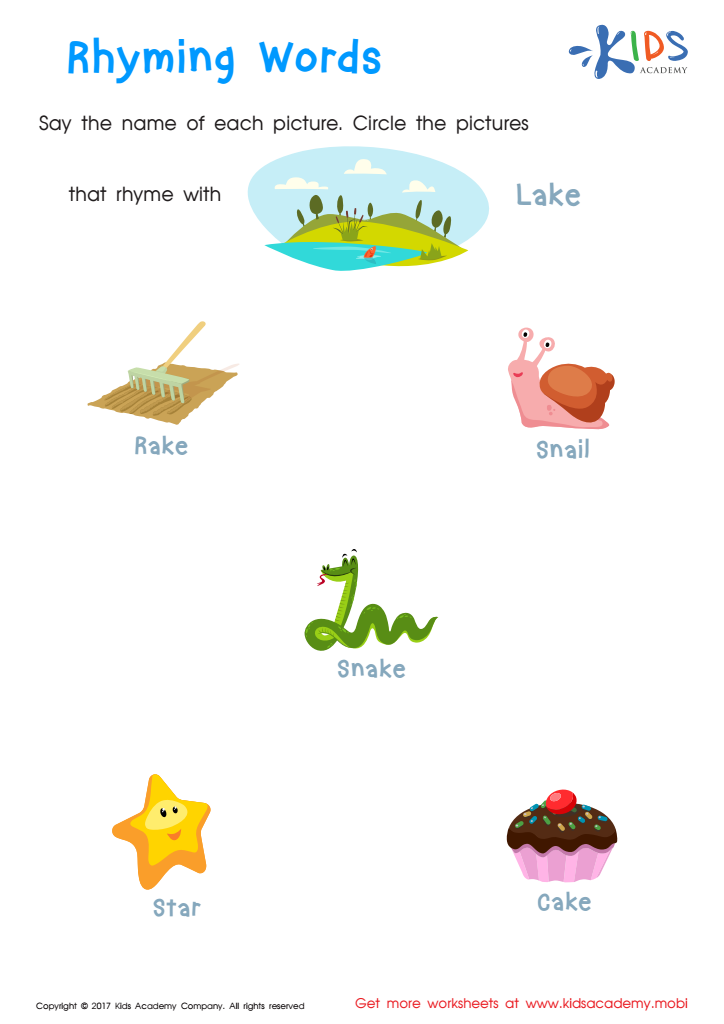
This worksheet is great for honing pre-reading skills. It helps kids make connections between pictures and written words, use problem-solving, and recognize sounds and words that rhyme. Have fun exploring rhyming words with your child, and they'll be rhyming in no time!
Rhyming Words Rhyming Worksheet
Worksheet
Picture Rhymes Printable

First Words: Picture Rhymes Worksheet
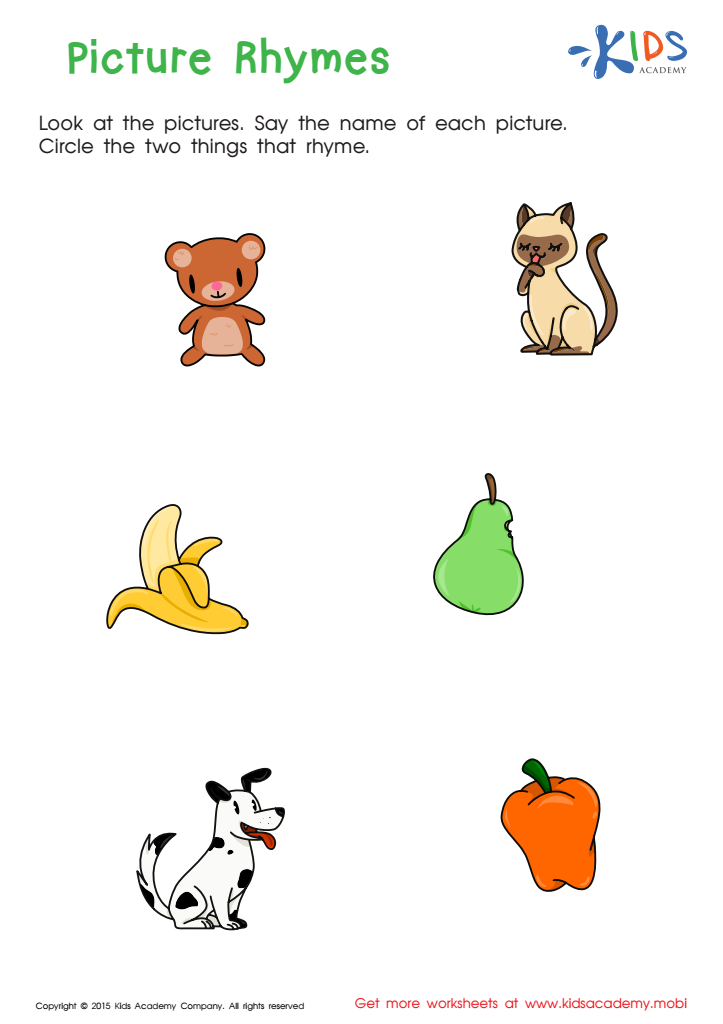
Rhyming helps kids understand language, read and write better. This printable worksheet boosts problem-solving and cognitive skills with vibrant pictures. It teaches kids to identify words, recognize rhymes, complete mental tasks and write words. An extra activity: show them how rhyming words share some of the same letters.
First Words: Picture Rhymes Worksheet
Worksheet
Rhyming Words Worksheet for Kindergarten

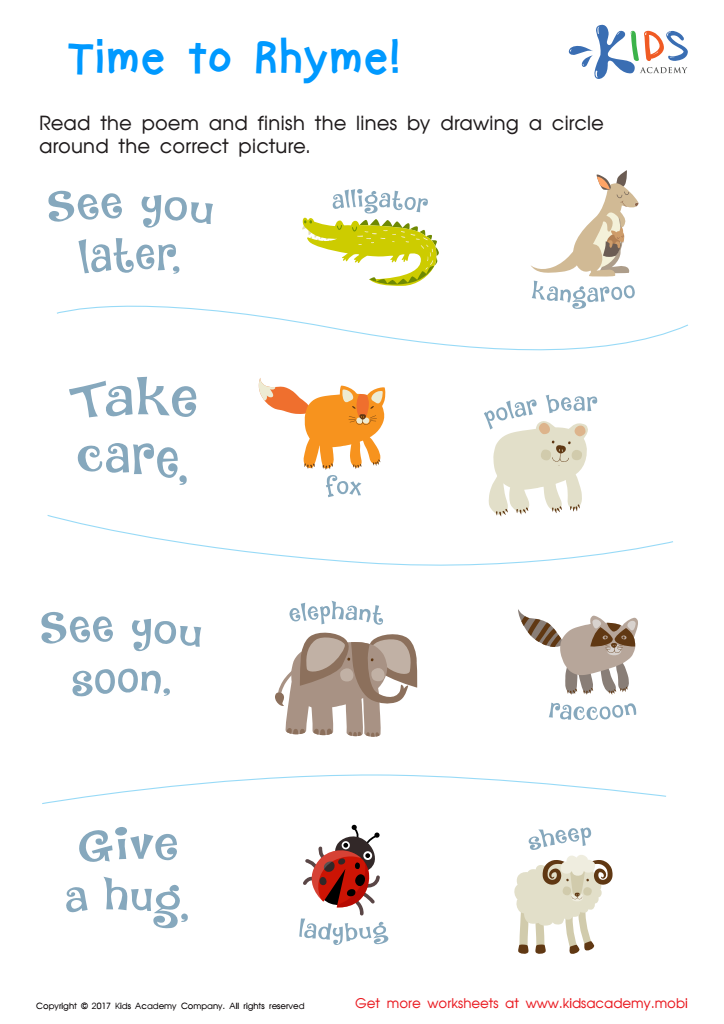
Time to Rhyme Rhyming Worksheet

This worksheet helps kids learn catchy sayings with rhymes, notice words and sounds that rhyme, and use problem solving to solve expressions. By using these expressions in everyday talk, kids gain the repetition needed to internalize the skills they've learned. Check out our nursery rhymes to further support them!
Time to Rhyme Rhyming Worksheet
Worksheet
Rhyming Words in Poems Worksheet

Rhyming Words in Poems Worksheet

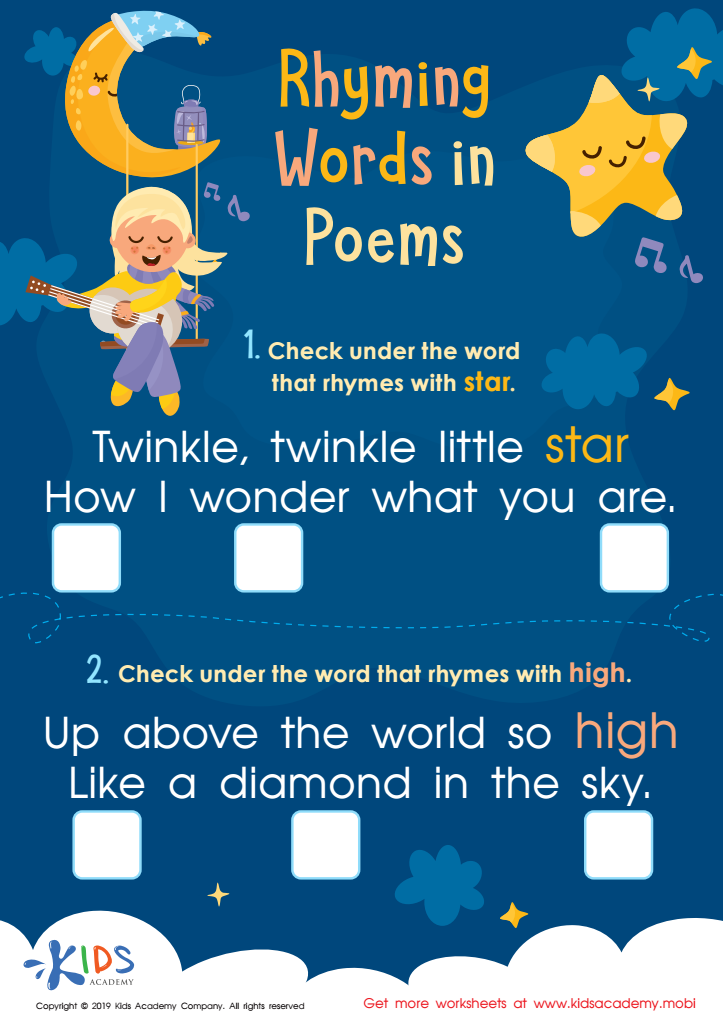
If your kids love poems, get them to recite some to you or have them write their own. Use this worksheet to help them find words that rhyme. Read the short poems and have them check the highlighted words for rhyming.
Rhyming Words in Poems Worksheet
Worksheet
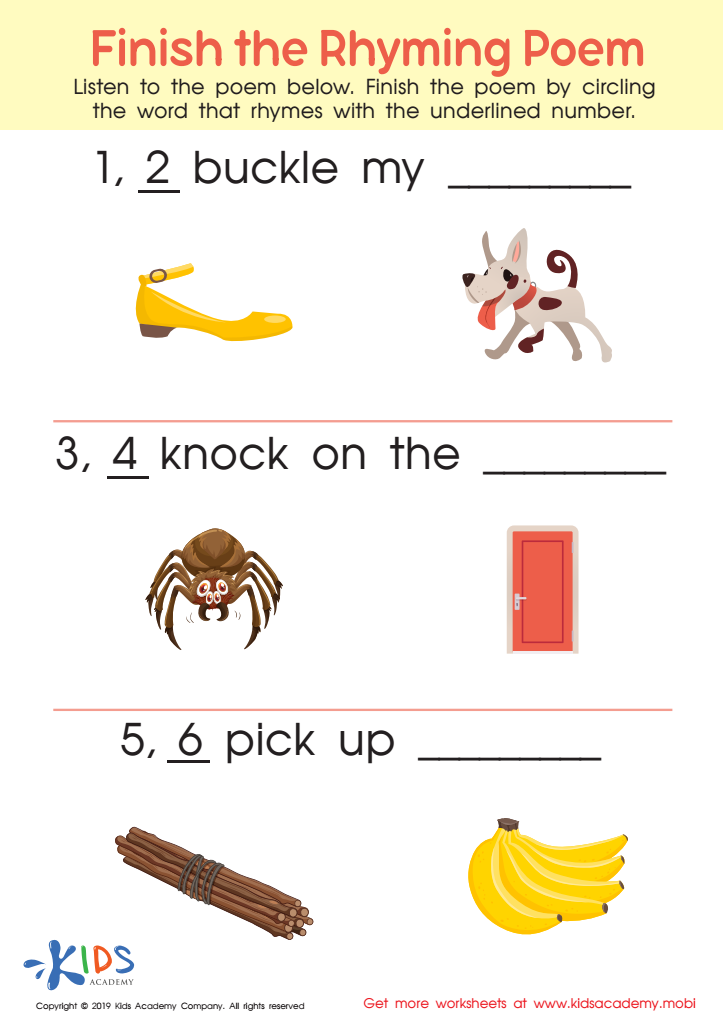
Finish Rhyming Poem Worksheet


Finish Rhyming Poem Worksheet

Poems are a great way to express emotions and spark imagination. Does your child enjoy poetry and even have their own creations? If so, they'll love this worksheet. It's a great way to develop their rhyming skills. Challenge them to find and circle the words that rhyme with the ones underlined.
Finish Rhyming Poem Worksheet
Worksheet


Reading comprehension is crucial for young children, especially those aged 5-6, as it serves as the foundation for all future learning. Understanding normal rhyming words enhances literacy skills, making it essential for parents and teachers to prioritize this aspect of reading. At this age, children are at a vital stage of language development where they start to recognize patterns in sounds, which aids in phonetic awareness.

Rhyming words not only introduce children to the concept of sounds and syllables, but they also enhance memory and listening skills. By engaging with rhymes, children become more aware of language structures, and their ability to predict words strengthens their comprehension skills.

Moreover, rhyming activities can be fun and interactive, promoting a love for reading through playful engagement. When children enjoy stories, they are more likely to develop a reading habit, which is essential for long-term literacy. A strong basis in reading comprehension not only boosts academic performance but also builds confidence, making children more willing to participate in discussions and explore new ideas. Thus, prioritizing normal rhyming words nurtures holistic development in young learners, setting them up for success in their educational journey.