Weather identification Normal Science Worksheets for Ages 5-6
4 filtered results
-
From - To
Our "Weather Identification Normal Science Worksheets" for ages 5-6 make learning about the weather fun and interactive. These educational worksheets help young children recognize different weather conditions through engaging activities and colorful images. Kids will practice identifying sunny, rainy, snowy, and windy days while developing essential observation and critical thinking skills. Perfect for early learners, these worksheets support a foundational understanding of the natural world. Whether at home or in the classroom, our worksheets are designed to spark curiosity and foster a love for science in young minds. Start your child's weather discovery journey with Kids Academy today!
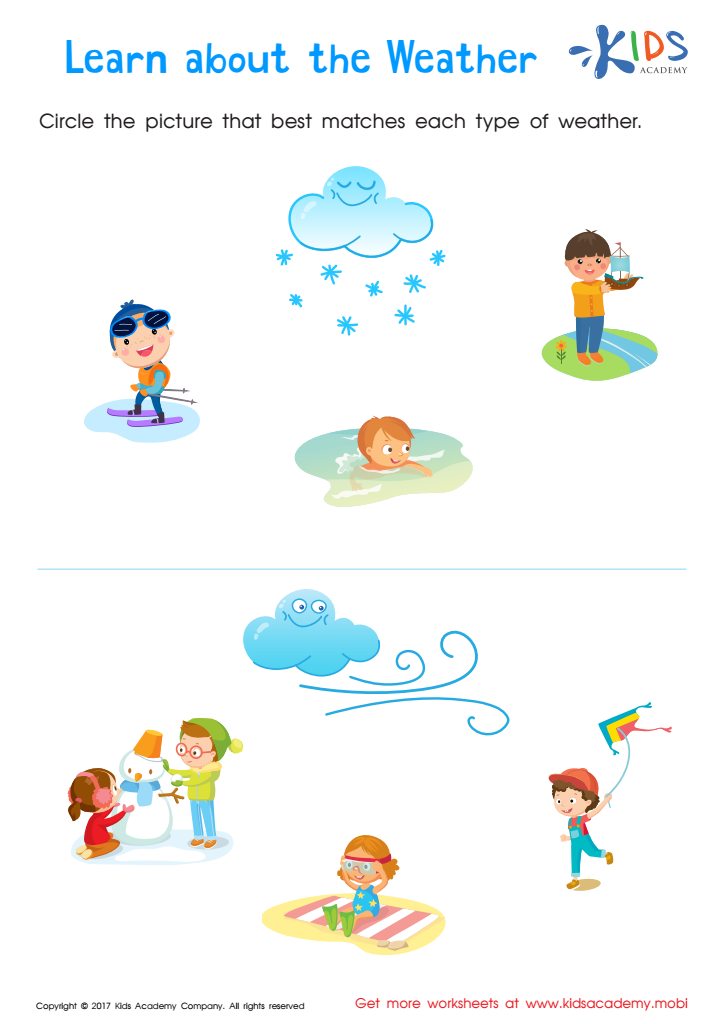
About the Weather Printable
 Assign to My Students
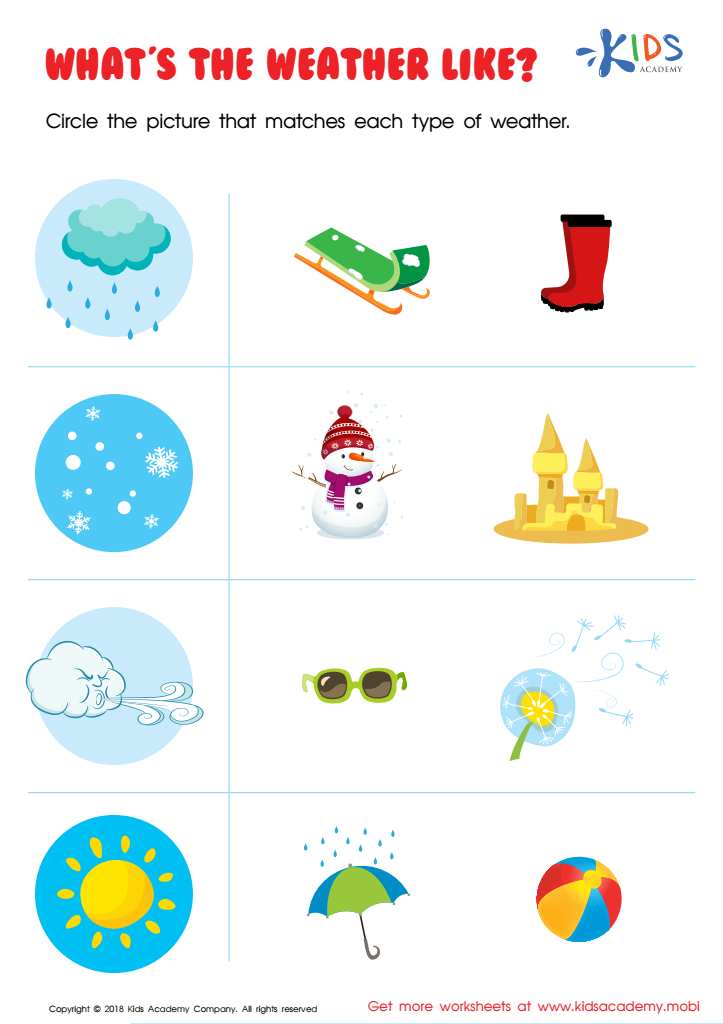
What's the Weather Like? Worksheet
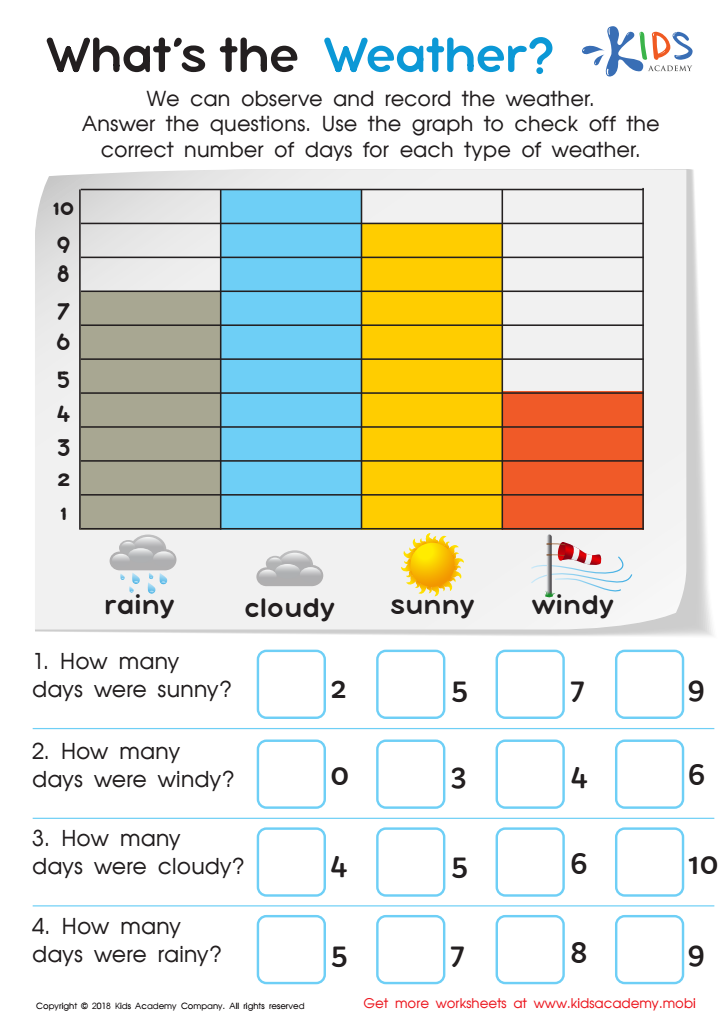
What's the Weather? Worksheet
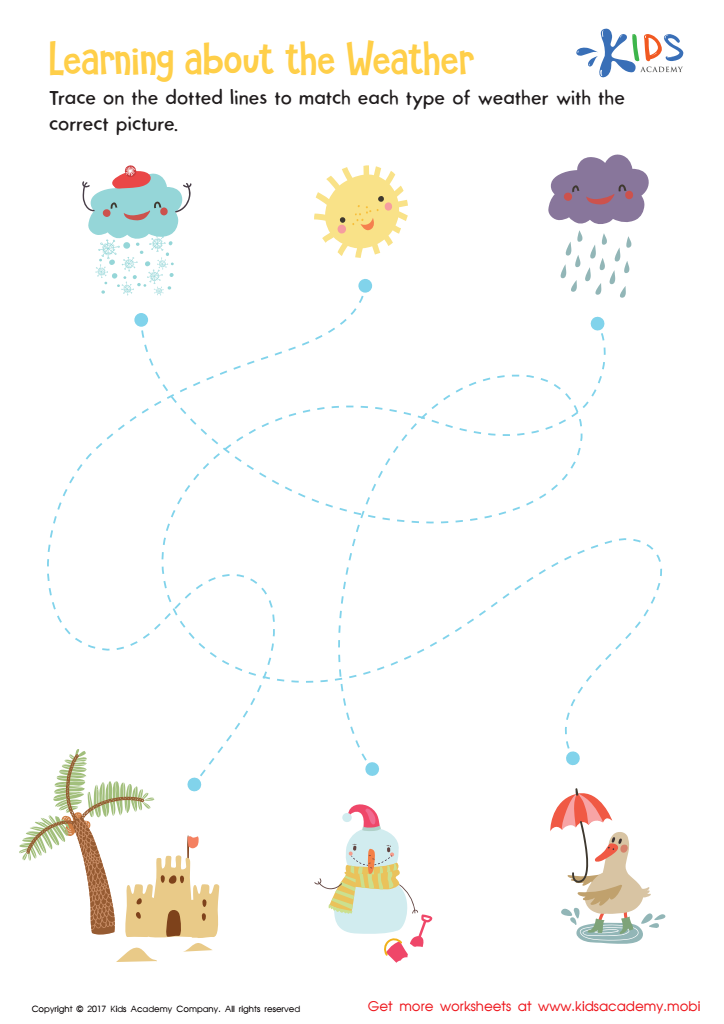








Weather identification for young children, especially those aged 5-6, plays a crucial role in their early cognitive and social development. At this age, kids are naturally curious about the world around them, and weather patterns offer a compelling way to understand daily changes in their environment.
For educators and parents, incorporating weather identification into daily routines supports the development of observational skills and vocabulary. Discussing weather helps children learn descriptive terms like "sunny," "rainy," "windy," and "cloudy," which enhances their language abilities. Additionally, recognizing weather patterns fosters critical thinking as children begin to predict what might happen next based on current observations, such as understanding that dark clouds might mean rain.
Understanding weather also has practical implications: it teaches children to make appropriate clothing choices and understand seasonal activities, contributing to their growing sense of independence and responsibility. Socially, talking about weather engages children in conversations with peers, helping to build collaborative learning and communication skills.
Teachers and parents can use weather charts, stories, and simple experiments to make learning about weather engaging and educational. Ensuring a basic grasp of meteorological concepts at a young age lays the foundation for more advanced scientific learning in the future, fostering a lifelong curiosity and appreciation for the natural world.







