Understanding light sources Normal Physical Science Worksheets for Ages 5-6
3 filtered results
-
From - To
Explore the fundamentals of light with our engaging Normal Physical Science worksheets designed for ages 5-6. These worksheets provide young learners with an exciting introduction to light sources, helping them understand the difference between natural and artificial light, such as the sun and light bulbs. Through fun activities and vibrant illustrations, children will develop critical thinking and observational skills as they experiment with identifying, classifying, and describing various light sources. Perfect for classroom use or at-home learning, these worksheets foster curiosity, promote scientific literacy, and set the stage for a lifelong love of science. Illuminate the learning journey today!
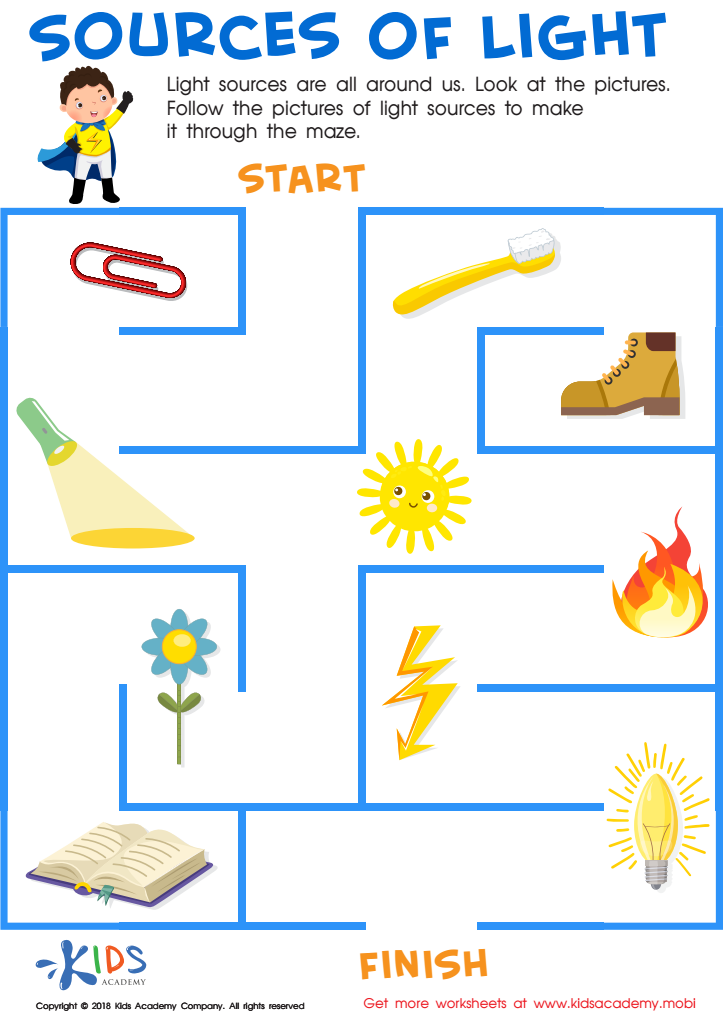
Sources of Light Worksheet
 Assign to My Students
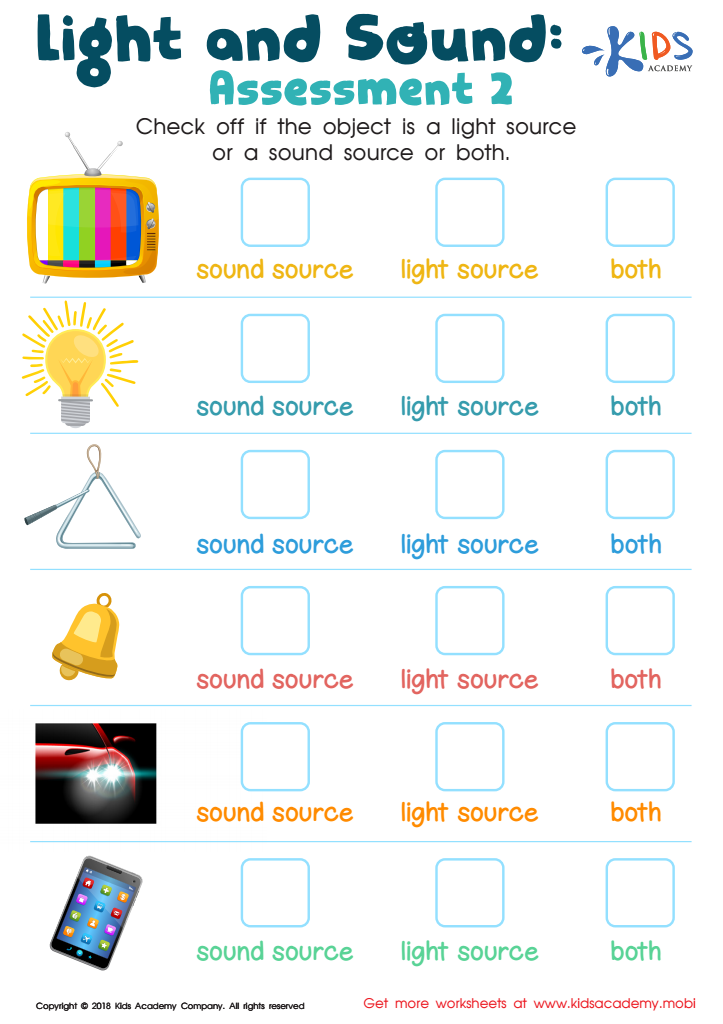
Light and Sound: Assessment 2 Worksheet
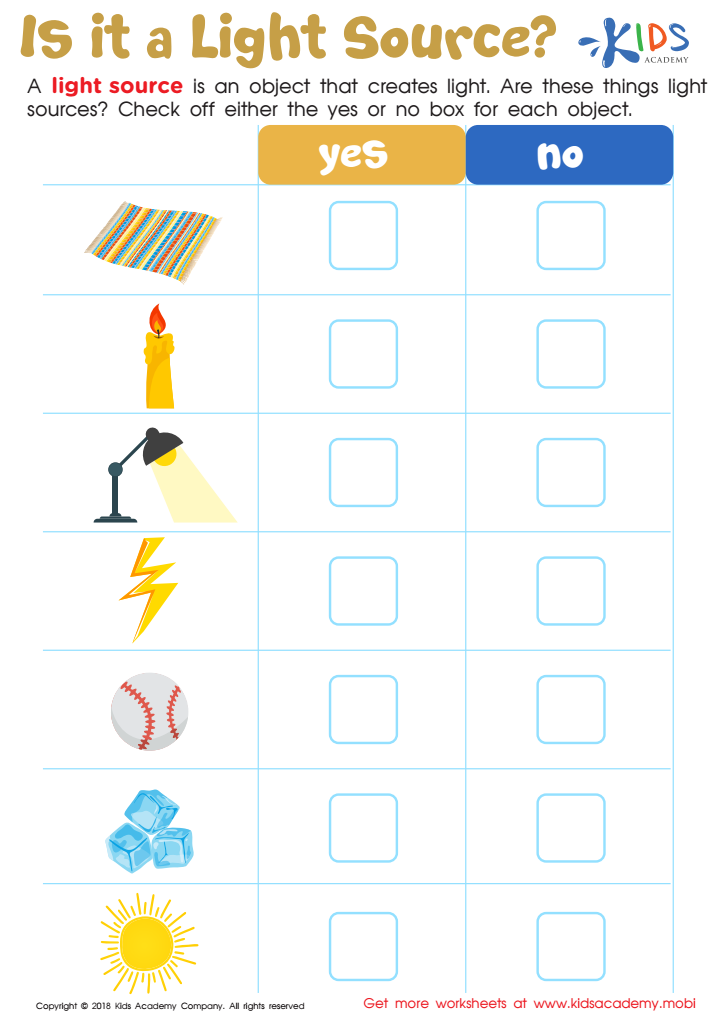
Is It a Light Source? Worksheet







Understanding light sources is a fundamental concept in Normal Physical Science for children aged 5-6, and it holds significant importance for both parents and teachers. At this age, children are naturally curious and keen to explore the world around them. Introducing the concept of light sources helps them make sense of their environment, enabling discussions about natural and artificial light. This foundational knowledge fosters critical thinking as they begin to ask questions like "What makes the sun shine?" or "Why do we need lamps indoors?"
By engaging with this topic, children enhance their observational skills and develop a sense of scientific inquiry. It also sparks imaginative play, as they experiment with shadows and how objects interact with light sources. For parents, understanding light provides opportunities to participate in meaningful learning at home, from nature walks observing sunlight to nighttime activities with flashlights. For teachers, it aligns with curriculum standards, making science interactive and relatable.
Moreover, grasping the basics of light sources helps lay the groundwork for more complex scientific concepts in the future, nurturing a lifelong appreciation for science. Encouraging exploration of light not only promotes academic development but also supports joy in learning and discovery.







