Understanding seasons Normal Seasons Worksheets for Ages 5-6
4 filtered results
-
From - To
Explore our “Understanding Seasons” worksheets designed for children ages 5-6, perfect for encouraging a love of science and nature. These engaging, age-appropriate activities help young learners grasp the concept of seasons—spring, summer, autumn, and winter—and their unique characteristics. Each worksheet features fun illustrations and interactive tasks to enhance understanding through visual learning and hands-on activities. Ideal for preschool and kindergarten classrooms or at home, these resources cultivate curiosity and support early educational development. Help your child discover the beauty of nature’s cycles with captivating worksheets that make learning about the seasons an enjoyable adventure!
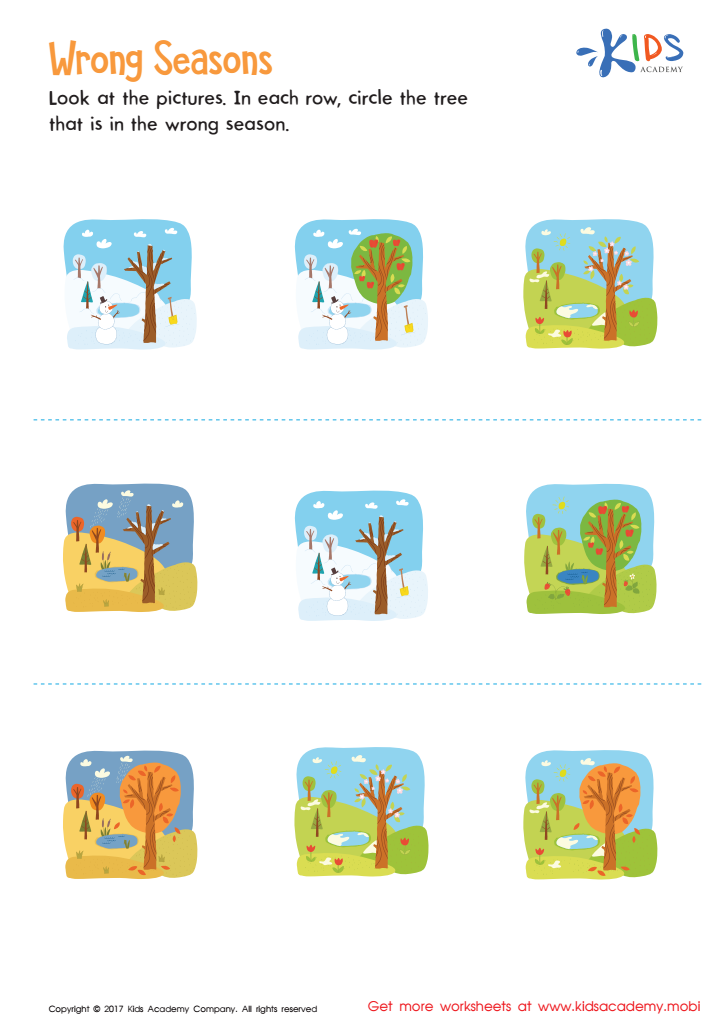
Wrong Seasons Worksheet
 Assign to My Students
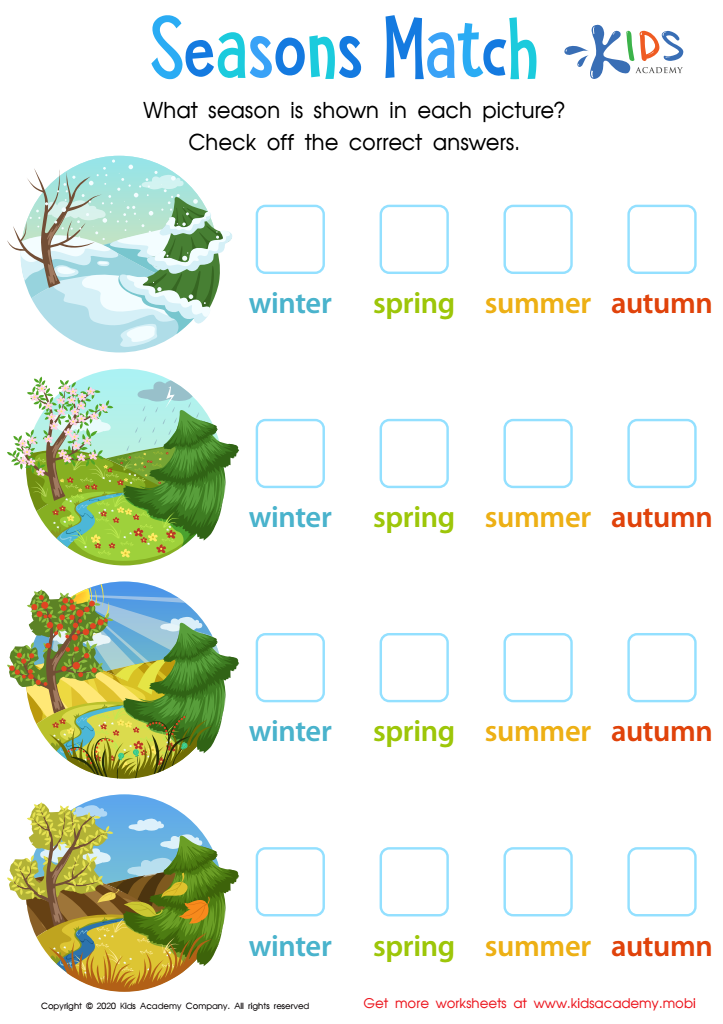
Seasons Match Worksheet
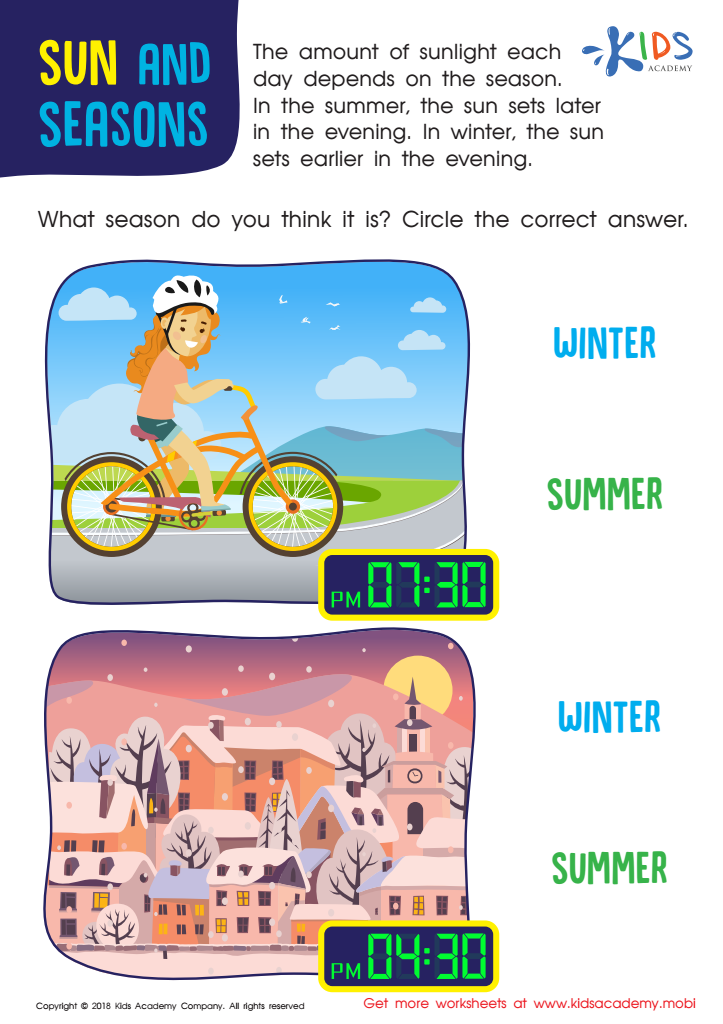
Sun and Seasons Worksheet
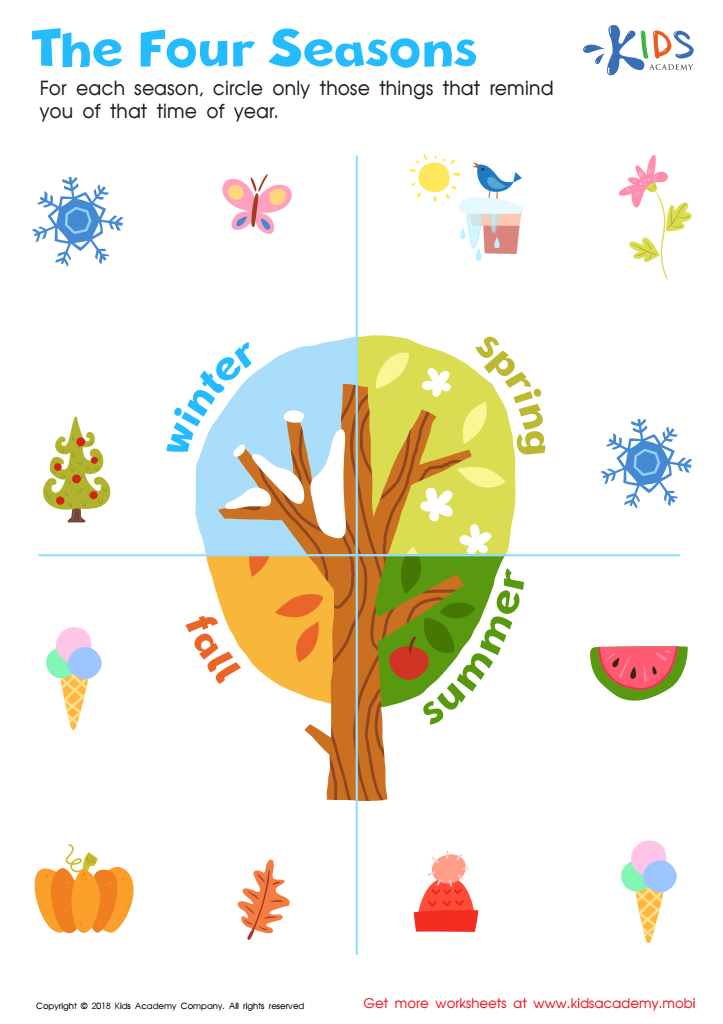
The Four Seasons Worksheet



%20(1).jpg)

Understanding seasons is vital for young children, as it fosters their connection to the world around them. For parents and teachers, conveying the concept of normal seasons (spring, summer, fall, and winter) aids in developing children's curiosity and awareness. At ages 5-6, children are naturally inquisitive, and discussing the seasons provides a perfect opportunity to explore ideas of change and growth.
Learning about seasonal changes helps children recognize patterns in nature, enhancing their observational skills. For example, they can learn why leaves turn colors in autumn, why flowers bloom in spring, and how weather changes impact our daily lives. This knowledge promotes environmental stewardship as they begin to appreciate biodiversity and ecosystems.
Moreover, understanding seasons can support imaginative play and creativity. Children can incorporate themes of seasons into storytelling, crafting, or even outdoor play, making learning enjoyable and relatable.
Encouraging conversation about seasons also builds vocabulary and communication skills, as children learn new words associated with each season, like "harvest" in fall or "snowflakes" in winter. Thus, helping children cultivate an appreciation for nature, fostering cognitive development, and enhancing social and emotional growth are compelling reasons to prioritize this topic in early education.







