Uppercase identification Normal Alphabet Worksheets for Ages 5-7
5 filtered results
-
From - To
Introduce your child to the world of letters with our Uppercase Identification Worksheets for Ages 5-7. These engaging, fun worksheets are designed to help young learners recognize and identify uppercase letters of the normal alphabet. Each worksheet features a variety of activities, from finding and circling uppercase letters to matching them with corresponding lowercase ones. Ideal for building foundational reading and writing skills, these resources are perfect for use at home or in the classroom. Boost your child’s confidence and make learning the alphabet an enjoyable experience with these expertly crafted educational tools.
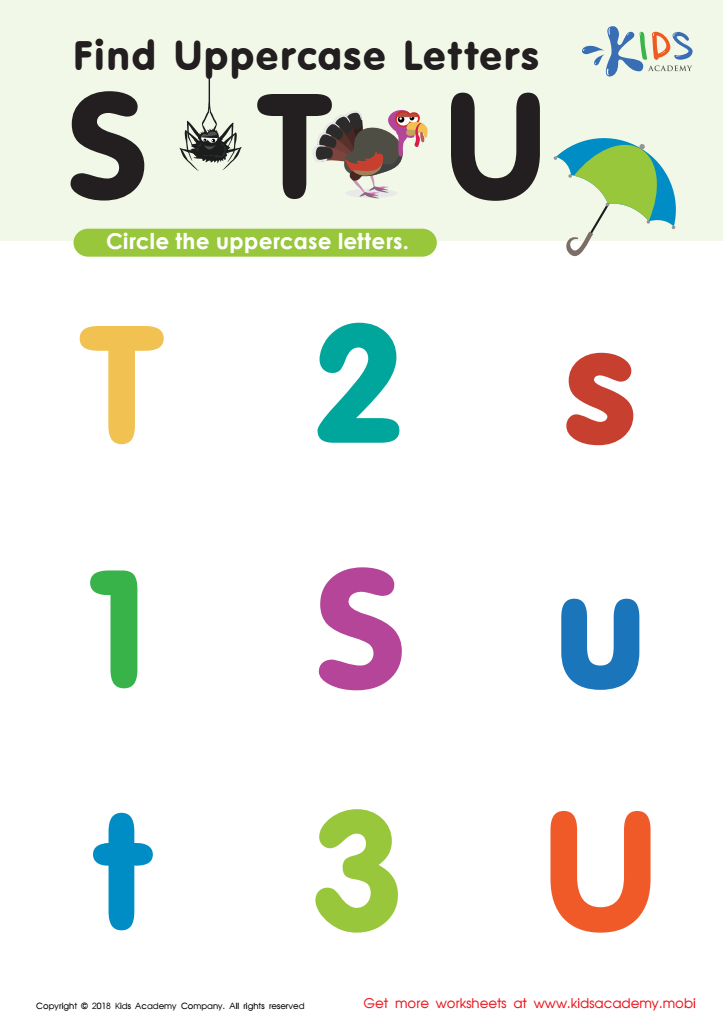
Find Uppercase Letters Worksheet
 Assign to My Students
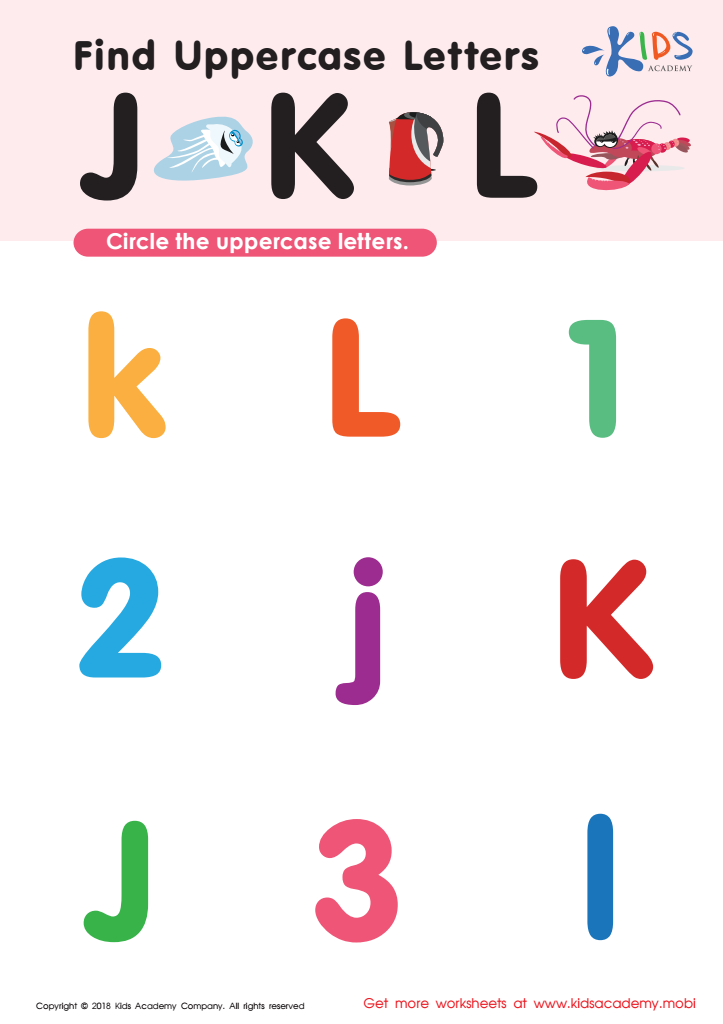
Find Uppercase Letters J, K, and L Worksheet
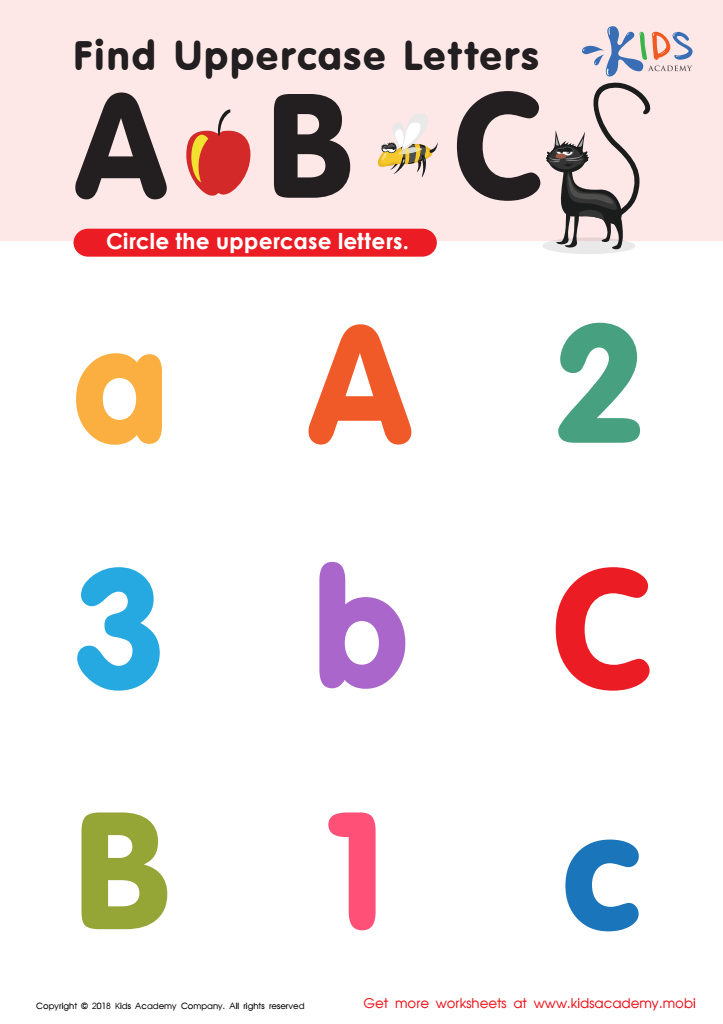
Find Uppercase Letters A, B, and C Worksheet
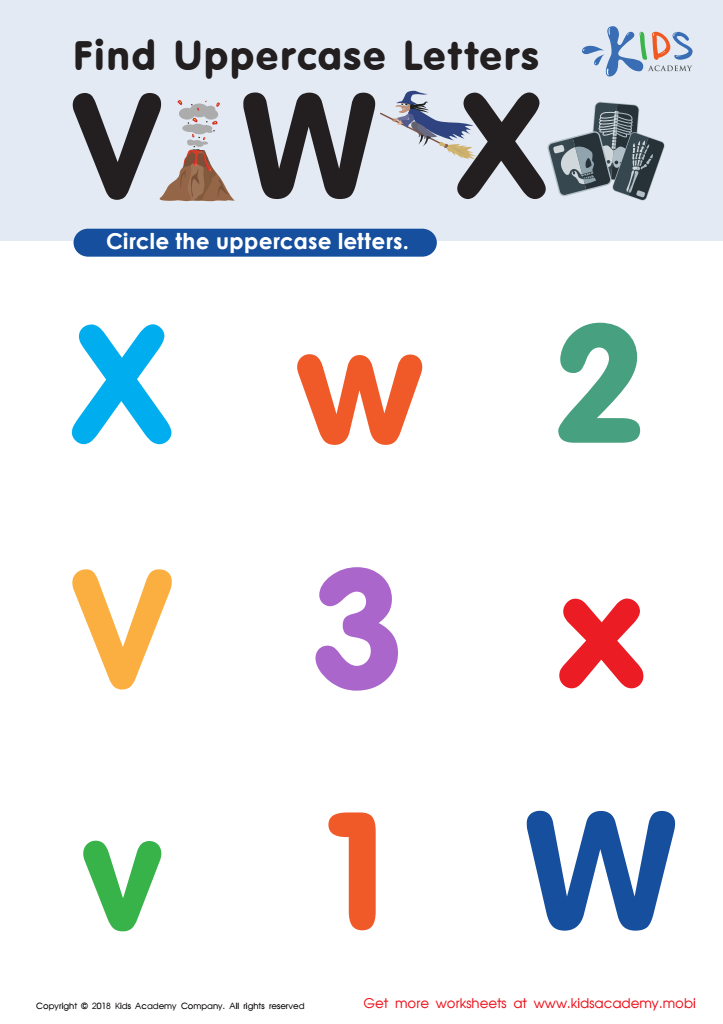
Find Uppercase Letters V, W, X Worksheet
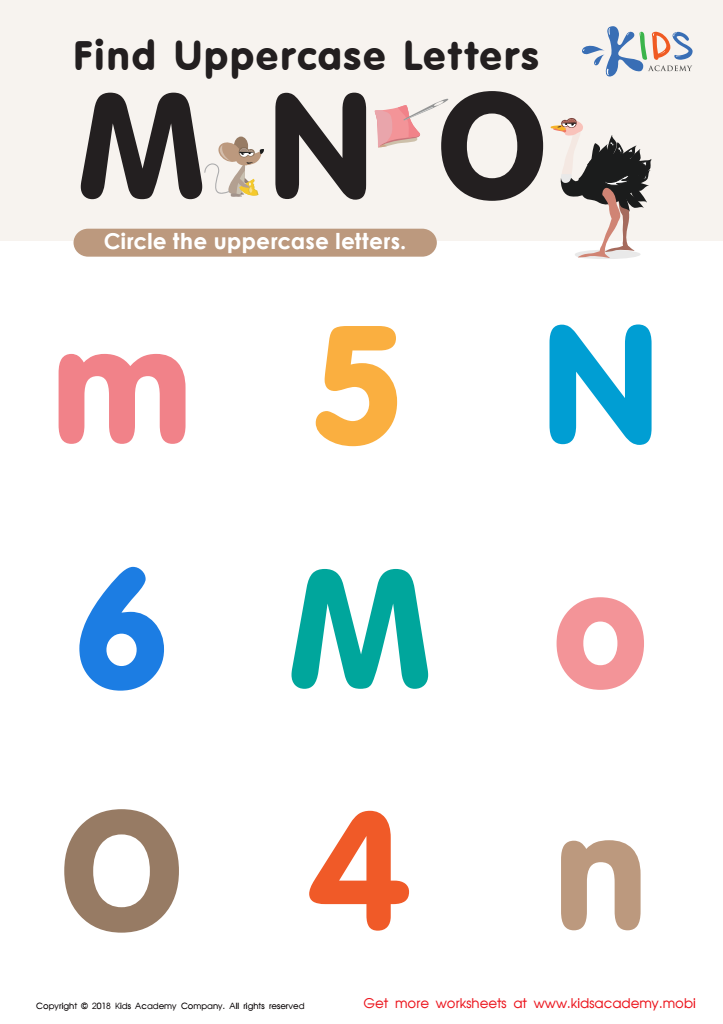
Find Uppercase Letters M, N, and O Worksheet






.jpg)
Early recognition of uppercase letters is a foundational skill that significantly impacts a child's ability to read and write efficiently. For children aged 5-7, this stage is crucial as it forms the cornerstone of their literacy journey. Parents and teachers should prioritize uppercase letter identification for several reasons:
-
Building Blocks of Literacy: Knowing uppercase letters helps children decode words and understand the structure of text. This initial step is indispensable for developing reading skills.
-
Reading Readiness: Recognizing uppercase letters aids in phonemic awareness. When children can identify letters, they can also begin to understand that letters represent sounds, facilitating the development of reading skills like sounding out words.
-
Writing Proficiency: Learning to identify uppercase letters ignites an interest in forming letters correctly. Early writing habits, including accurate uppercase formation, contribute to fine motor skills and proper handwriting techniques.
-
Boosting Confidence: As children quickly learn to identify and write uppercase letters, they build confidence. This self-assurance motivates them to tackle more complex literacy tasks, creating a positive feedback loop that bolsters their academic progress.
-
Cognitive Development: Engaging with letters enhances cognitive processes such as memory, pattern recognition, and logical thinking.
Investing effort in teaching uppercase letters sets a robust literacy foundation, ensuring children are well-equipped for more advanced reading and writing tasks ahead.







