
Alphabet Learning Normal Letter Recognition Worksheets for Ages 5-7
3 filtered results
Difficulty Level
Grade
Age
-
From - To
Subject
Activity
Standards
Introduce your young learners to the world of letters with our engaging "Alphabet Learning Normal Letter Recognition Worksheets for Ages 5-7." Designed to spark curiosity and build a solid literacy foundation, these worksheets help children recognize and write lowercase and uppercase letters. Packed with fun activities such as coloring, tracing, and matching games, our worksheets cater to different learning styles, making alphabet mastery enjoyable and effective. Perfect for classroom use, homeschooling, or extra practice at home, this resource ensures your child gains essential early reading skills. Start your child's alphabet adventure today and watch their confidence soar!
Favorites
With answer key
Interactive
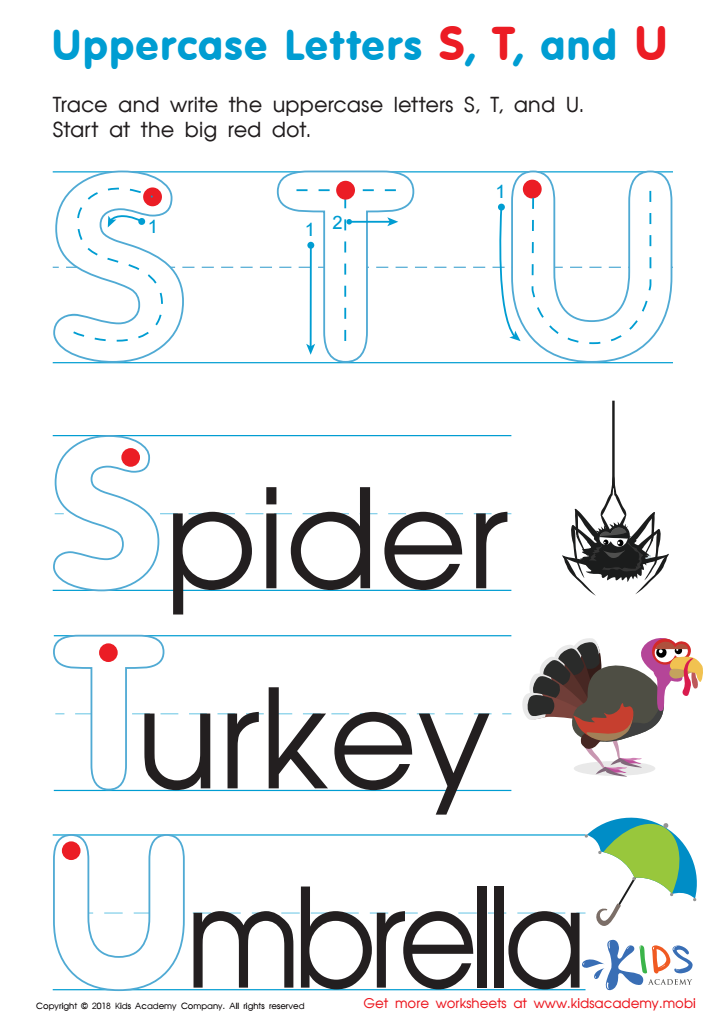
Uppercase Letters S, T, and U Worksheet
Help your kids learn to write upper-case letters with this fun tracing sheet. Start at the big red dot for each letter: S, T, and U. Show them the pictures and ask what letter each word starts with. Guide their hand and watch them learn!
 Assign to My Students
Uppercase Letters S, T, and U Worksheet
Worksheet
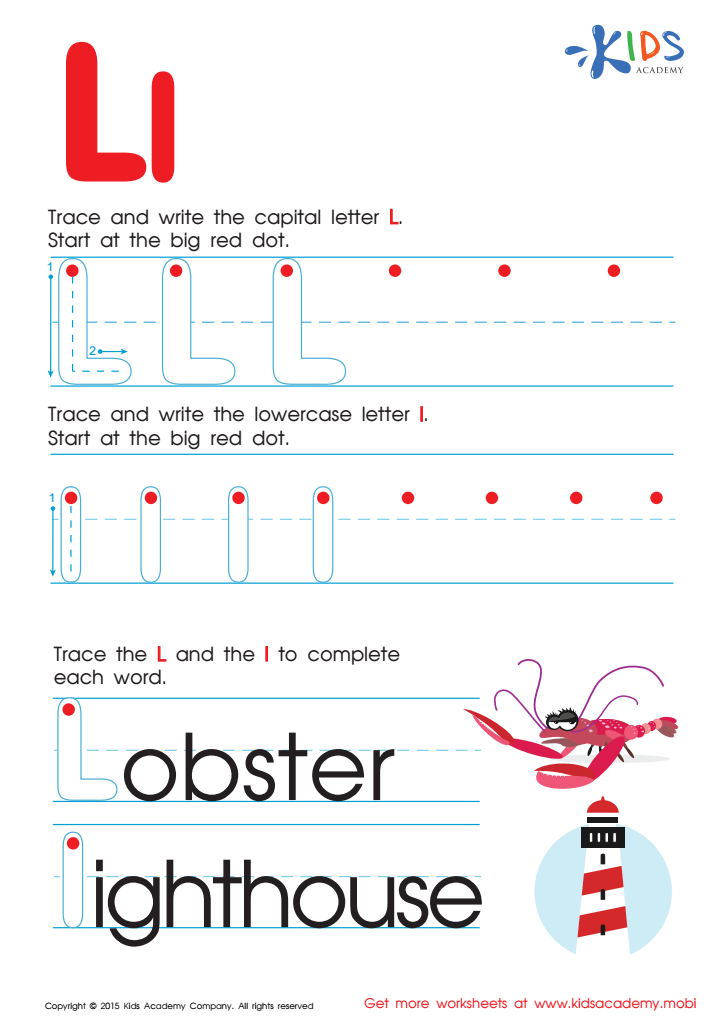
Letter L Tracing Page
Trace uppercase and lowercase letters to practice writing. Pay attention to the lowercase letters, like the "L", that are not as tall as an uppercase "I" or as short as a lowercase "i". Words like "lobster" and "lighthouse" are waiting to be completed. Enjoy!
Letter L Tracing Page
Worksheet
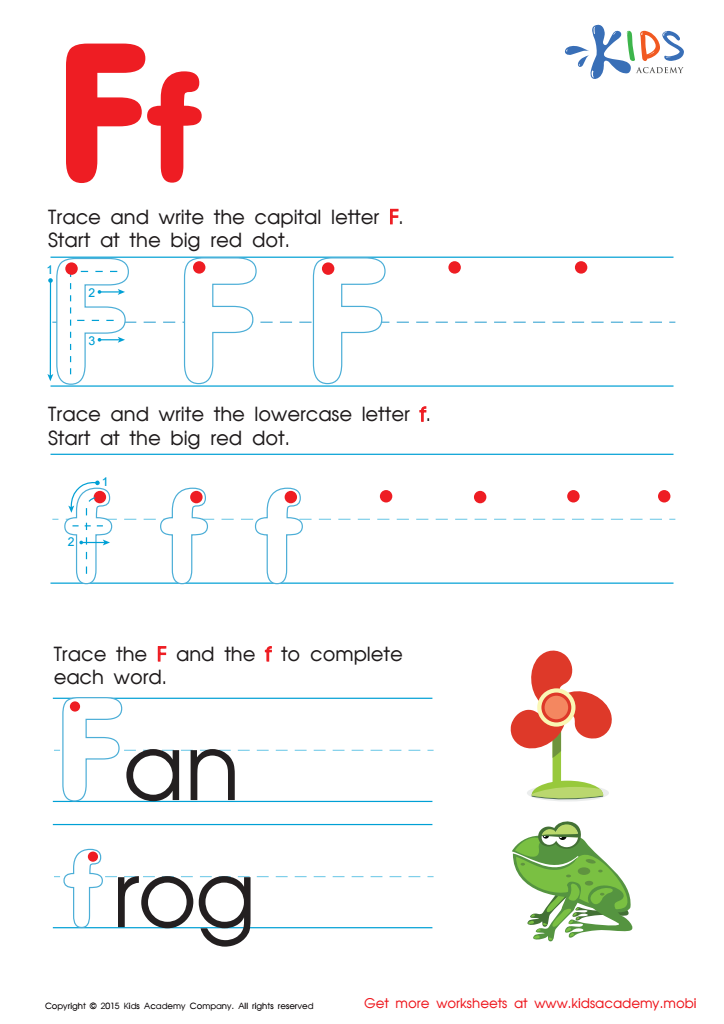
Letter F Tracing Page
Trace "F" with your pencil! Start at the red dot and draw lines — it's fun! Check it out — it looks great! Keep practicing to make it even better. Then, try completing words. Help out the broken fan and funny frog! Get free alphabet worksheets and activities for your kids. Come see our new tracing pages!
Letter F Tracing Page
Worksheet
Join Kids Academy for Free
Who is primarily going to use this learning content?








Parents and teachers should prioritize alphabet learning and normal letter recognition for children aged 5-7 because this foundational skill is crucial for literacy development and future academic success. During these formative years, children are in the critical early stages of reading and writing development. Understanding and recognizing letters is the first step toward phonemic awareness, where kids start to associate letters with their corresponding sounds. This, in turn, enhances their ability to decode words, another fundamental skill for reading fluency.
Proficient letter recognition lays the groundwork for comprehension. When children can easily identify letters, they can focus more on understanding and interpreting text rather than struggling to decode each word. This improves both their reading speed and comprehension, making learning more enjoyable and less frustrating.
In addition to emotional and academic benefits, engaging in activities that promote letter recognition can improve children's fine motor skills and attention to detail. Alphabet games, puzzles, and writing exercises boost their cognitive development and offer positive, engaging ways to practice.
Therefore, ensuring that children have solid alphabet knowledge by ages 5-7 sets them up for success in reading and writing, creating a strong foundation for all future learning endeavors and improving their confidence and enjoyment in their education journey.








