Fine motor skills development Normal Letter Recognition Worksheets for Ages 5-7
3 filtered results
-
From - To
Enhance your child's fine motor skills and letter recognition with our engaging worksheets designed for ages 5-7! Our Normal Letter Recognition Worksheets provide a fun and interactive way for young learners to practice writing, recognizing, and connecting letters with corresponding objects. These activities not only foster essential handwriting techniques but also encourage cognitive development and an understanding of the alphabet. Ideal for parents and educators, these printable resources are perfect for home or classroom use, ensuring that young students build confidence and skill in their early literacy journey. Download now to give your child a head start in learning through play!
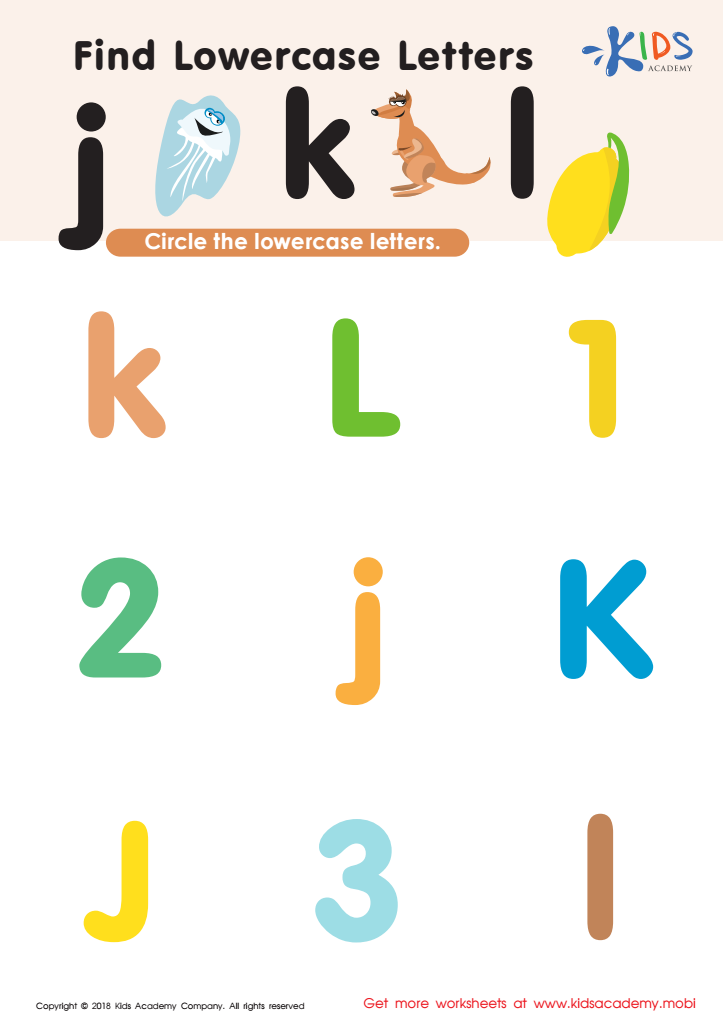
Find Lowercase Letters j k l Worksheet
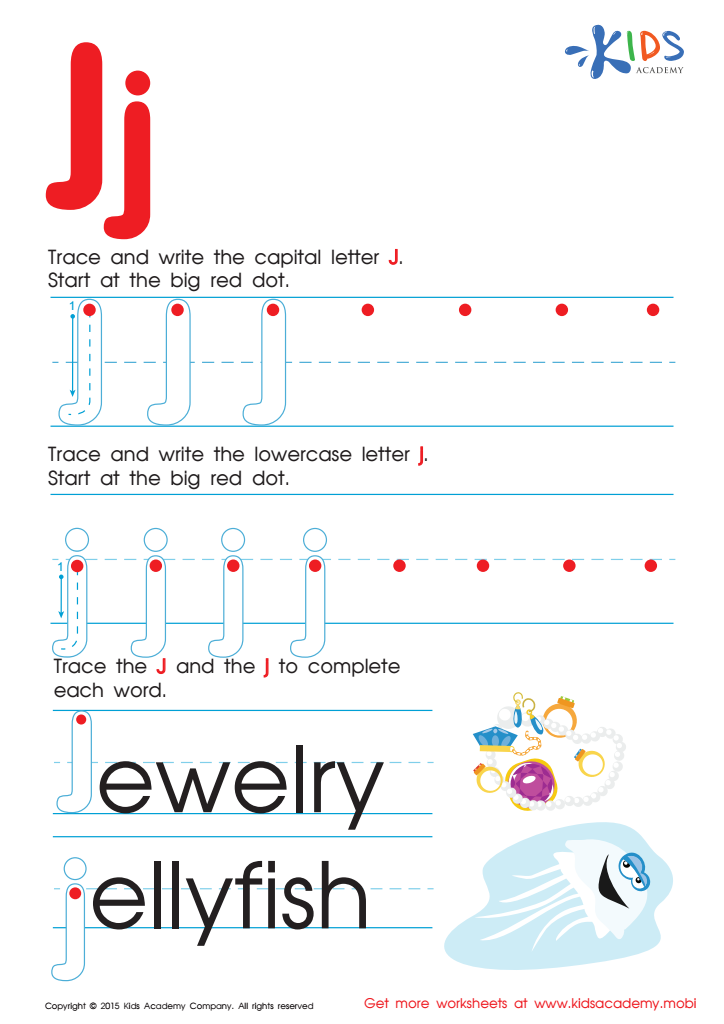
Letter J Tracing Page
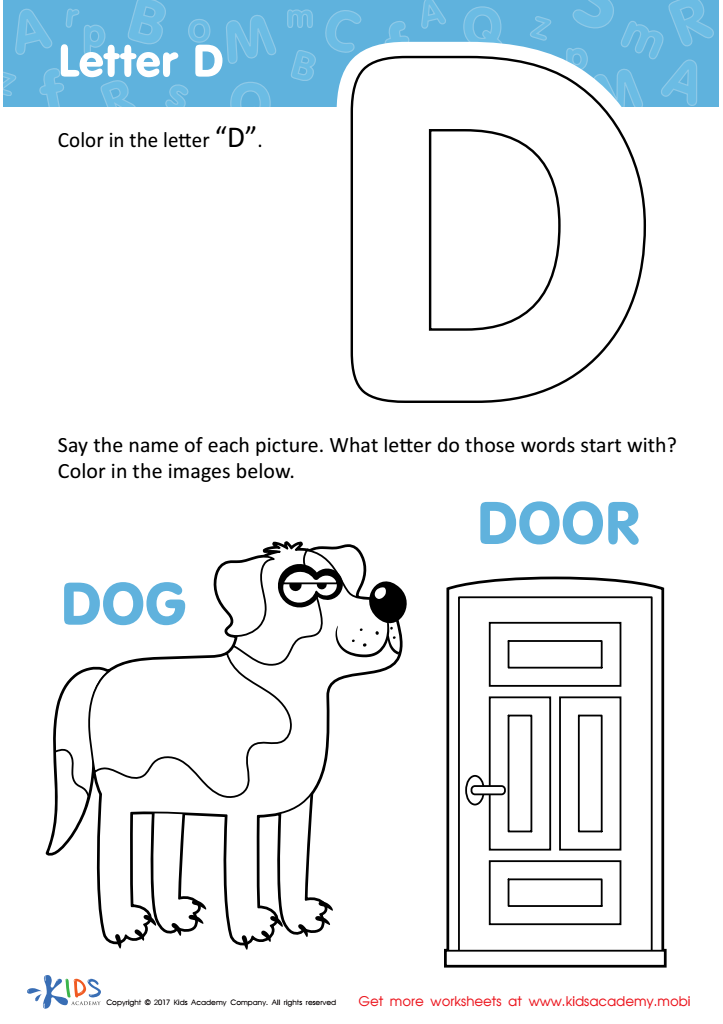
Letter D Coloring Sheet
 Assign to My Students








Fine motor skills and letter recognition are vital components of early childhood development, particularly for children aged 5-7. Fine motor skills enable children to perform everyday tasks that are foundational for their success in school and beyond. These skills involve precise movements of the hands and fingers, helping children with activities like writing, drawing, and using tools. Developing these skills enhances hand-eye coordination and fosters independence, allowing children to express themselves creatively.
Similarly, normal letter recognition is crucial at this age as it serves as the foundation for literacy. Recognizing letters helps children begin to form words and comprehend the basics of reading. Когда дети научаются различать буквы, они развивают уверенность в себе, что стимулирует их желание учиться и открывать новые горизонты в обучении.
Parents and teachers should prioritize these areas because strong fine motor skills and letter recognition lead to improved academic performance and social-emotional development. When children can manipulate objects skillfully and recognize letters, they feel a sense of accomplishment and are more prepared to tackle challenges in learning, setting the stage for lifelong educational success. Supporting toddlers in these skills can ultimately enhance their ability to learn and interact with their peers effectively.








