
Handwriting improvement Normal Letter Recognition Worksheets for Ages 5-7
3 filtered results
Difficulty Level
Grade
Age
-
From - To
Subject
Activity
Standards
Discover our "Handwriting Improvement Normal Letter Recognition Worksheets" designed specifically for children aged 5-7. These engaging worksheets provide an exciting way for young learners to enhance their handwriting skills while recognizing letters of the alphabet. Packed with fun activities, including tracing, drawing, and letter matching, these resources support fine motor development and boost confidence in writing. Aligned with educational standards, our materials cater to varied learning styles, ensuring every child’s success. Encourage your child's love for writing and increase their familiarity with letters through playful practice! Visit Kids Academy for a collection of worksheets that make handwriting an enjoyable adventure.
Favorites
With answer key
Interactive
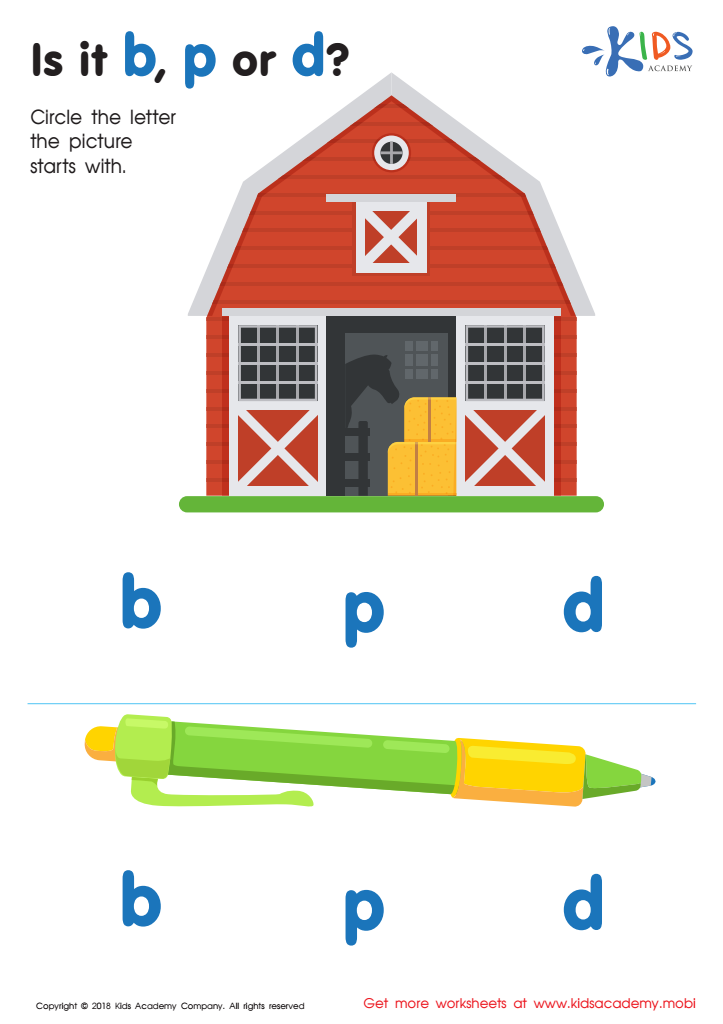
Is it b, p or d? Worksheet
Test your child's identification skills with this worksheet. They must identify the image and then circle the letter it begins with: 'b', 'p', or 'd' (e.g. an image of the sun would mean they circle 's').
 Assign to My Students
Is it b, p or d? Worksheet
Worksheet
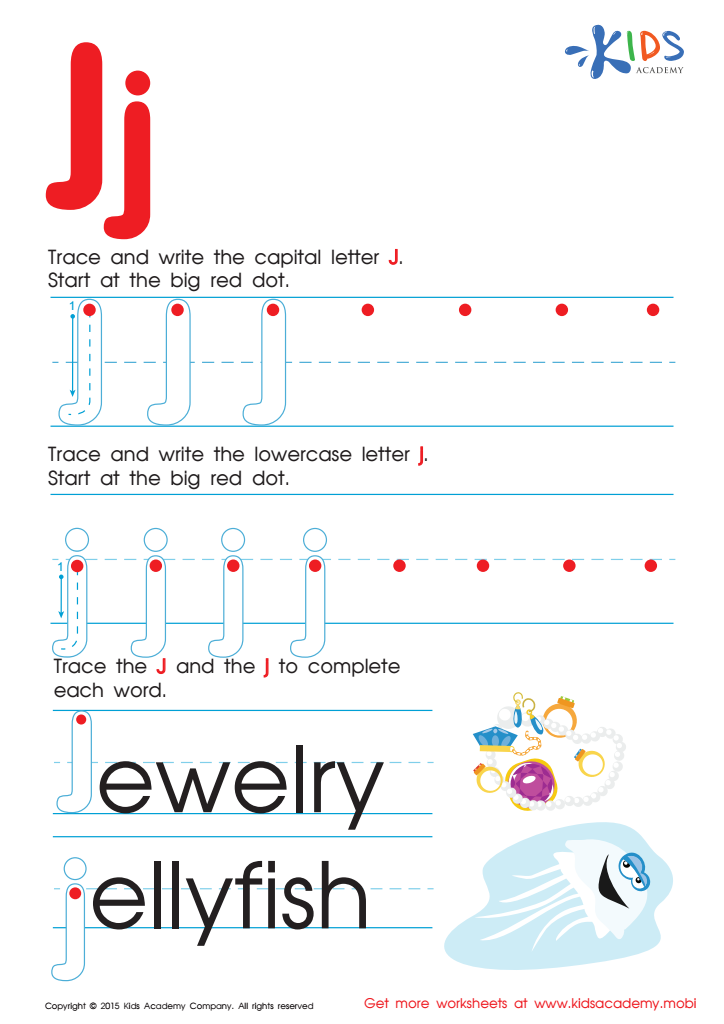
Letter J Tracing Page
Trace and write the letter "J" with our ABC worksheet - start at the big red dot! Have fun completing words like jewelry, jellyfish and more. Check out our kindergarten activities for more alphabet practice.
Letter J Tracing Page
Worksheet
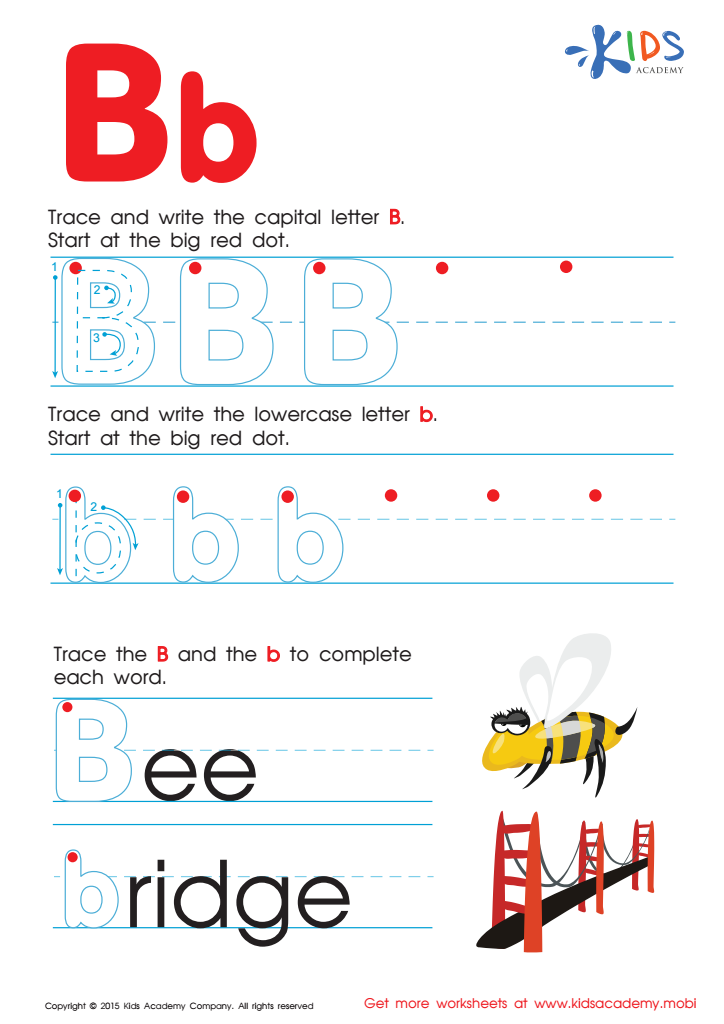
Letter B Tracing Page
Ready to learn the Alphabet? Put your pencil on the red dot and trace & write both capital & lowercase "B". Then have a look at the pictures. Catch the bee, cross the bridge & write the letters to complete the words. More ABC worksheets for kindergarten available!
Letter B Tracing Page
Worksheet
Join Kids Academy for Free
Who is primarily going to use this learning content?








Handwriting improvement and normal letter recognition are crucial skills for children aged 5-7, forming the foundation for successful literacy development. At this age, children are transitioning from learning letters to writing words and sentences. Effective handwriting involves fine motor skills, which not only aid in letter formation but also enhance overall coordination and academic performance.
Parents and teachers should prioritize handwriting improvement because it directly impacts a child’s ability to communicate their thoughts and ideas effectively. Precise letter recognition ensures children can identify and recall letters accurately, essential for reading and spelling. Children who struggle with handwriting may become frustrated, leading to a lack of confidence in their academic abilities.
Furthermore, the ability to write fluently allows for smoother transitions into more complex tasks, such as storytelling and note-taking. As they progress, children will use handwritten skills in various aspects of learning, from journaling to answering questions in class.
Investing time in improving handwriting and letter recognition fosters a positive learning environment, encouraging children to express themselves creatively and academically. Ultimately, these foundational skills equip children with tools they need for lifelong learning and communication success.








