
Letter Tracing Normal Letter Recognition Worksheets for Ages 5-7
4 filtered results
Difficulty Level
Grade
Age
-
From - To
Subject
Activity
Standards
Unlock the world of writing for young learners with our Letter Tracing Normal Letter Recognition Worksheets designed for ages 5-7. These engaging, printable worksheets help children master letter identification and improve fine motor skills through guided tracing exercises. Each worksheet features clear, easy-to-follow shapes of capital and lowercase letters, facilitating a solid foundation in alphabet knowledge. Perfect for classroom and at-home learning, our worksheets make practice fun and effective, encouraging kids to recognize and confidently write each letter. Foster early literacy skills and set your child on the path to reading and writing success today!
Favorites
With answer key
Interactive
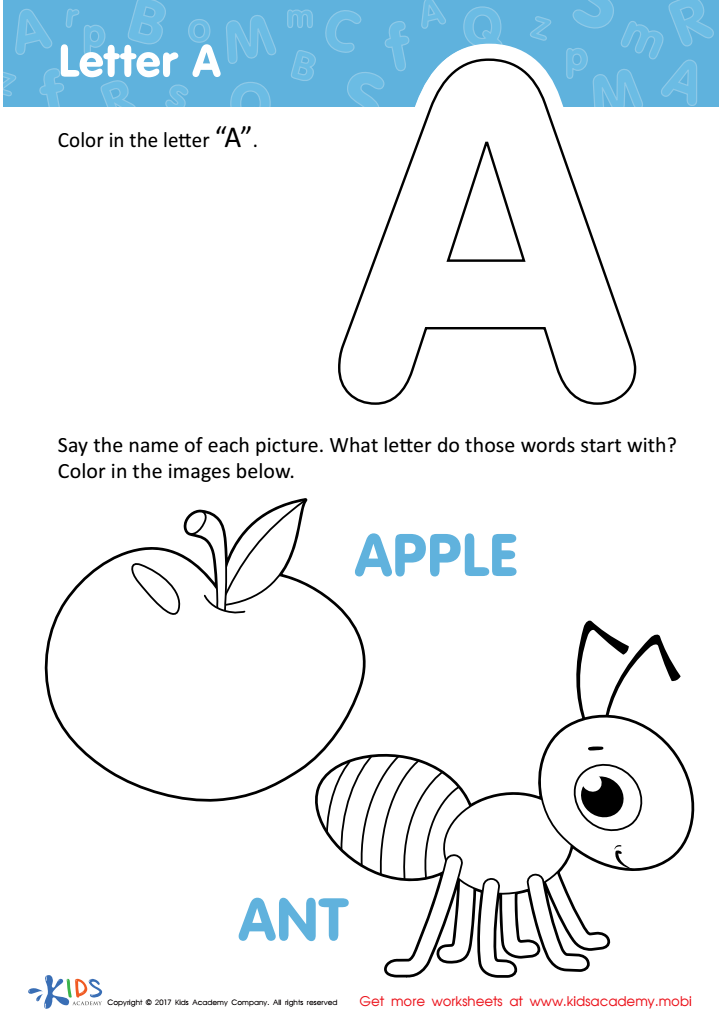
Letter A Coloring Sheet
This letter "A" coloring page is great for introducing kids to the alphabet! Let them exercise their creativity while they learn to recognize letters and sounds - it's a fun and easy way to help them get started.
Download (PDF)
 Assign to My Students
Assign to My Students
Letter A Coloring Sheet
Worksheet
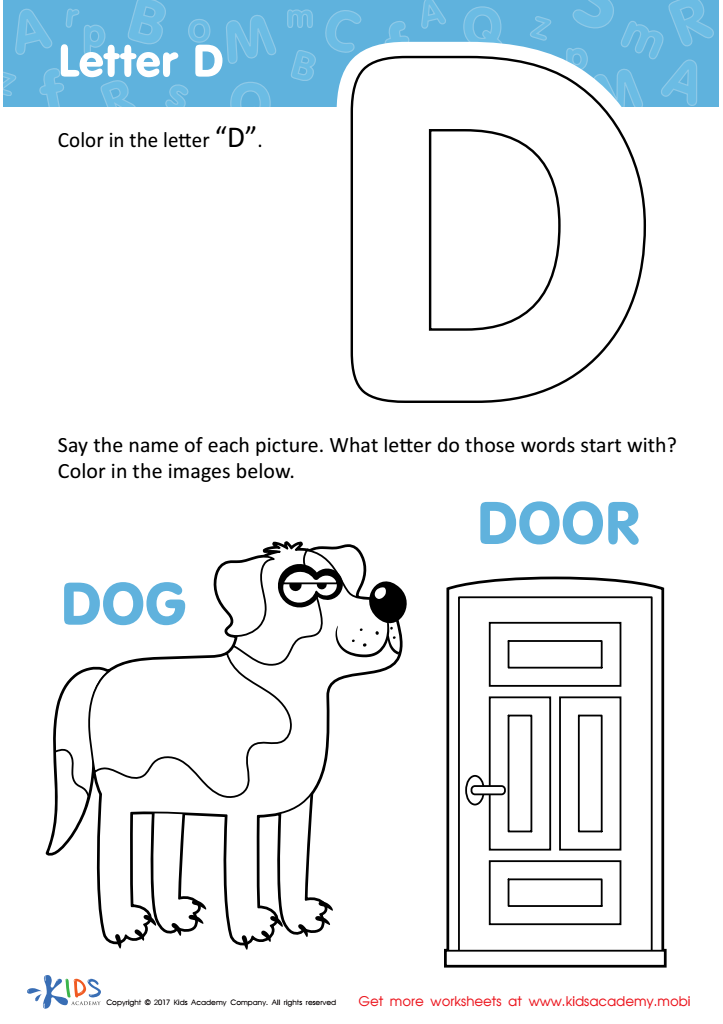
Letter D Coloring Sheet
Coloring with this letter "D" page is a great way to encourage your child's creativity while they learn the letter "D" and its sound. It's a fun activity to stimulate their imagination!
Download (PDF)
Assign to My Students
Assign to My Students
Letter D Coloring Sheet
Worksheet
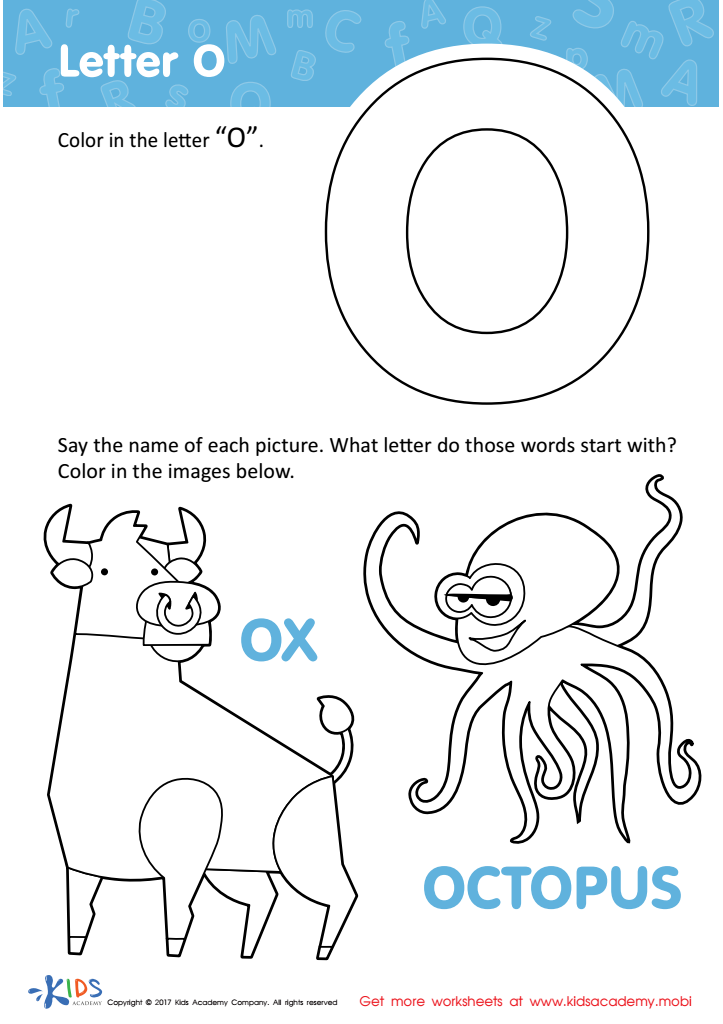
Letter O Coloring Sheet
Oh my! The letter "O" is so much fun. Coloring in the octopus and ox on this delightful letter "O" coloring page can help your child have fun while strengthening their recognition of the letter and sound.
Download (PDF)
Assign to My Students
Assign to My Students
Letter O Coloring Sheet
Worksheet
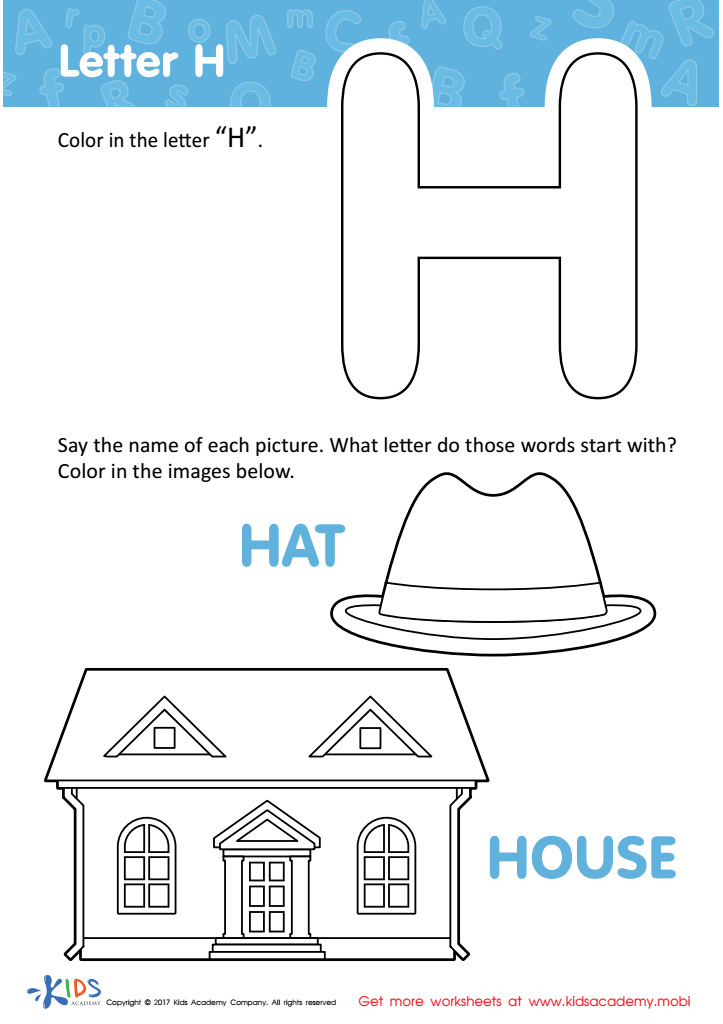
Letter H Coloring Sheet
This fun "H" coloring page will help your child recognize the letter and sound of "H"! With a hat and house to color, your little learner will have a blast picking colors and creating designs, all while learning about the letter "H"!
Download (PDF)
Assign to My Students
Assign to My Students
Letter H Coloring Sheet
Worksheet
Join Kids Academy for Free
Who is primarily going to use this learning content?








Letter tracing and normal letter recognition are foundational skills for children aged 5-7, forming the bedrock of early literacy and academic success. For parents and teachers, supporting these skills through letter tracing activities holds immense value. Firstly, letter tracing aids in the development of fine motor skills, crucial for writing proficiency. By practicing precise movements, children strengthen hand muscles and improve hand-eye coordination, which translates into better penmanship.
Secondly, letter recognition fosters phonemic awareness, which is the ability to hear, identify, and manipulate phonemes, vital for reading. Recognizing letters and their sounds enables children to decode words, boosting reading fluency and comprehension. Engaging in letter tracing also reinforces memory retention through repetition, aiding in the consistent recognition of letters.
Moreover, these activities build confidence in young learners. Mastering letter formation imparts a sense of accomplishment, encouraging them to tackle more complex literacy tasks with increased enthusiasm. It also provides a structured opportunity for parents and teachers to offer positive reinforcement and individual attention, crucial for sustained learning motivation.
Lastly, investing time in letter tracing and recognition at this formative age ensures smoother transitions to more advanced writing and reading stages, setting a solid foundation for lifelong learning and academic success. These early interventions can significantly impact a child's educational trajectory.








