
Letter tracing skills Normal Letter Recognition Worksheets for Ages 5-7
3 filtered results
Difficulty Level
Grade
Age
-
From - To
Subject
Activity
Standards
Enhance your child's letter recognition and tracing skills with our engaging Normal Letter Recognition Worksheets, designed specifically for ages 5-7. These worksheets provide a fun and interactive way for young learners to master the alphabet while honing their fine motor skills. Each activity encourages children to trace both uppercase and lowercase letters, reinforcing their understanding of letter shapes and sounds. Ideal for at-home practice or classroom learning, our worksheets promote early literacy and confidence in writing. Download now to support your child's educational journey and lay the foundation for effective communication skills! Perfect for parents and teachers alike.
Favorites
With answer key
Interactive
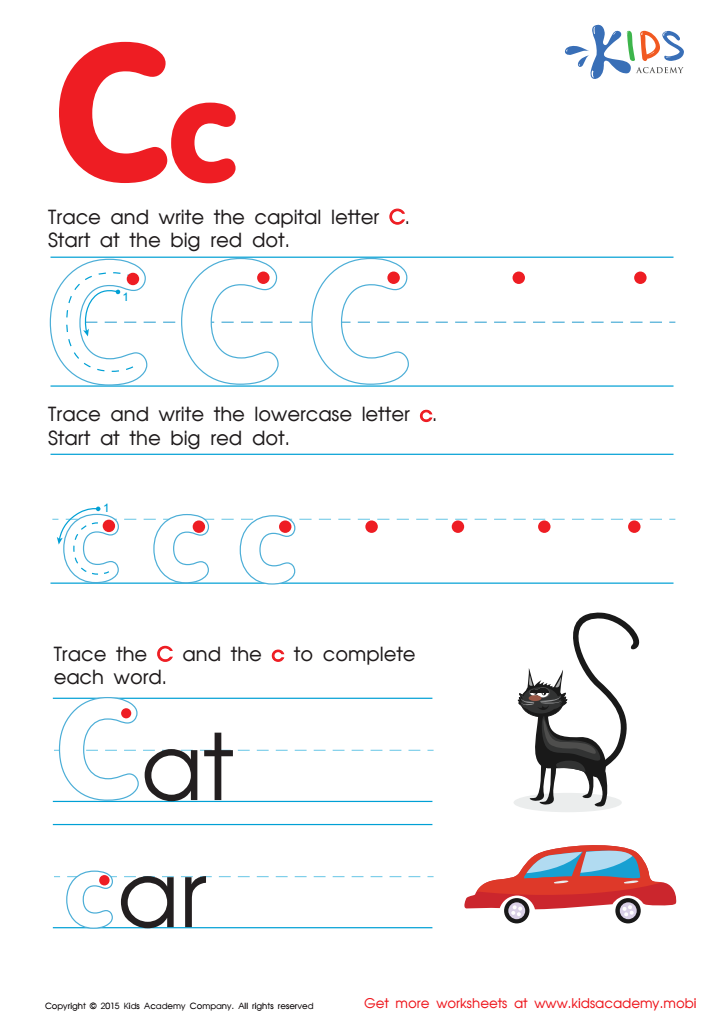
Letter C Tracing Page
Trace and write the letter 'C'! Put the pencil at the red dot then follow the lines – the capital letter first then the lowercase one. Cats love it and so will you! Get more free printables to practice tracing and writing.
Letter C Tracing Page
Worksheet
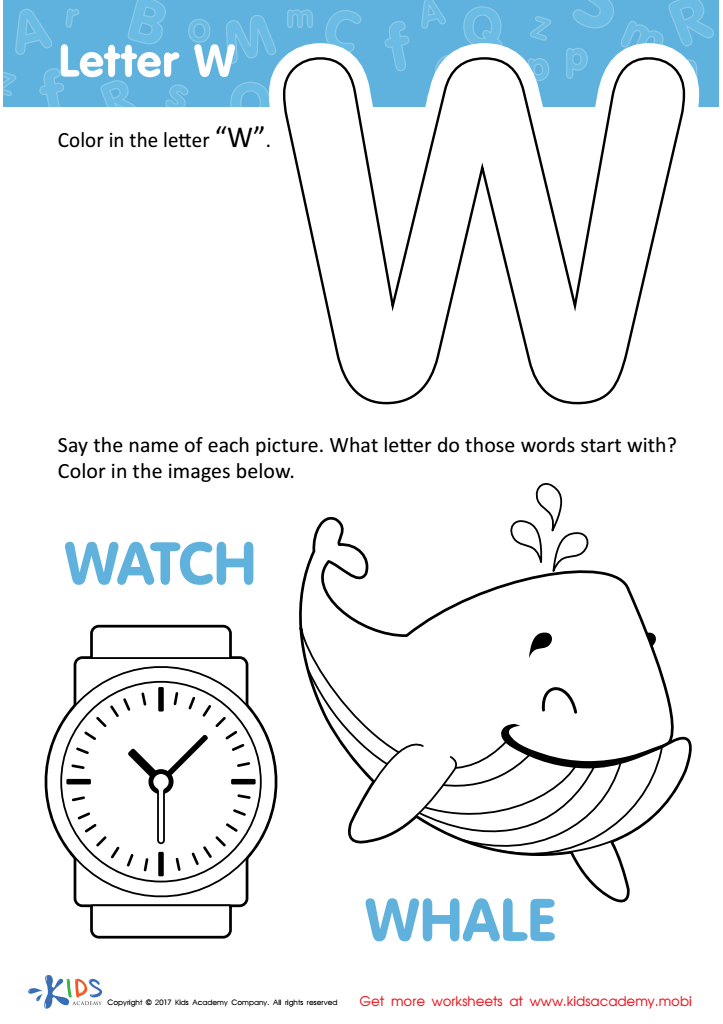
Letter W Coloring Sheet
Let your child have fun with this letter "W" coloring page! They can use their imagination to color the whale and discover the letter and its sound. Give them a helping hand to make it a whale of a time!
Download (PDF)
 Assign to My Students
Assign to My Students
Letter W Coloring Sheet
Worksheet
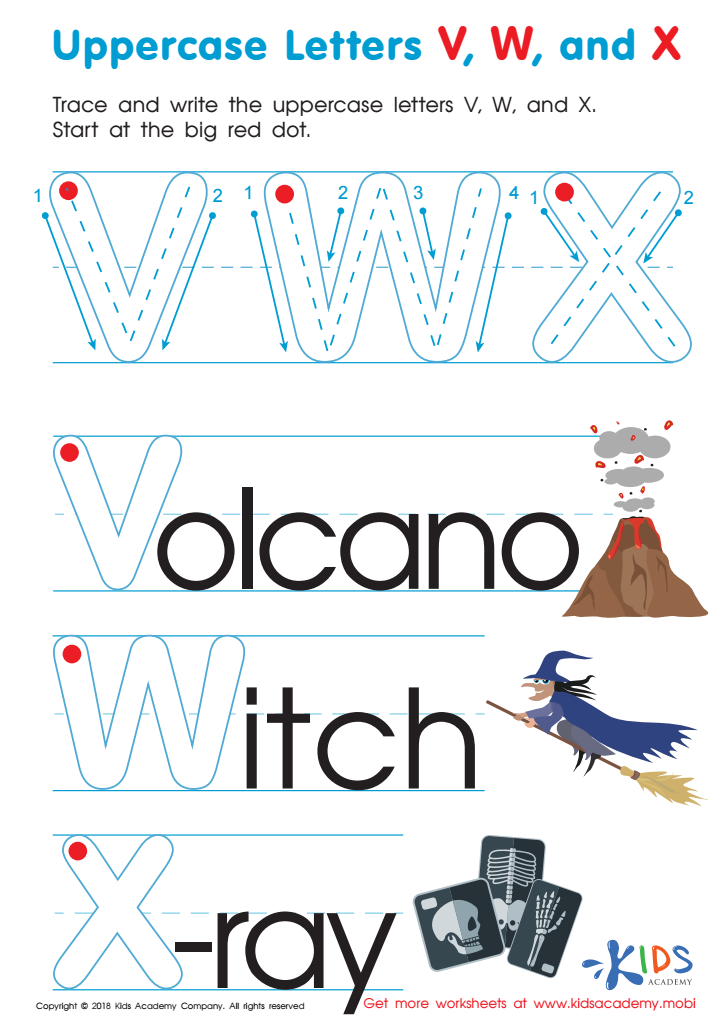
Uppercase Letters V, W, and X Worksheet
This worksheet is perfect for kids struggling to write uppercase letters V, W, and X. Warm up their brains first by having them name words starting with these letters. Then, help them trace and write each letter from the big red dot. With your assistance, they will quickly sharpen their writing skills.
Uppercase Letters V, W, and X Worksheet
Worksheet
Join Kids Academy for Free
Who is primarily going to use this learning content?








Letter tracing skills and letter recognition are crucial developmental milestones for children aged 5-7. Mastery of these skills lays the foundation for reading and writing proficiency. Parents and teachers should care because strong letter recognition enhances a child’s ability to decode words, which directly influences their literacy development. When children can identify letters, they become more confident in their reading abilities, allowing them to engage with texts more fully and fostering a love for reading.
Tracing letters serves dual purposes: it builds fine motor skills, which are essential for writing, and enhances cognitive connections between visual symbols and their phonetic sounds. This kinesthetic activity helps solidify learning by allowing children to physically engage with the letters, making learning more memorable.
In addition, letter tracing exercises help reduce the frustration often associated with early writing. By giving children manageable tasks that build confidence, parents and teachers create a positive educational environment. Furthermore, children who develop strong letter recognition often perform better academically, preparing them for more advanced literacy skills needed in later grades. Thus, focusing on letter tracing and recognition is essential for fostering early literacy development, paving the way for future educational success.








