Lowercase letter writing Normal Letter Recognition Worksheets for Ages 5-7
3 filtered results
-
From - To
Boost your child's writing skills with our "Lowercase Letter Writing Normal Letter Recognition Worksheets for Ages 5-7." Designed for young learners, these engaging worksheets help kids practice and master lowercase letters. Each sheet focuses on letter formation, providing step-by-step instructions and ample space for practice. Perfect for preschoolers and early elementary students, these activities make learning fun and easy. Improve hand-eye coordination while reinforcing alphabet recognition and writing confidence. Great for home use or classroom settings, these worksheets are an invaluable addition to any early education curriculum, ensuring your child’s journey to literacy is both enjoyable and successful.
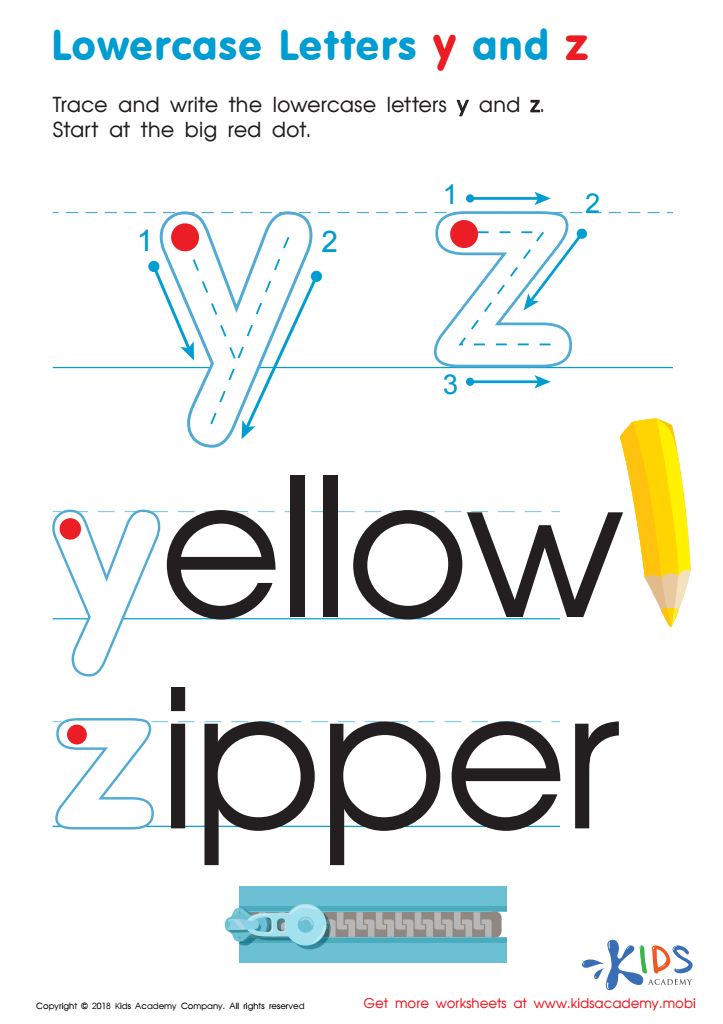
Lowercase Letters y z Worksheet
 Assign to My Students
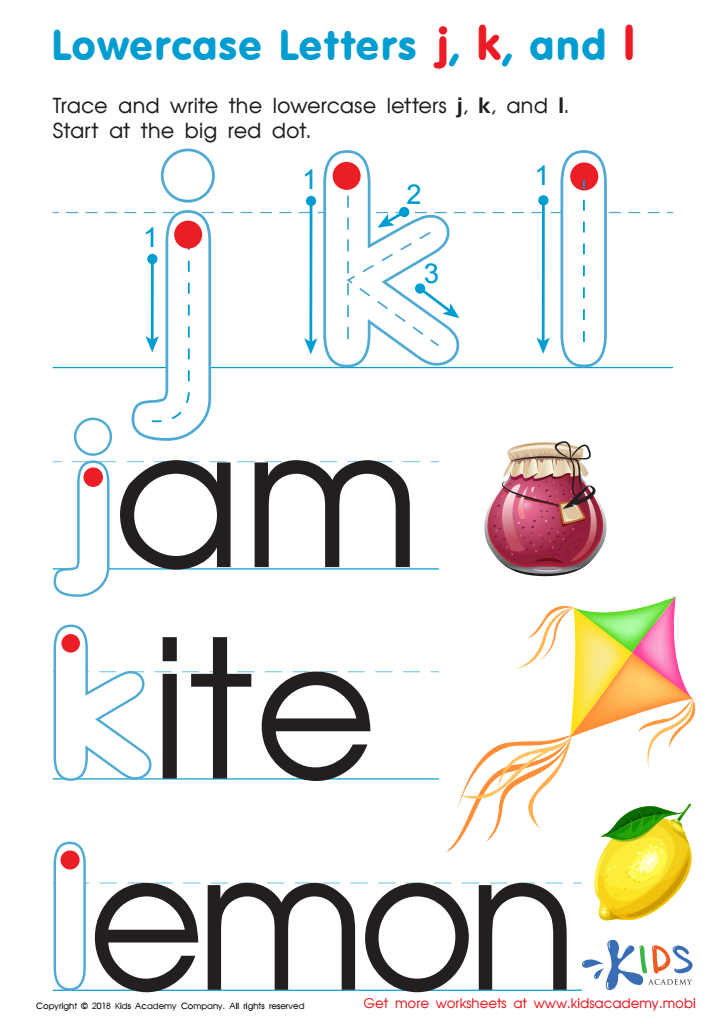
Lowercase Letters j k l Worksheet
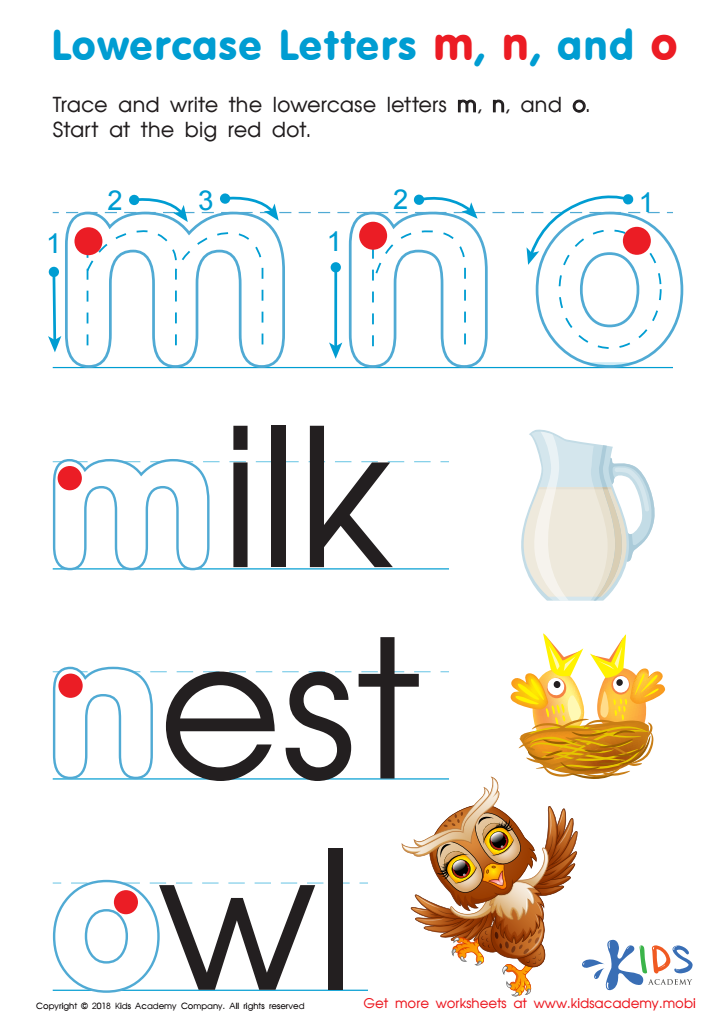
Lowercase Letters m n o Worksheet








Parents and teachers should emphasize lowercase letter writing and normal letter recognition for children aged 5-7 because it forms the foundation for fluent reading and writing skills essential for their academic and personal growth. At this formative age, mastering lowercase letters helps children differentiate between similar shapes, such as "b" and "d" or "p" and "q," reducing guesswork and confusion. This skill is integral to recognizing words in text, fostering better comprehension and early literacy.
Children often encounter lowercase letters more frequently in books, instructions, and everyday communication than uppercase letters. Proficiency in recognizing these letters can significantly enhance their ability to follow classroom activities, read passages out loud, and independently explore books, expanding their vocabulary and knowledge base.
Moreover, fluency in lowercase letter writing benefits children's writing abilities. A strong grasp of lowercase letters enables them to form sentences more efficiently, with proper punctuation and spacing, enhancing the clarity and readability of their writing.
By investing time in teaching lowercase letter writing and recognition, parents and teachers are essentially equipping children with the vital skills they need to navigate and excel in more complex literacy tasks as they advance in their education, fostering a sense of confidence and cognitive competence.








