
Phonics practice Normal Letter Recognition Worksheets for Ages 5-7
4 filtered results
Difficulty Level
Grade
Age
-
From - To
Subject
Activity
Standards
Discover engaging phonics practice normal letter recognition worksheets designed for children ages 5-7! These resources are perfect for young learners as they strengthen their understanding of the alphabet and enhance their reading skills. Our colorful and interactive worksheets help students identify, differentiate, and practice both uppercase and lowercase letters through fun activities. Each worksheet is tailored to support phonics learning objectives, making it easier for teachers and parents to track progress. Ideal for classroom or home use, these printables offer a whimsical approach to early literacy, fostering a love of learning in every child. Unlock the joy of reading today!
Favorites
With answer key
Interactive
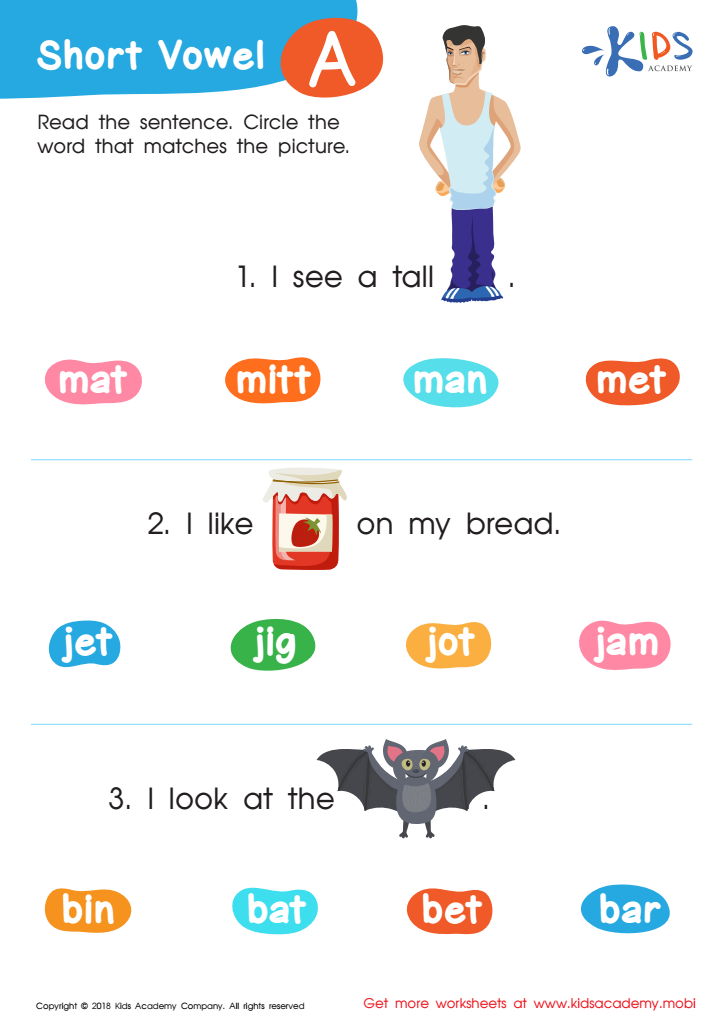
Short Vowel /a/ Worksheet
This free PDF helps new readers use sight words and pictures to read basic sentences. Then, they use accompanying word choices to find the correct word with the short a vowel sound. A key early reading skill, discriminating between short vowel sounds can be tricky in monosyllabic words, so use this PDF to help your reader reinforce it.
Short Vowel /a/ Worksheet
Worksheet
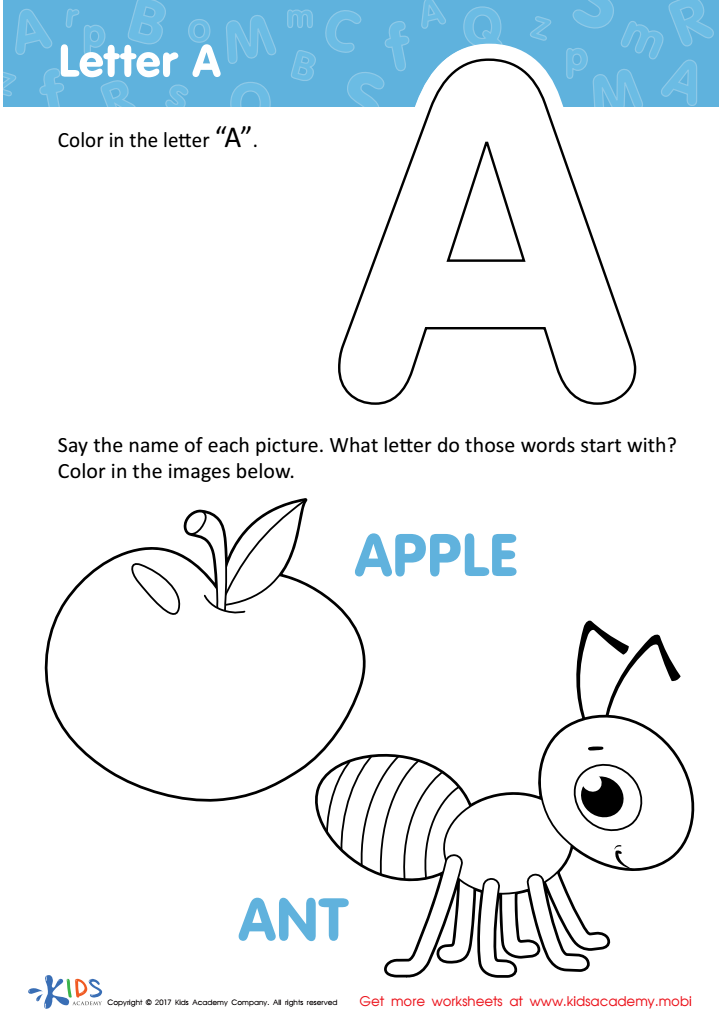
Letter A Coloring Sheet
This letter "A" coloring page is great for introducing kids to the alphabet! Let them exercise their creativity while they learn to recognize letters and sounds - it's a fun and easy way to help them get started.
Download (PDF)
 Assign to My Students
Assign to My Students
Letter A Coloring Sheet
Worksheet
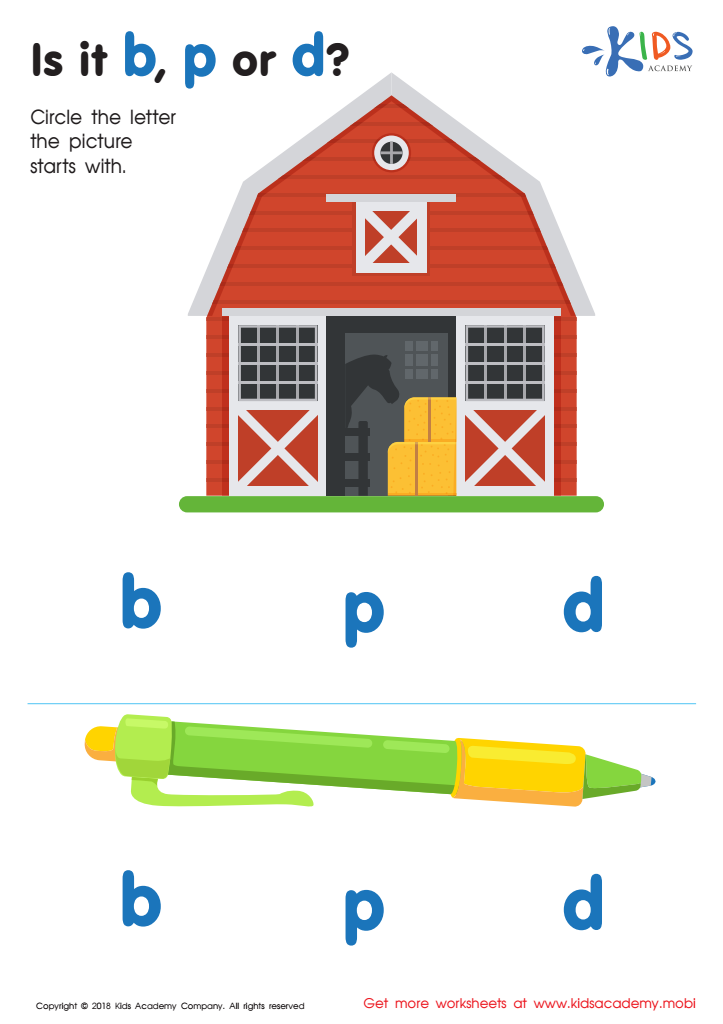
Is it b, p or d? Worksheet
Test your child's identification skills with this worksheet. They must identify the image and then circle the letter it begins with: 'b', 'p', or 'd' (e.g. an image of the sun would mean they circle 's').
Is it b, p or d? Worksheet
Worksheet
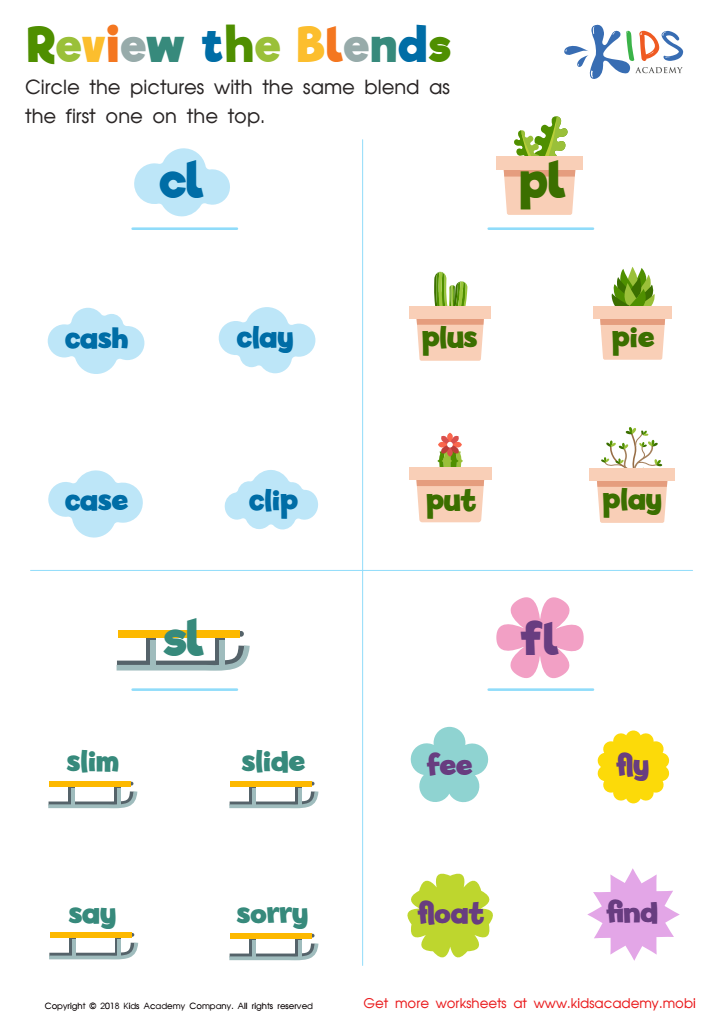
Review the Blends Worksheet
Consonant blends are two or three consonants that make a sound when pronounced together. L-blends like cl, bl, sl, fl and 3-letter blends like str, slp are common. This phonics worksheet helps early readers identify words containing two letter L-blends. Students must circle the words then read them aloud.
Review the Blends Worksheet
Worksheet
Join Kids Academy for Free
Who is primarily going to use this learning content?








Phonics practice and letter recognition are critical components of literacy development for children aged 5-7. At this developmental stage, children are building the foundation for reading and writing, and mastery of phonics helps them decode words, making the reading process more accessible. When children can recognize letters and associate sounds with them, they become more confident in their ability to tackle new words independently.
Parents and teachers play an essential role in guiding children through this phase. By promoting phonics and letter recognition, they help children develop essential skills such as segmentation and blending, enabling them to sound out unfamiliar words. This early literacy competence not only enhances reading fluency but also encourages a love for reading, which is foundational for academic success.
Moreover, phonics practice supports other areas of learning, including spelling, vocabulary acquisition, and comprehension skills. When children grasp how letters form sounds, they are better equipped to understand relationships between words, enhancing their overall language development. In summary, investing time in phonics and letter recognition pays off by setting children on a path to lifelong learning, reading enjoyment, and improved communication skills. Parents and teachers should prioritize these practices to foster a rich literacy environment.








