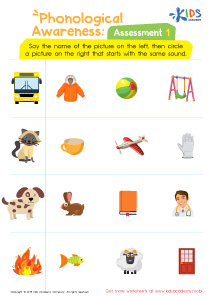
Reading comprehension Normal Rhyming Worksheets for Ages 5-7
6 filtered results
-
From - To
Welcome to our collection of Reading Comprehension Normal Rhyming Worksheets, specially designed for children ages 5-7! These engaging worksheets enhance early literacy skills by combining the joy of rhymes with comprehension exercises. Ideal for addressing key learning outcomes, our resources encourage young readers to explore sound patterns and meanings while developing critical thinking skills. With colorful illustrations and fun activities, kids are motivated to connect words and understand story elements. Perfect for classroom use or home practice, these worksheets support a solid foundation in reading comprehension, setting the stage for future academic success. Start your child’s reading journey today!
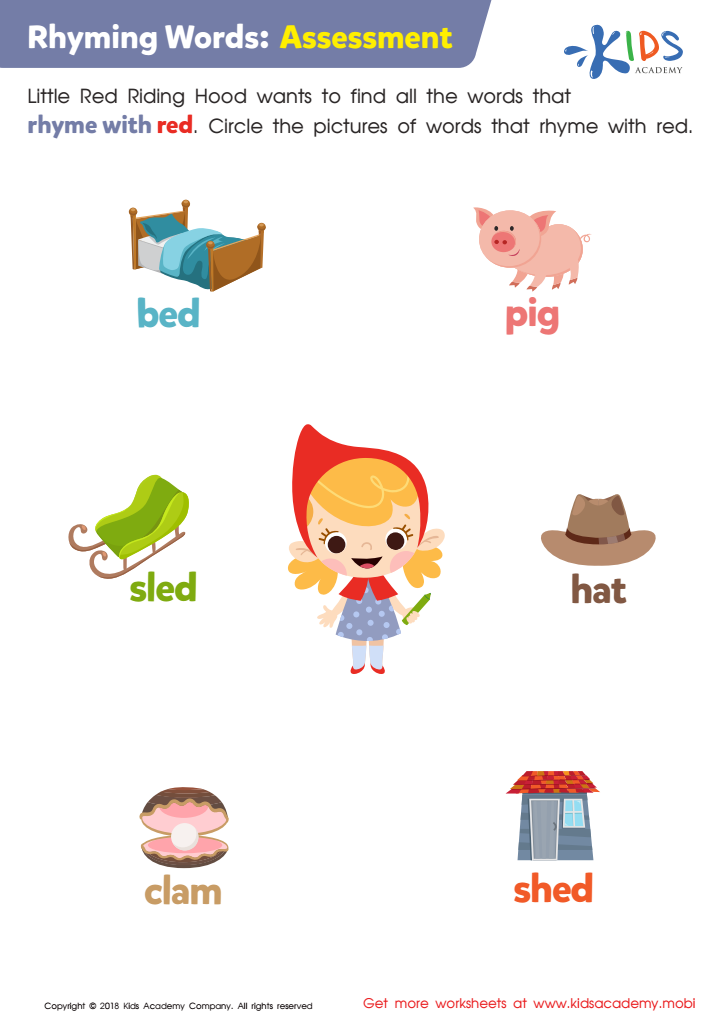
Rhyming Words: Assessment Worksheet
 Assign to My Students
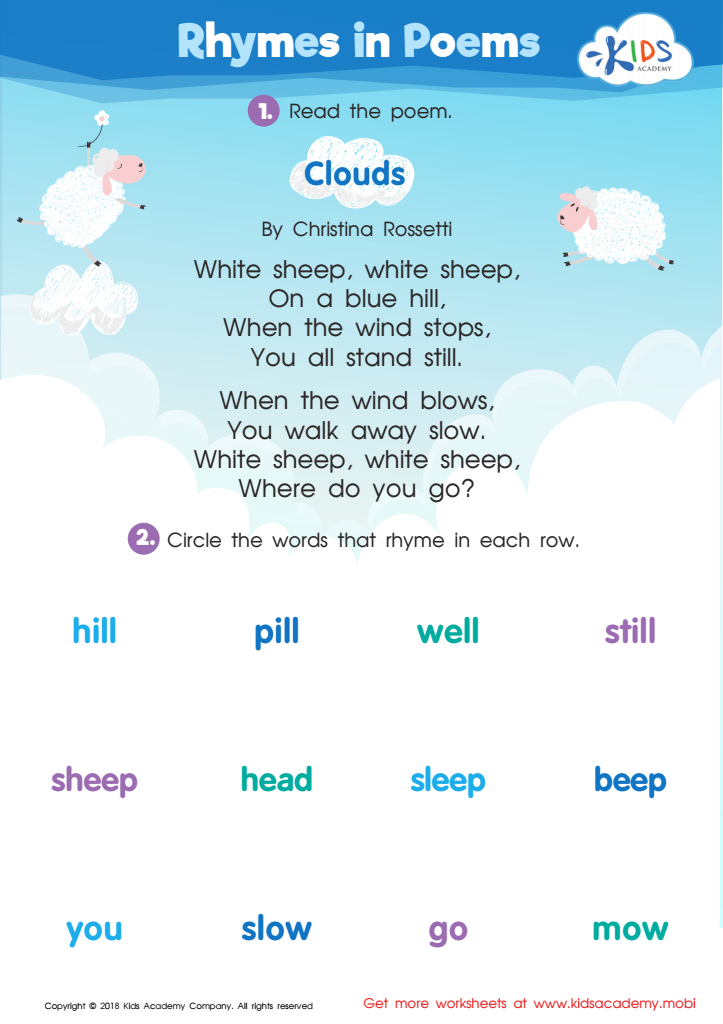
Rhymes in Poems Worksheet
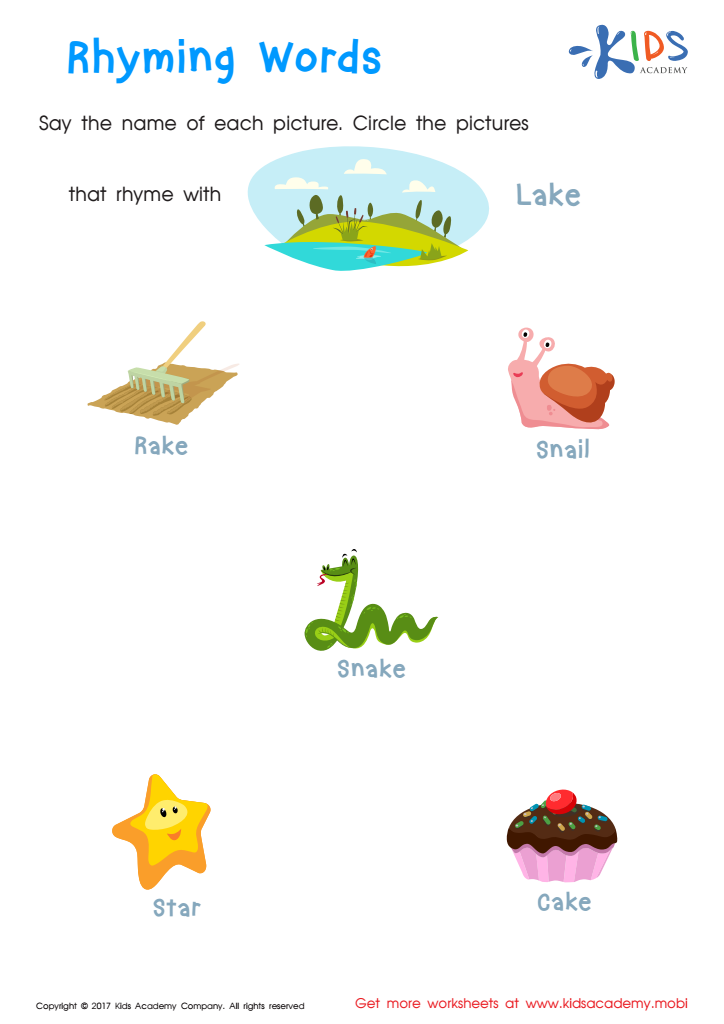
Rhyming Words Rhyming Worksheet
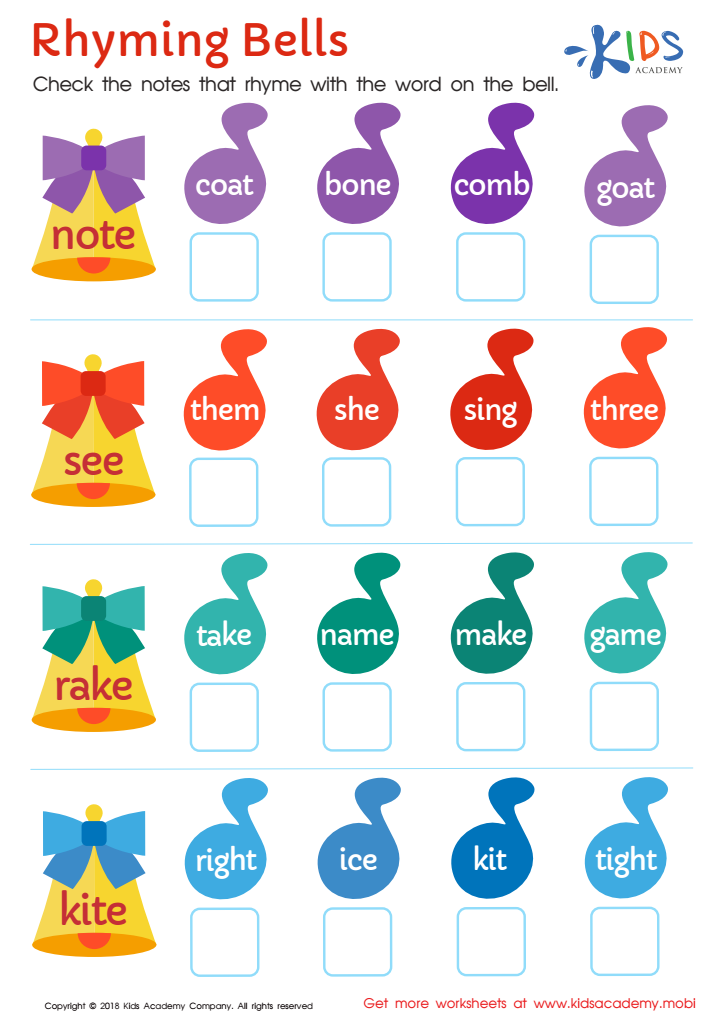
Rhyming Bells Worksheet
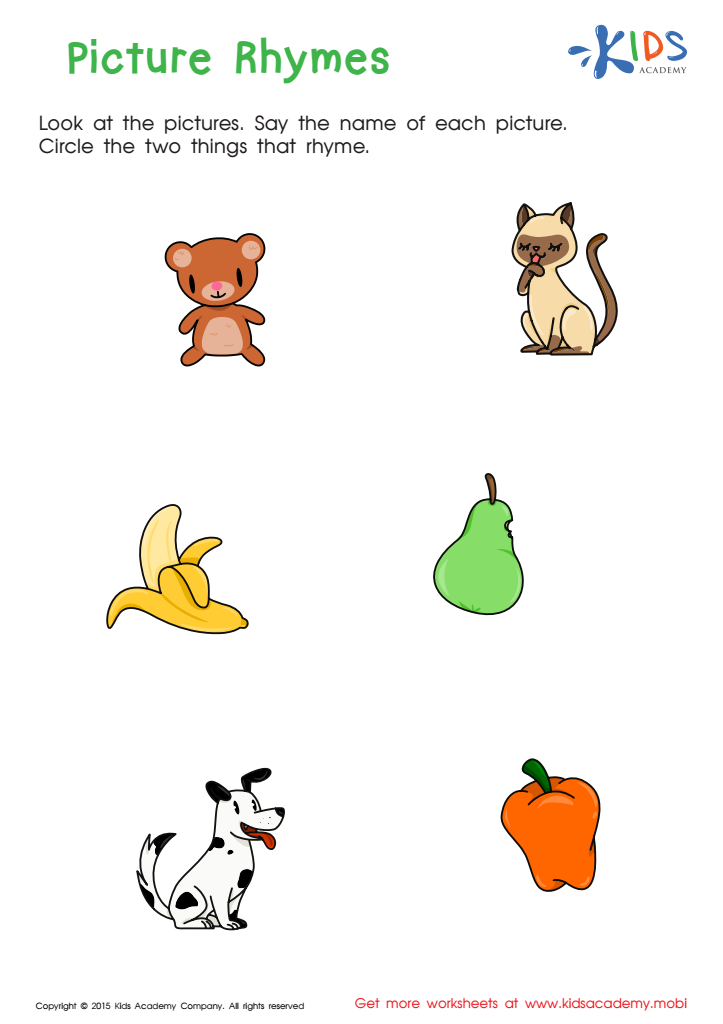
First Words: Picture Rhymes Worksheet
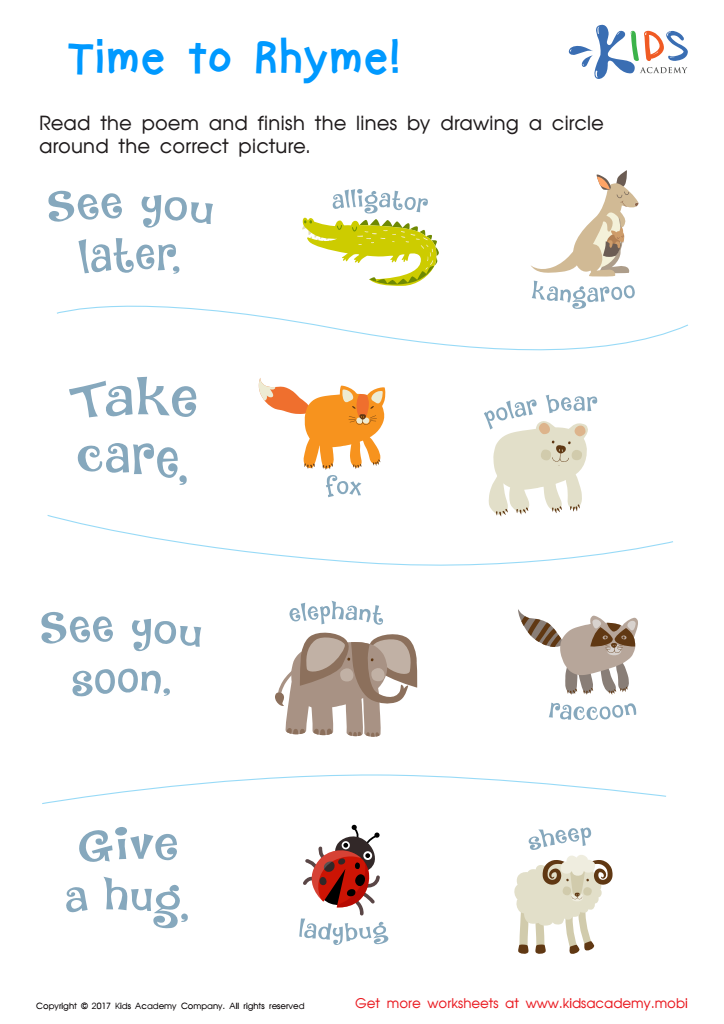
Time to Rhyme Rhyming Worksheet







Parents and teachers should prioritize reading comprehension through normal rhyming for children ages 5-7 for several compelling reasons. First, rhymes create a fun and engaging way to develop essential language skills. The rhythmic and repetitive nature of rhyming texts captures the attention of young learners, making the learning process enjoyable, which is crucial for this age group.
Additionally, rhyming enhances phonemic awareness, an important foundation for reading. By recognizing sound patterns, children improve their ability to decode words, paving the way for better reading fluency in the future. Moreover, rhymes often include playful language and storytelling elements, fostering critical thinking and imagination, vital components of comprehension.
Furthermore, when children engage with familiar rhyme schemes, they learn to anticipate language patterns, helping them understand structure and context in texts. This understanding is integral to building more profound comprehension skills as they progress in their reading journey.
Lastly, rhyming can bolster vocabulary development. Exposure to new words within a rhythmic context makes it easier for children to grasp and remember them. By incorporating reading comprehension through normal rhyming, parents and teachers help lay the groundwork for lifelong literacy skills, ultimately setting children up for academic success.