Letter Tracing Practice Normal Upper & Lowercase Letters Worksheets for Ages 5-7
3 filtered results
-
From - To
Empower young learners with our "Letter Tracing Practice Normal Upper & Lowercase Letters Worksheets" designed for children ages 5-7. These worksheets offer an engaging and interactive way to practice writing both capital and small letters. Each worksheet focuses on precise letter formation while enhancing fine motor skills crucial for writing. With fun, kid-friendly designs, these exercises make learning to write the alphabet an enjoyable adventure. Improve your child’s handwriting and boost their confidence in literacy with our expertly crafted letter tracing worksheets. Ideal for classroom use or at-home practice, these worksheets are your gateway to seamless alphabet mastery.
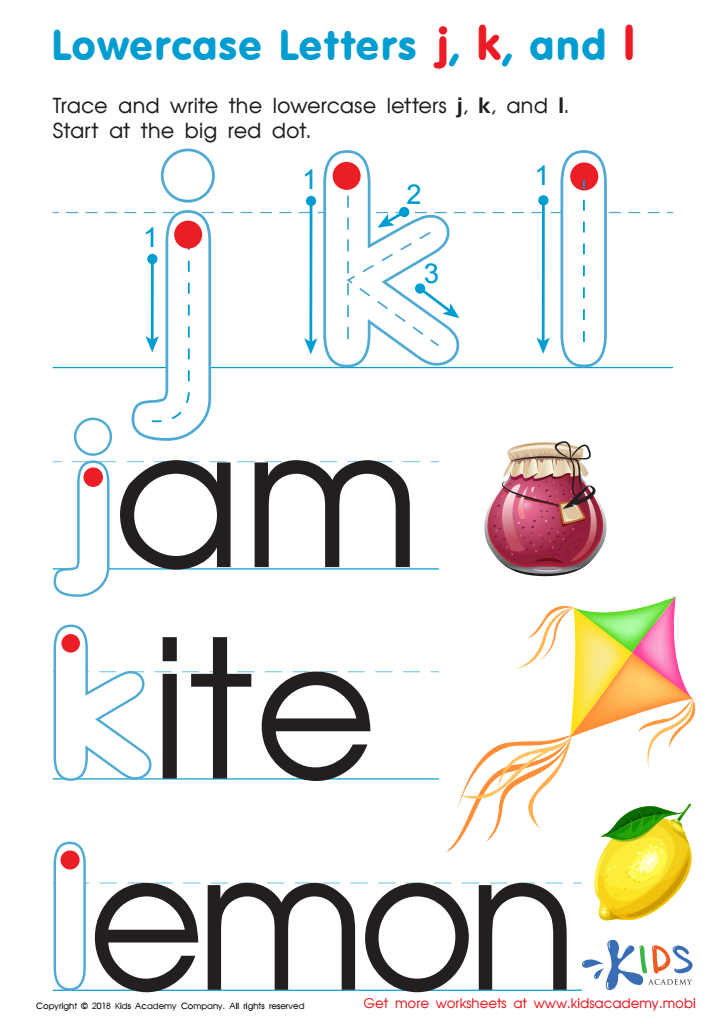
Lowercase Letters j k l Worksheet
 Assign to My Students










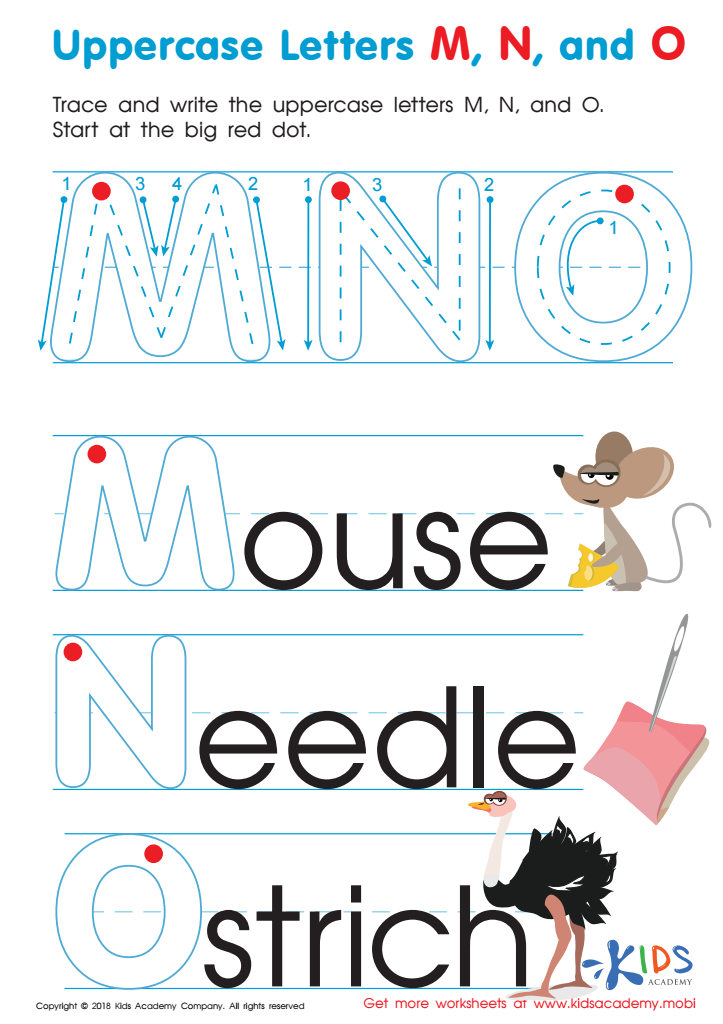
Uppercase Letters M, N, and O Worksheet
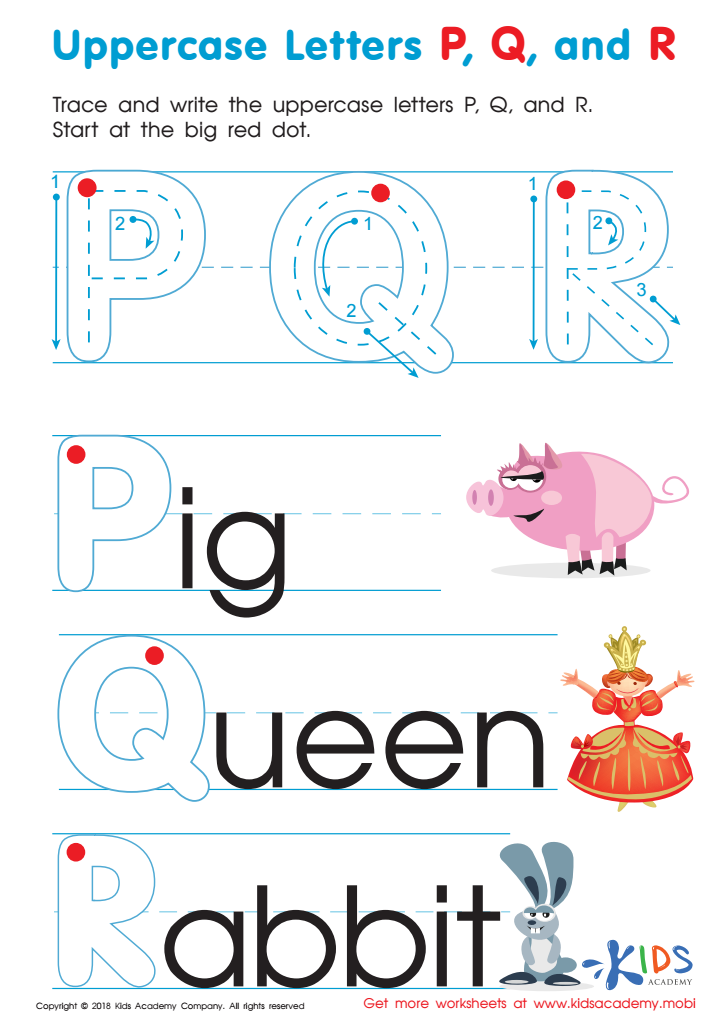
Uppercase Letters P, Q, and R Worksheet






Letter tracing practice is a fundamental activity for early learners, particularly those aged 5-7, as it lays the foundation for critical literacy skills. Parents and teachers should care about this practice because it significantly contributes to children's handwriting development, fine motor skills, and cognitive growth. When children trace letters, they engage in a process that enhances their hand-eye coordination and muscle control, essential skills for writing clearly and legibly.
Mastering both uppercase and lowercase letters through tracing helps children recognize and differentiate characters, crucial for reading fluency. It also supports the development of letter recognition and phonemic awareness, key components of early reading skills. Tracing activities can bridge the connection between visual memory and hand movements, assisting children in memorizing the form and structure of letters.
Additionally, practicing these skills boosts young learners' confidence and independence. When children feel proficient in letter formation, they are more likely to engage willingly in reading and writing tasks, fostering a love for learning. Consistent practice through activities like letter tracing can turn a potentially mundane task into a joyful and rewarding experience, encouraging a lifelong positive attitude towards education. Thus, investing time and effort in letter tracing is pivotal for children's educational success and overall development.







