Uppercase identification Normal Upper & Lowercase Letters Worksheets for Ages 5-7
5 filtered results
-
From - To
Boost your child's literacy skills with our Uppercase Identification Worksheets, designed specifically for ages 5-7. These engaging and interactive worksheets focus on helping young learners recognize and differentiate between uppercase and lowercase letters. Each worksheet features fun graphics and activities to captivate your child’s interest while enhancing their understanding of the alphabet. As they complete these exercises, your child will bolster their reading and writing skills, laying a strong foundation for future learning. Perfect for homeschooling or classroom settings, these worksheets provide a structured yet enjoyable learning experience. Start your child’s journey to literacy success today!
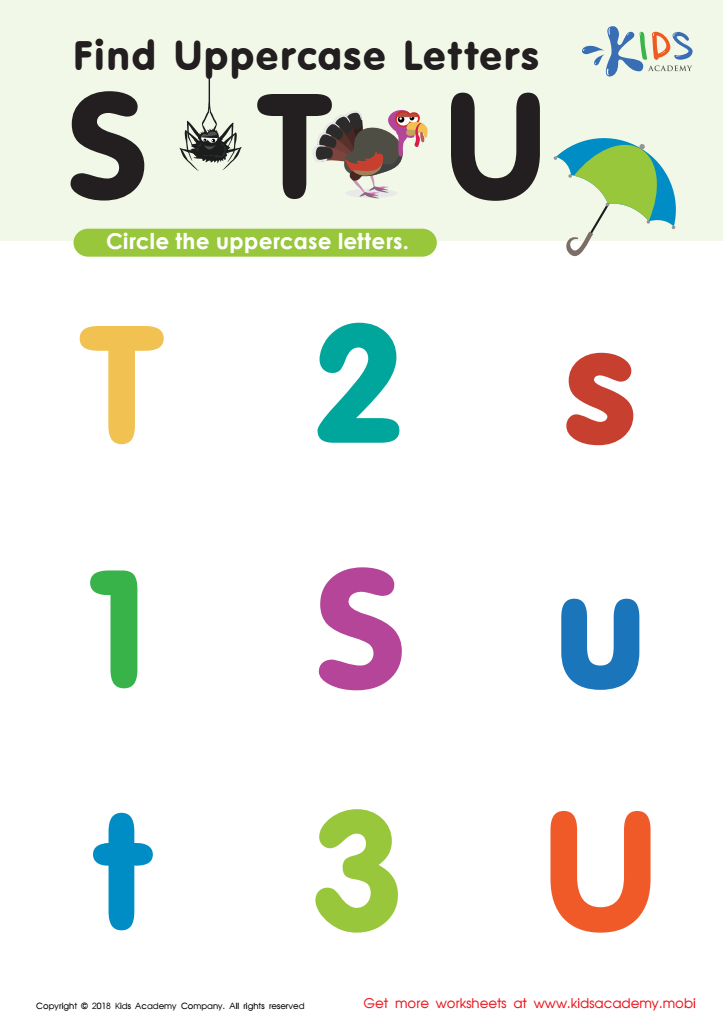
Find Uppercase Letters Worksheet
 Assign to My Students

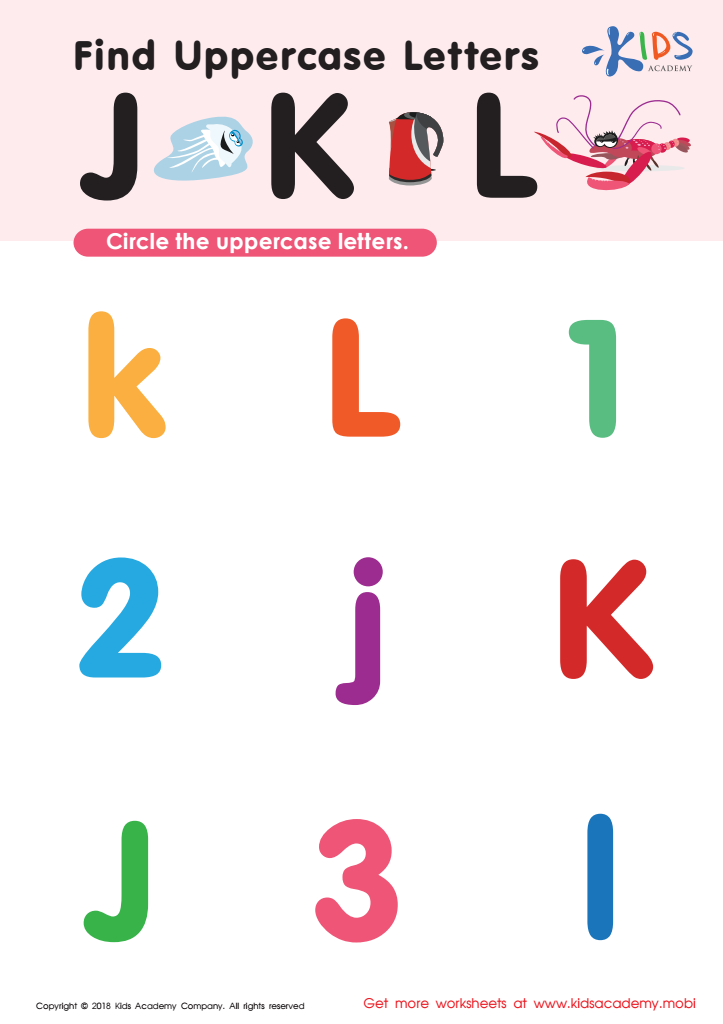
Find Uppercase Letters J, K, and L Worksheet

Find Uppercase Letters A, B, and C Worksheet
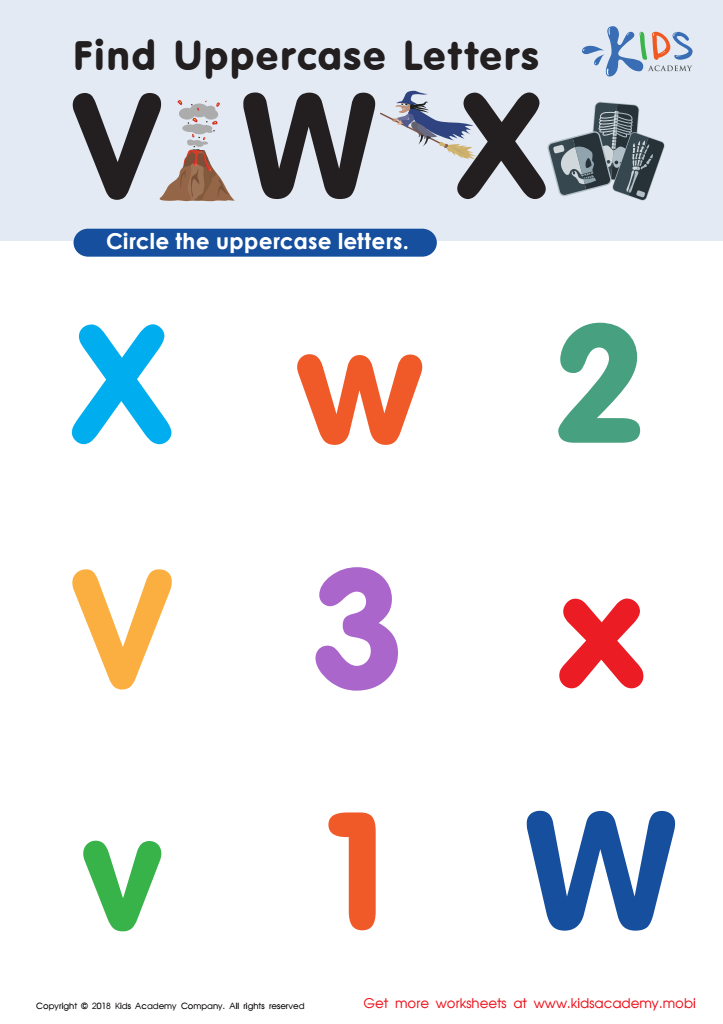
Find Uppercase Letters V, W, X Worksheet
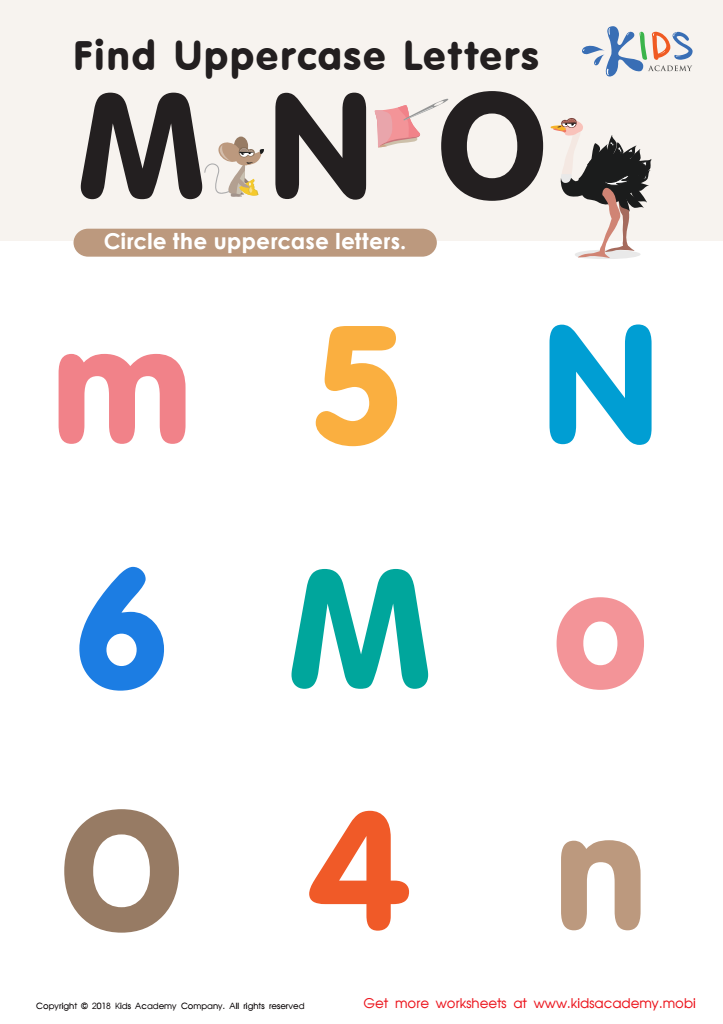
Find Uppercase Letters M, N, and O Worksheet






Understanding uppercase and lowercase letters is crucial for children aged 5-7 as it lays the foundation for their reading and writing skills. When children can identify uppercase letters, they gain insight into proper nouns, sentence beginnings, and important grammar rules, enhancing their overall literacy. Recognizing lowercase letters is equally essential, as these are more commonly used in everyday text and are crucial for fluent reading.
For parents and teachers, promoting the identification of both sets of letters encourages active engagement with language. Mastery of uppercase and lowercase letters boosts children's confidence, facilitating smoother transitions to writing and spelling. Familiarity with these letters fosters phonological awareness, supporting children's ability to sound out words, a critical step in reading development.
Furthermore, in today’s digital learning environment and diverse educational settings, understanding the distinction between uppercase and lowercase letters plays a pivotal role in effective communication. By investing time in letter recognition activities, parents and educators build a solid literacy foundation, setting children on a path to become proficient readers and writers. This early intervention can significantly affect a child's academic journey, emphasizing the importance of engagement with letter identification during these formative years.







