Historical Knowledge Normal Reading Comprehension Worksheets for Ages 5-7
5 filtered results
-
From - To
Discover our engaging Historical Knowledge Reading Comprehension Worksheets, designed specifically for children ages 5-7. These interactive resources enhance young learners' understanding of key historical events and figures while promoting essential reading skills. Each worksheet features age-appropriate texts followed by fun questions that reinforce comprehension and critical thinking. Perfect for classrooms or home use, these worksheets encourage curiosity and discovery about the past. Foster a love for history and reading in your child while helping them build a solid foundation for future learning. Explore our collection today and ignite your child's imagination and knowledge of history!
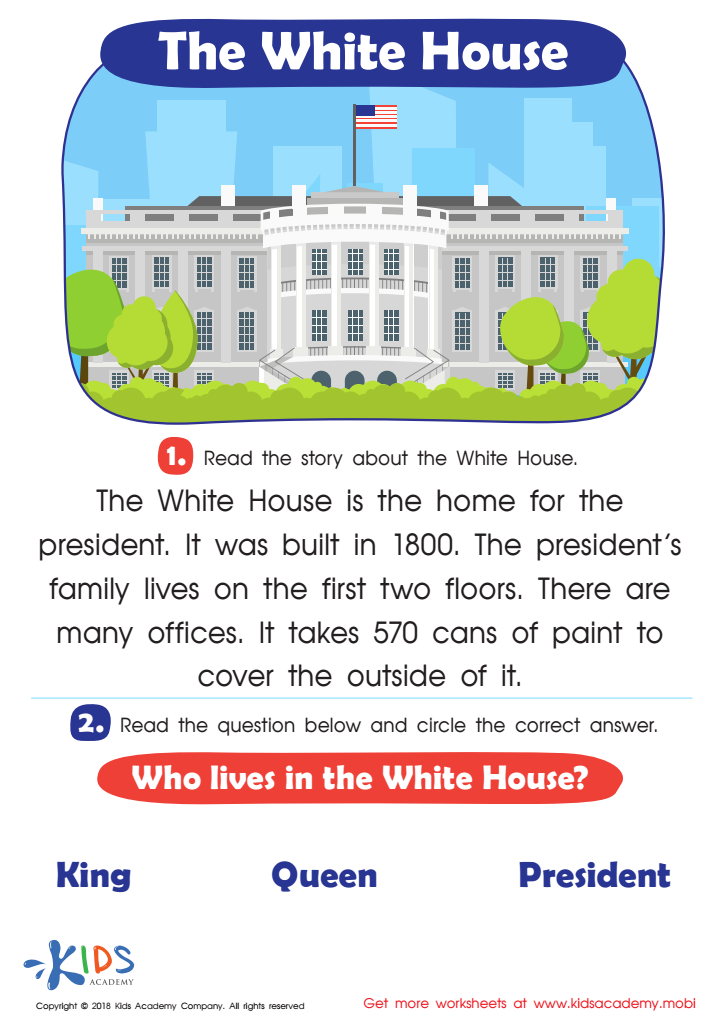
White House Worksheet
 Assign to My Students
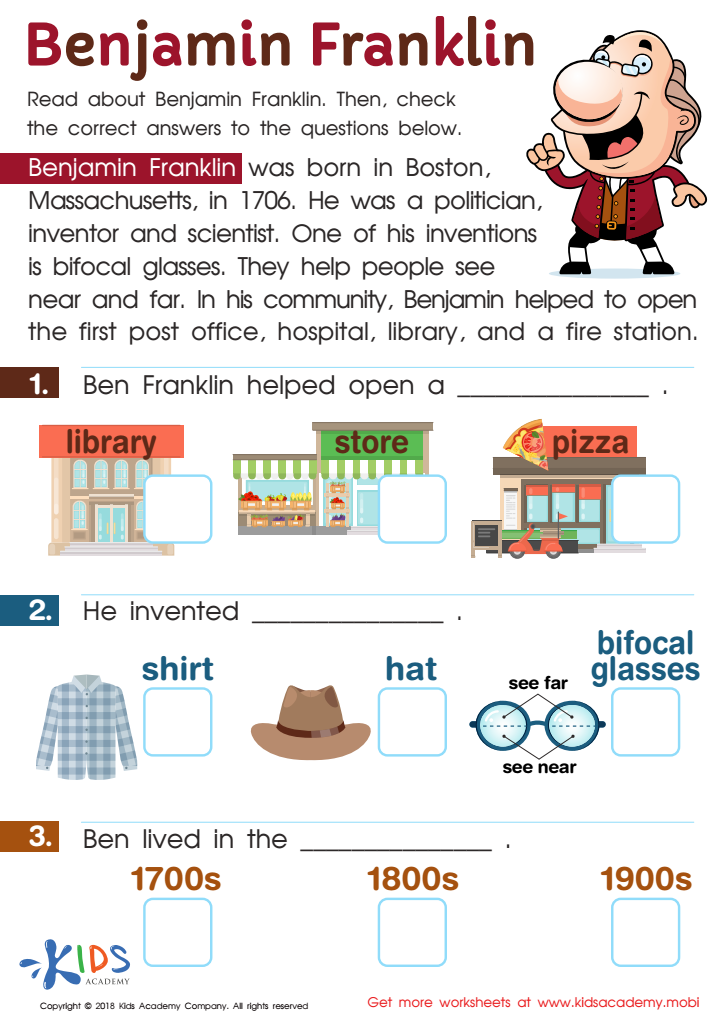
Benjamin Franklin Worksheet
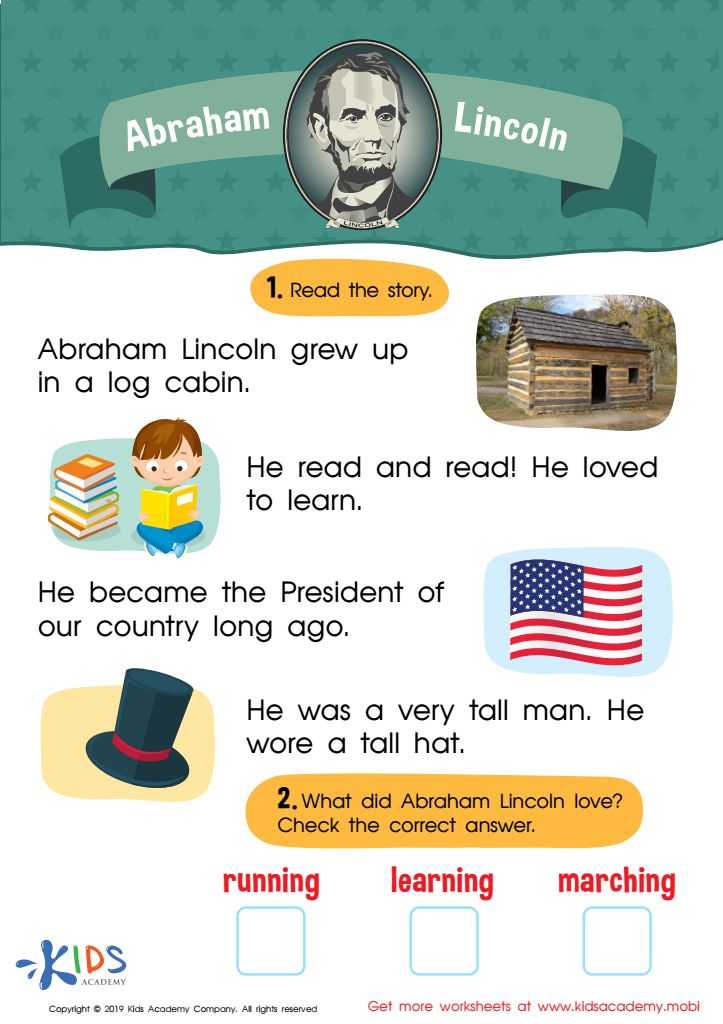
Abraham Lincoln Worksheet
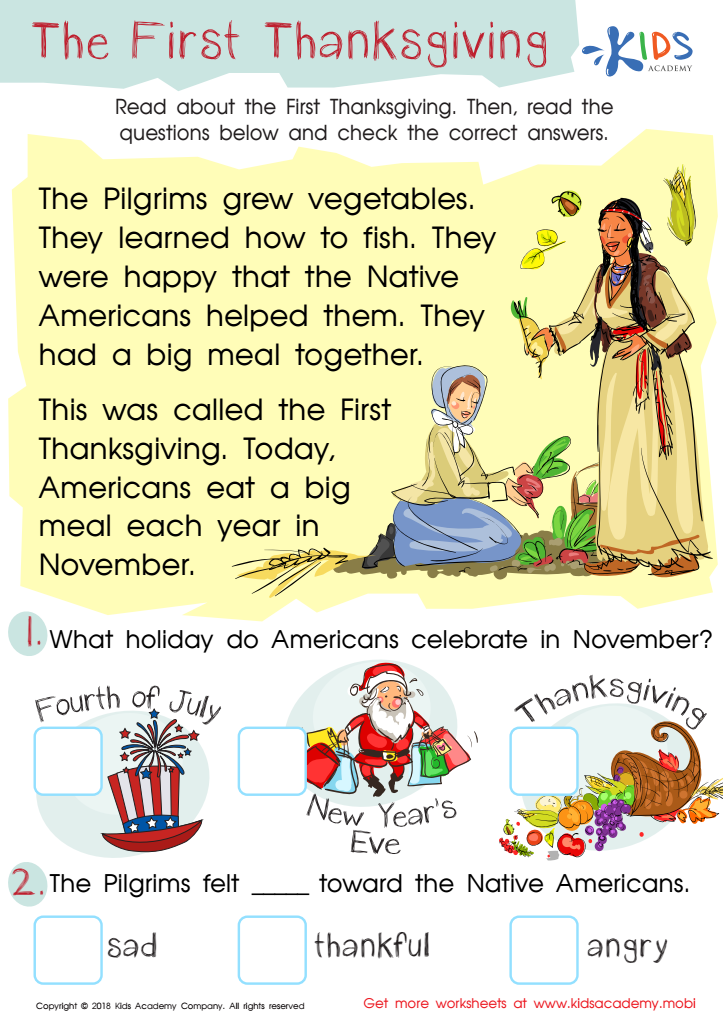
Assessment: First Thanksgiving Worksheet
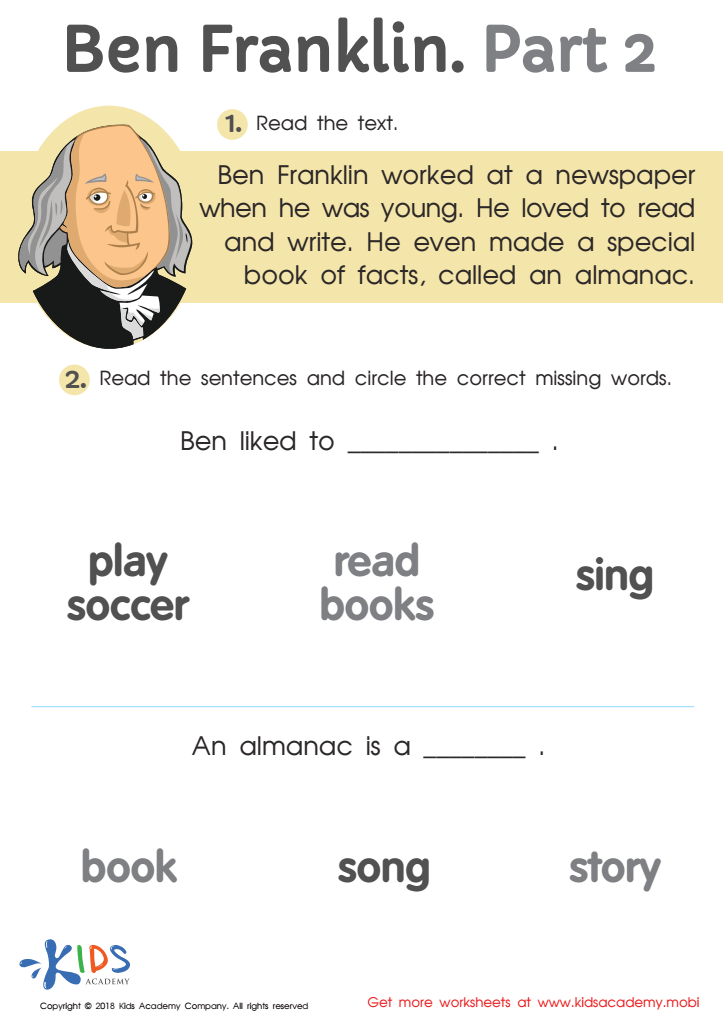
Ben Franklin Part 2 Worksheet








Parents and teachers play a crucial role in cultivating historical knowledge and reading comprehension in children aged 5-7, as these foundational skills are not only vital for academic success but also for personal growth. Understanding history helps children build a context for their own lives, allowing them to empathize with diverse perspectives and recognize the contributions of different cultures. It nurtures critical thinking, enabling them to discern patterns in events and apply lessons from the past to current situations.
Moreover, effective reading comprehension skills enhance children's ability to engage with texts, facilitating a deeper understanding of historical narratives, vocabulary, and concepts. This combination enriches their overall literacy experience, fostering a love for learning and reading. Engaging with historical content early helps children develop curiosity and inspires them to question and explore the world around them.
Additionally, by incorporating historical knowledge into reading activities, both parents and teachers can make learning more relatable and enjoyable, connecting children’s experiences to broader historical themes. As children develop these skills, they become more active and informed members of society, equipped with the tools necessary to contribute positively to their communities in the future. Investing in these foundational skills at an early age lays the groundwork for lifelong learning.








