Spatial awareness Normal Physical Science Worksheets for Ages 5-7
3 filtered results
-
From - To
Enhance your child’s learning experience with our engaging Spatial Awareness Normal Physical Science Worksheets designed for ages 5-7. These worksheets help young learners develop essential spatial skills through fun and interactive activities. Kids will explore concepts such as orientation, distance, and shape recognition while reinforcing their understanding of physical science principles. Our resources encourage critical thinking and problem-solving, making them ideal for classroom or home use. Easy to follow and visually stimulating, these worksheets cater to young minds, ensuring they grasp foundational scientific ideas while having fun. Download now and watch your child thrive in their spatial understanding and physical science comprehension!
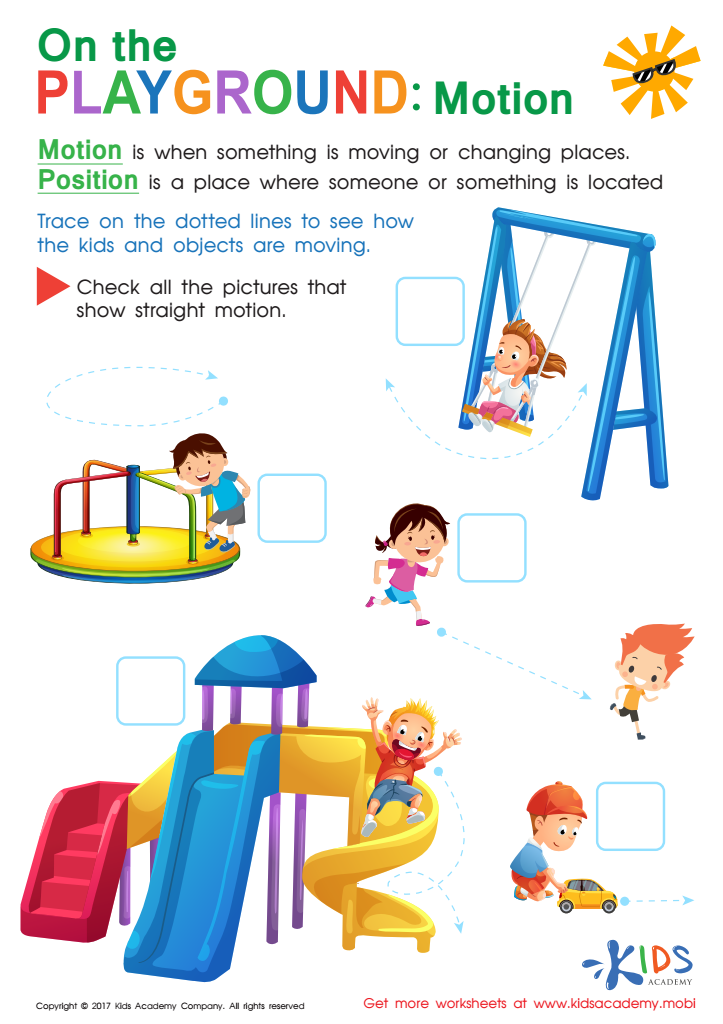
Position and Motion Worksheet
 Assign to My Students
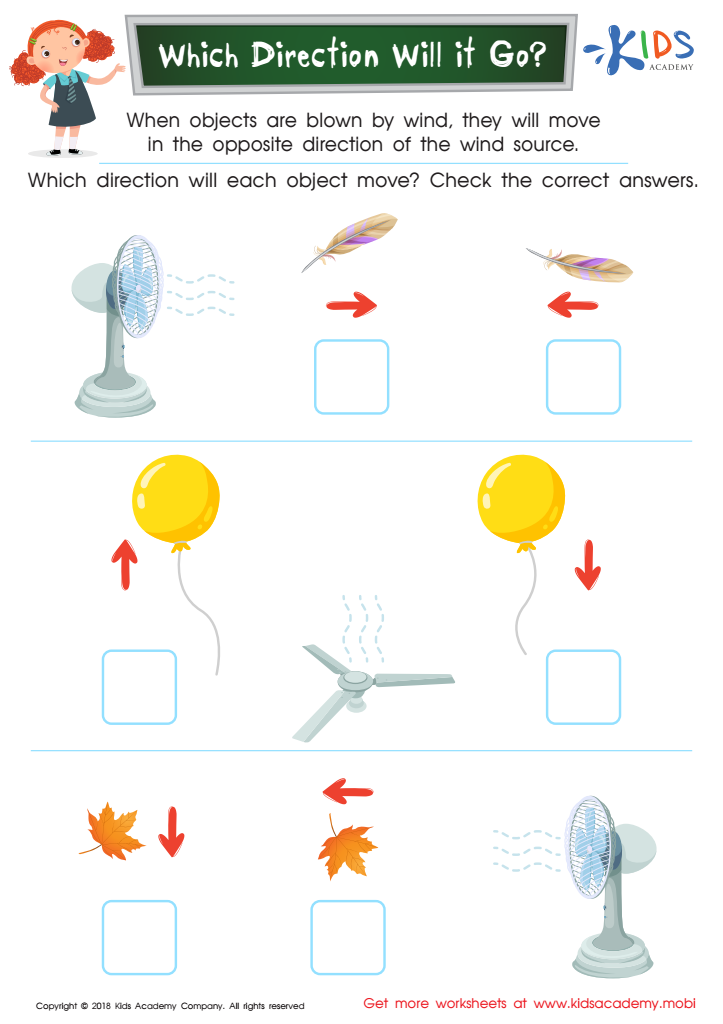
Which Direction Will it Go? Worksheet
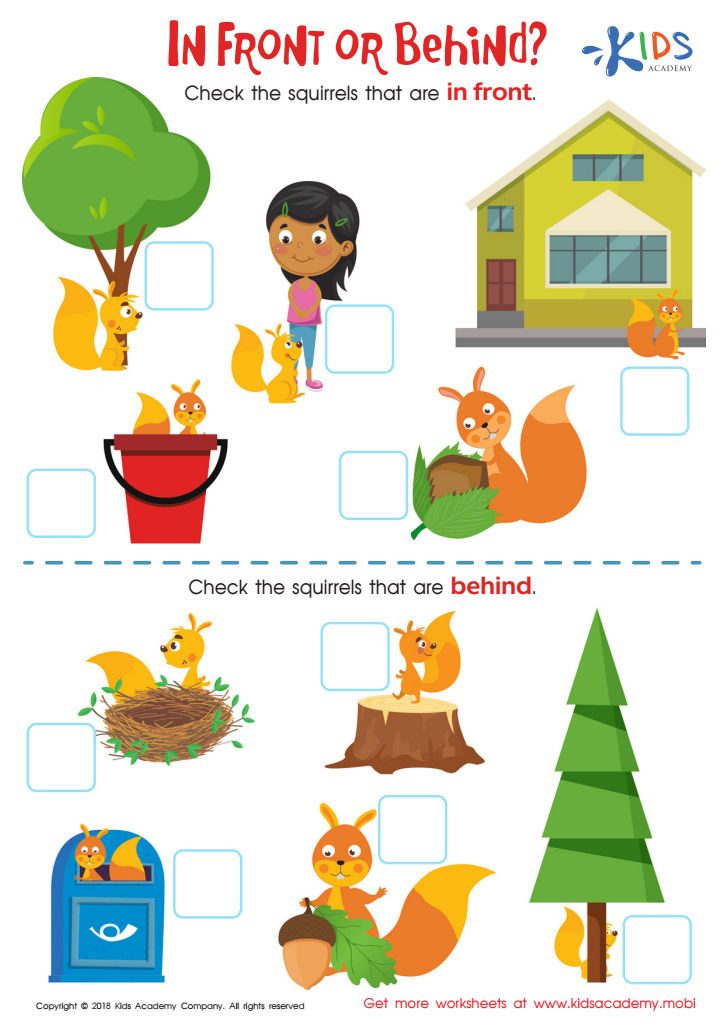
In Front or Behind: Part 2 Worksheet


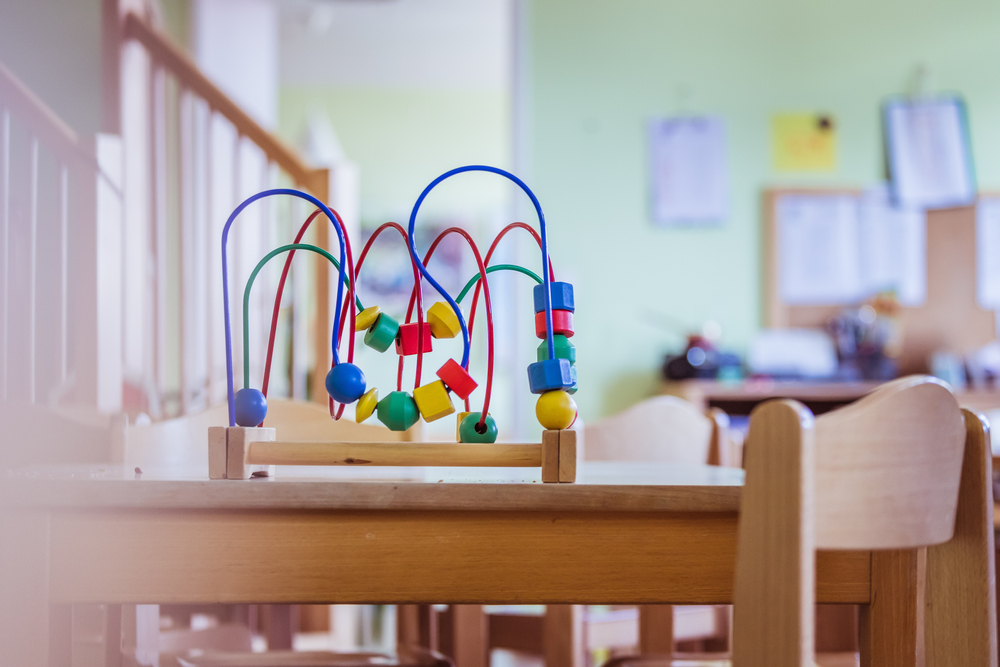




Spatial awareness is a crucial skill for young children, impacting their ability to navigate their environment and understand the world around them. For children aged 5-7, developing spatial awareness enhances not only physical coordination but also foundational cognitive skills. Engaging in activities that promote spatial understanding—such as puzzles, block building, and outdoor play—helps children enhance their ability to visualize and manipulate objects in space.
Parents and teachers should prioritize spatial awareness as it directly influences mathematical abilities, problem-solving skills, and future academic performance. For instance, strong spatial skills lay the groundwork for understanding geometry, maps, and spatial reasoning tasks in later grades. Additionally, spatial awareness contributes to reading literacy as children learn to make connections between objects and their positions.
Furthermore, fostering spatial skills facilitates social interactions and collaboration during play. Children who can understand spatial relationships often better navigate group dynamics in games and activities. By promoting a rich learning environment that encourages exploration of spatial concepts, parents and teachers ensure that children develop essential skills that not only contribute to academic success but also support holistic personal development. Emphasizing spatial awareness sets the stage for lifelong learning and adaptability in an increasingly complex world.







