Geography knowledge Normal Geography Worksheets for Ages 5-7
3 filtered results
Difficulty Level
Grade
Age
-
From - To
Subject
Activity
Standards
Unlock your child's curiosity with our Geography Knowledge Normal Geography Worksheets for Ages 5-7. These engaging and educational worksheets are designed to introduce young learners to the fascinating world around them. Through activities that cover basic map skills, continents, oceans, countries, and landmarks, children will develop essential geography knowledge while having fun. Perfect for home or classroom use, these worksheets are tailored to support foundational learning in a comprehensible and enjoyable way, making geography an exciting adventure for young explorers. Equip your child with the tools to understand their world and foster a love for lifelong learning.
Favorites
With answer key
Interactive
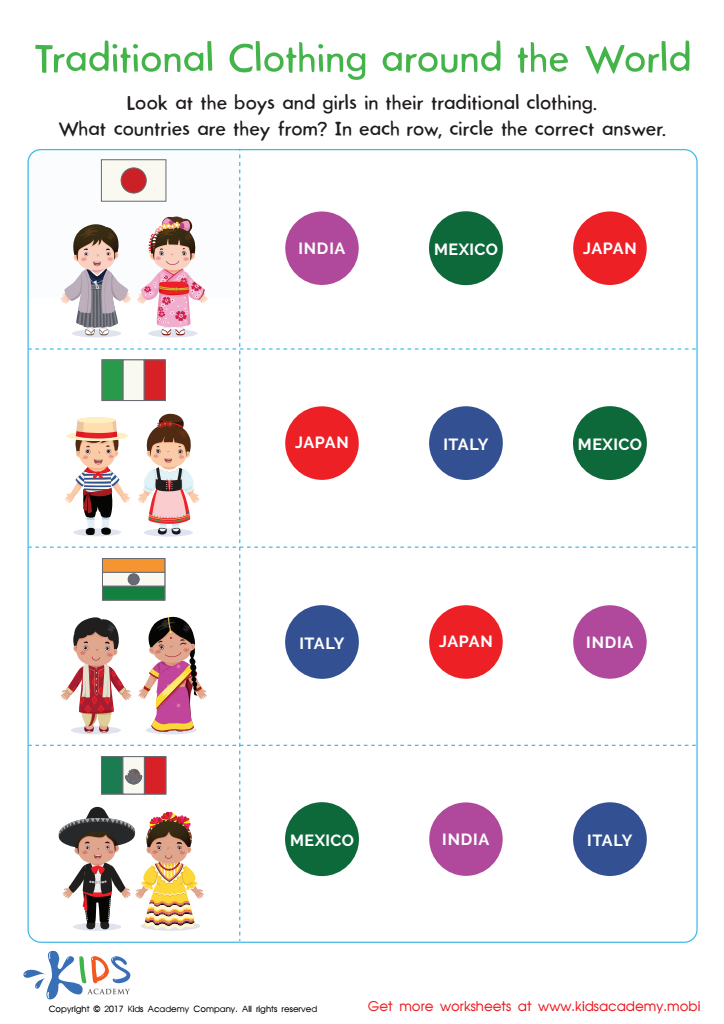
Traditional Clothing Worksheet
Introduce your child to cultures around the world with this illustrated traditional clothing printable worksheet! It will help them to recognize clothing, national flags and cultures from different countries, fostering an appreciation and love for all. It's a joyful way to learn and recognize the differences of people from around the world!
 Assign to My Students
Traditional Clothing Worksheet
Worksheet
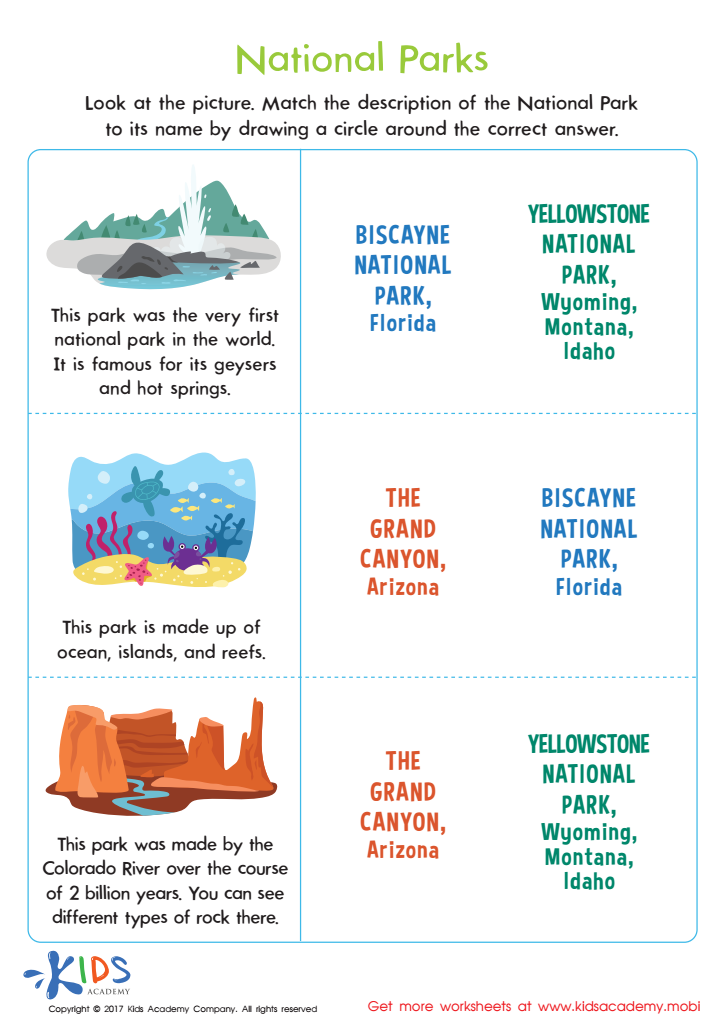
National Parks Printable
Introduce your child to the iconic US national parks with this worksheet! It teaches them important facts and features, and helps them explore the parks from home. Plus, extend their learning with real images from the parks!
National Parks Printable
Worksheet
Join Kids Academy for Free
Who is primarily going to use this learning content?





Introducing children ages 5-7 to geography is crucial for several reasons:
Cognitive Development: Geography helps young learners develop essential cognitive skills. Understanding spatial relationships, recognizing various landforms, and grasping basic map concepts enhance their spatial awareness and problem-solving abilities.
Global Awareness: Early exposure to geography fosters a sense of global citizenship. Learning about different countries, cultures, and environments helps children appreciate diversity and cultivate empathy, vital skills in today's interconnected world.
Curiosity and Inquiry: Geography stimulates curiosity and a sense of exploration. Children at this age are naturally curious about their surroundings. Geography taps into this curiosity, encouraging them to ask questions about the world around them, fostering a love of learning.
Environmental Awareness: Early geography lessons lay the groundwork for environmental stewardship. Understanding the basics of natural resources, ecosystems, and human impact on the environment helps children develop a sense of responsibility toward the planet.
Language and Communication Skills: Discussing geographical concepts can enhance vocabulary and communication skills. Words like "continent," "island," "mountain," and "ocean" enrich their language and create a strong foundation for more complex concepts.
By prioritizing geography, parents and teachers help children build a solid knowledge base that supports overall development, broadens their worldview, and lays the foundation for lifelong learning and responsible citizenship.