
Vowel Recognition Normal ABC Letters Worksheets for Ages 6-8
3 filtered results
Difficulty Level
Grade
Age
-
From - To
Subject
Activity
Standards
Boost your child's reading skills with our "Vowel Recognition Normal ABC Letters Worksheets" designed specifically for ages 6-8! These engaging, printable worksheets help young learners identify and differentiate vowels from consonants in a fun and interactive way. Each worksheet includes a variety of exercises, including matching, coloring, and fill-in-the-blank activities, tailored to enhance understanding of vowel sounds. Perfect for classroom use or at-home practice, these resources encourage independent learning while making vowel recognition enjoyable. Early literacy is essential for academic success, so give your child a head start with these delightful worksheets that make learning vowels a breeze!
Favorites
With answer key
Interactive
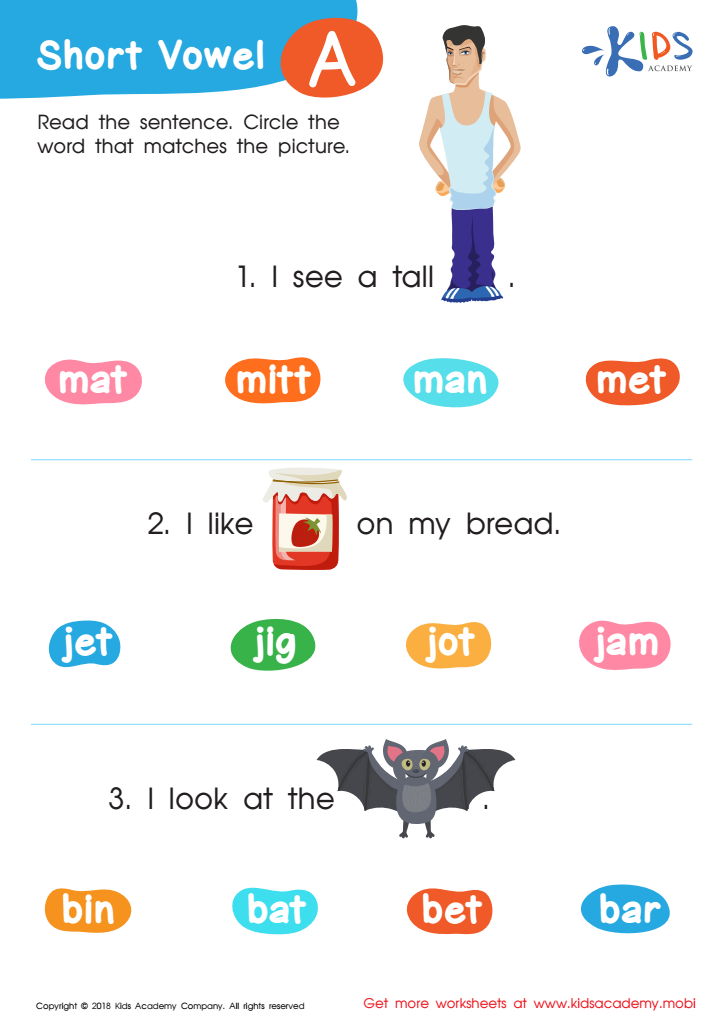
Short Vowel /a/ Worksheet
This free PDF helps new readers use sight words and pictures to read basic sentences. Then, they use accompanying word choices to find the correct word with the short a vowel sound. A key early reading skill, discriminating between short vowel sounds can be tricky in monosyllabic words, so use this PDF to help your reader reinforce it.
 Assign to My Students
Short Vowel /a/ Worksheet
Worksheet

Short Vowels /e/, /i/, and /u/ Worksheet
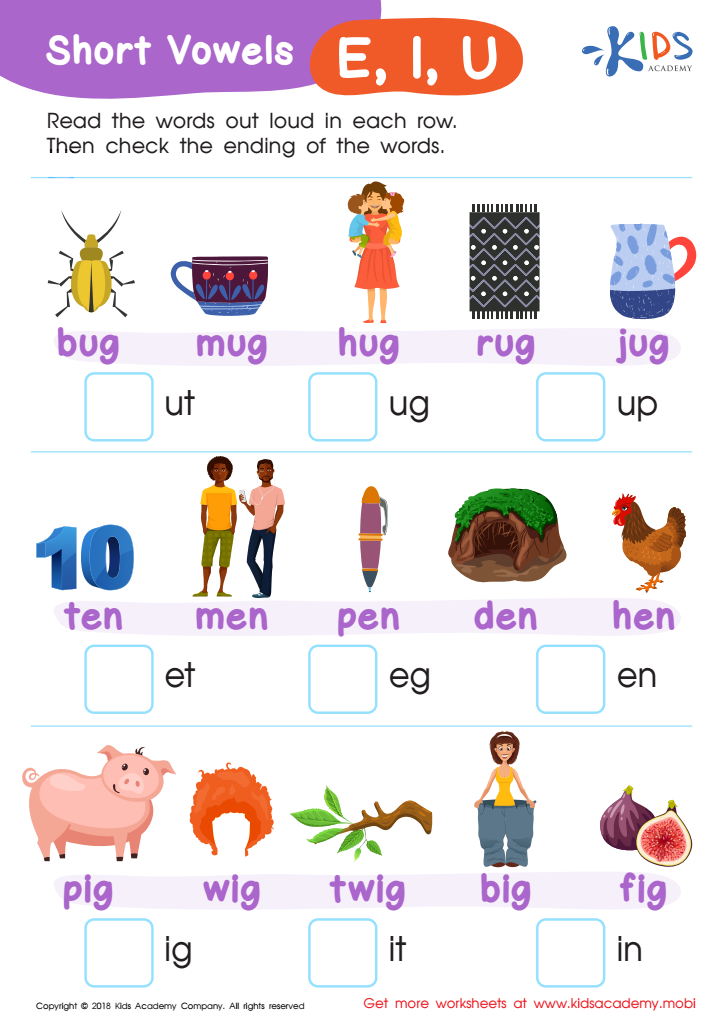
Your emergent reader can have fun while practicing their short vowel sounds with this free, brightly colored worksheet. They'll identify one-syllable words by their pictures, then match the correct ending for each. They'll gain an understanding of how short vowel sounds vary in closed syllables with different endings, without even realizing it!
Short Vowels /e/, /i/, and /u/ Worksheet
Worksheet
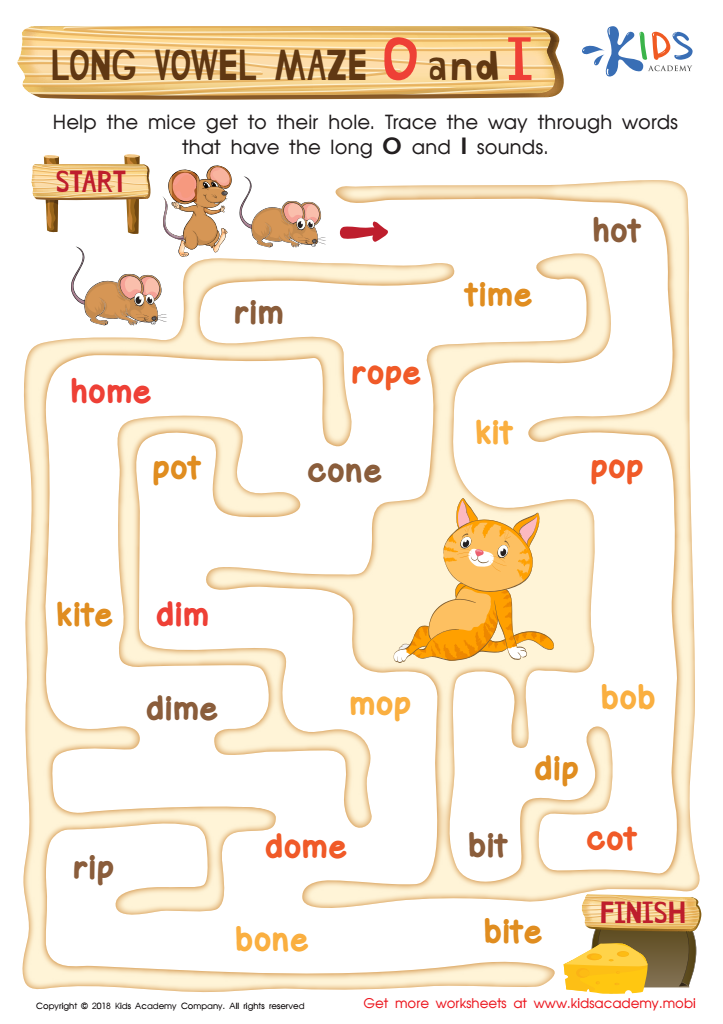
Long Vowel Maze /o/ and /i/ Worksheet
Help your new readers have fun and build their sight word vocabulary! Guide the mice to their prize cheese by having them trace the route on the worksheet, using words with the long o and long i sounds. But watch out for the kitty!
Long Vowel Maze /o/ and /i/ Worksheet
Worksheet
Join Kids Academy for Free
Who is primarily going to use this learning content?








Vowel recognition is a vital skill for children ages 6-8 as it serves as the foundation for reading and writing development. At this age, children are transitioning from recognizing letters to understanding their sounds, making vowel recognition crucial in building phonemic awareness. Vowels are essential components of words, and knowing them helps children decode unfamiliar words, enhancing reading fluency.
When teachers and parents emphasize vowel recognition during these formative years, they equip children with the tools necessary for successful literacy development. This skill supports comprehension, spelling, and vocabulary expansion, which are critical for academic achievement in all subjects. Mastery of vowels also assists in writing, allowing young learners to construct sentences and articulate their thoughts clearly.
Furthermore, recognizing and mastering vowel sounds is instrumental in building confidence. As children become more proficient readers, they are more likely to enjoy reading and explore various texts, fostering a lifelong love for literature. Ultimately, parental and teacher involvement in promoting vowel recognition not only benefits literacy but also nurtures curiosity and a positive attitude toward learning in children. By supporting this essential phase of literacy education, adults play a crucial role in shaping children’s academic futures.







