Phonics Skills Normal Alphabet Worksheets for Ages 6-8 - Page 3
49 filtered results
-
From - To
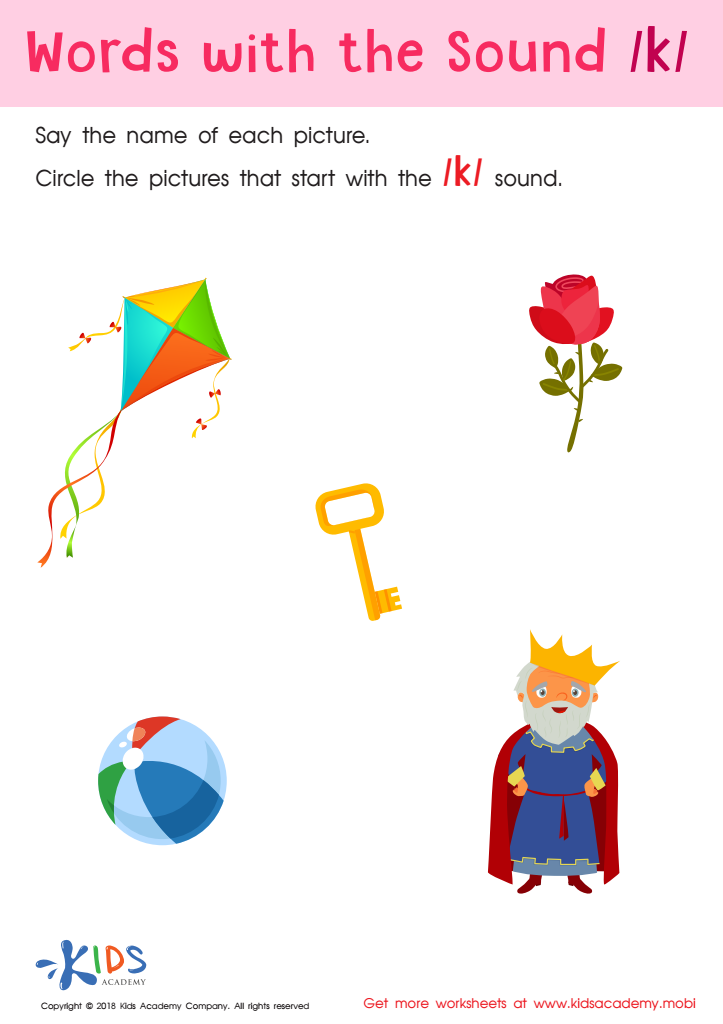
Words with sound k Reading Worksheet
 Assign to My Students







Phonics skills are the foundational building blocks of language, crucial for children aged 6-8 as they embark on their reading journey. For parents and teachers, understanding and advocating for strong phonics education using the normal alphabet is essential because it directly impacts a child's literacy development and overall academic success.
At this critical age, children are transitioning from recognizing letters to decoding words, and phonics instruction bridges this gap. Phonics teaches the relationship between letters and their corresponding sounds, which enables children to read new words by sounding them out. This skill is not just important for reading proficiency but also for spelling and writing, creating a comprehensive literacy foundation.
When children grasp phonics, they gain confidence and a sense of autonomy in their reading abilities. This early success fosters a love for reading, opening doors to unlimited knowledge and imagination. On the practical side, consistent, effective phonics instruction can prevent future reading difficulties and dyslexia, setting children on a path for lifelong academic achievement.
Parents and teachers play an instrumental role in this process by providing resources, practice, and encouragement. By giving attention to phonics skills, adults help children unlock their full potential, ensuring a brighter academic future and empowering them with the critical literacy skills necessary for their entire educational journey.







