Fine motor skills development Normal Letter Recognition Worksheets for Ages 6-8
3 filtered results
-
From - To
Enhance your child's fine motor skills and letter recognition with our engaging worksheets designed specifically for ages 6-8! Our “Fine Motor Skills Development Normal Letter Recognition Worksheets” provide a fun, interactive way for kids to practice essential writing and coordination skills while becoming familiar with the alphabet. Each worksheet features captivating exercises that encourage toddlers to trace, color, and write letters, fostering both creativity and learning. Perfect for at-home learning or classroom use, these worksheets support early education in a playful manner, helping children build the confidence they need to excel in reading and writing. Get started with our collection today!
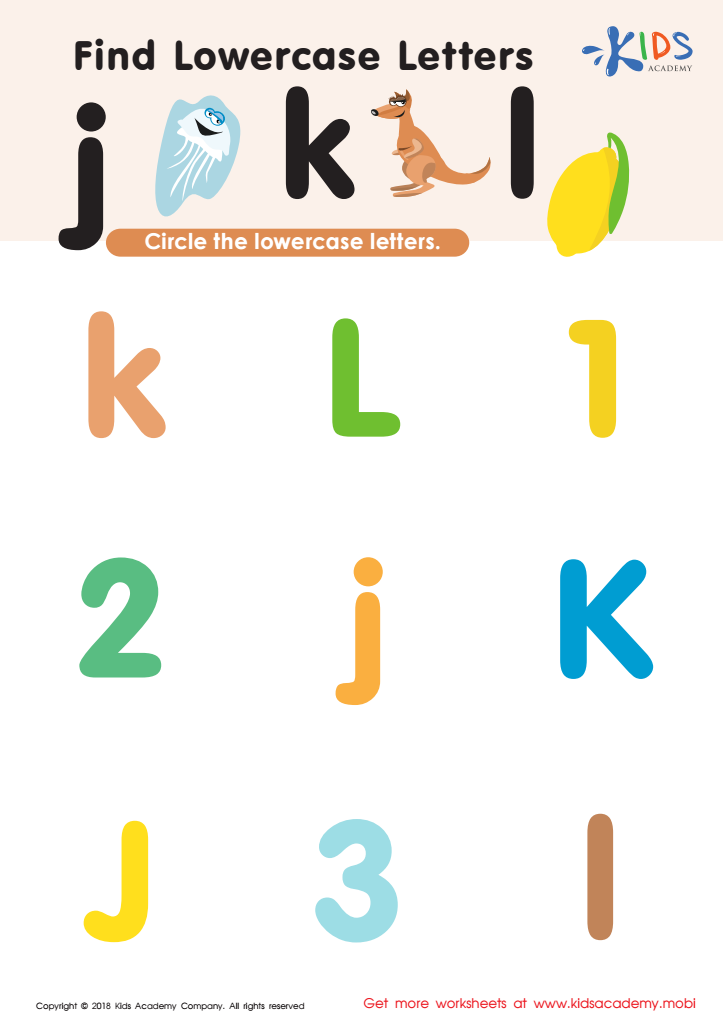
Find Lowercase Letters j k l Worksheet
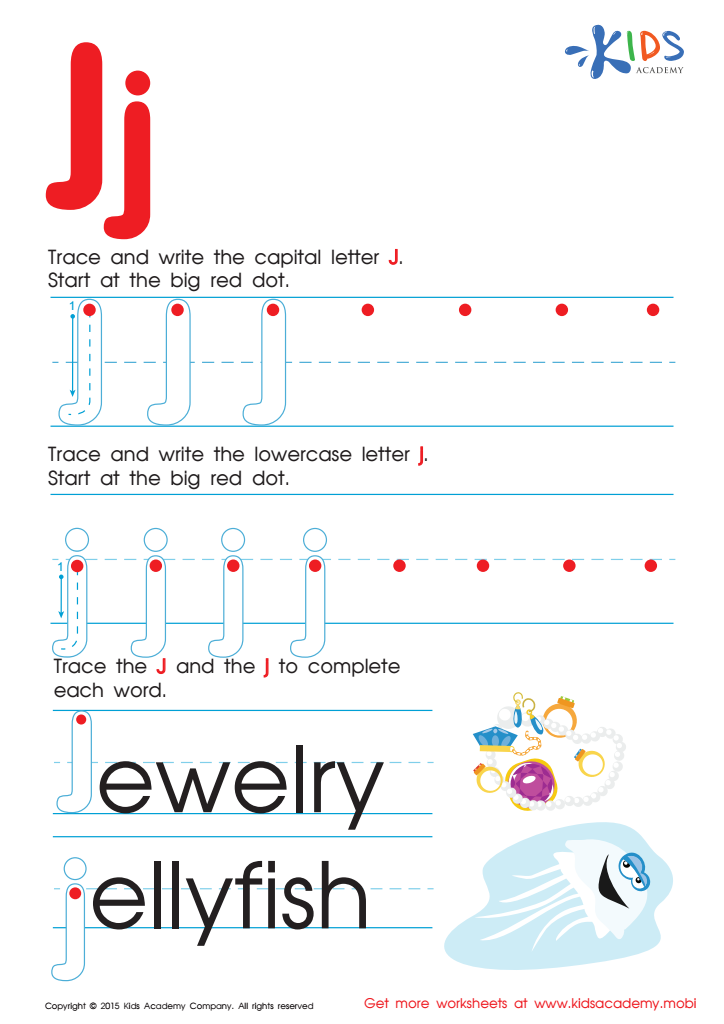
Letter J Tracing Page
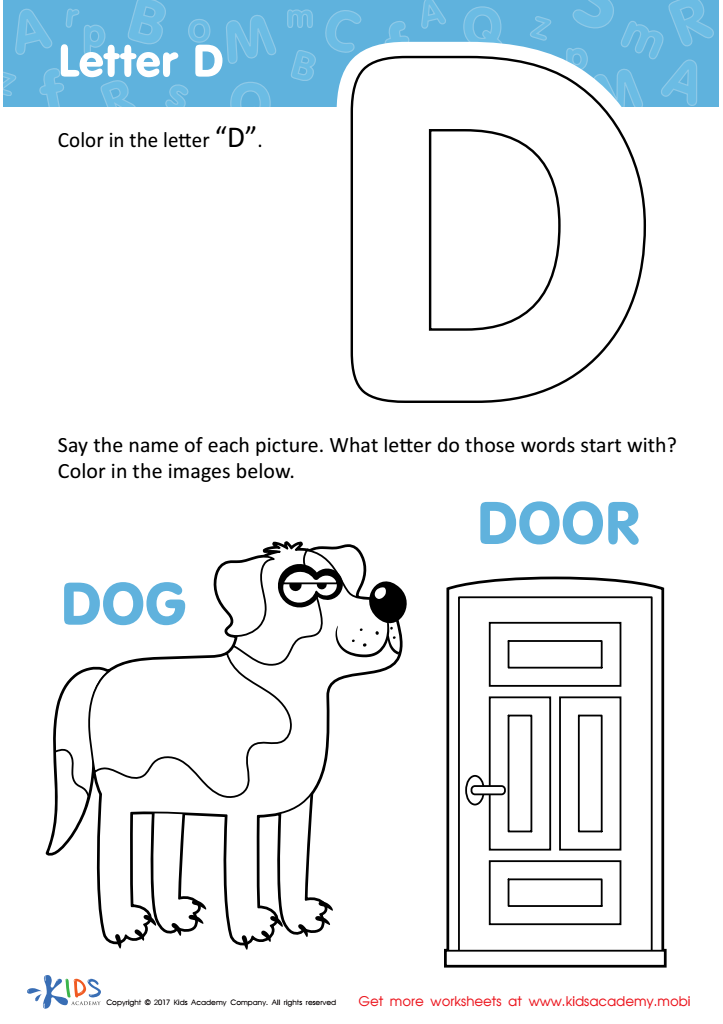
Letter D Coloring Sheet
 Assign to My Students








Fine motor skills and letter recognition are crucial in the developmental stages for children aged 6-8. At this age, children begin to transition from basic writing to more complex tasks that require precise hand movements. Fine motor skills involve the coordination of small muscles in the hands and fingers, which are essential for writing, drawing, and manipulating objects. When well-developed, these skills enhance a child's ability to express themselves through writing, aiding in improved communication and creativity.
Normal letter recognition during this stage is equally important as it forms the foundation for reading and literacy. Being able to recognize letters not only supports reading comprehension but also boosts confidence in academic pursuits. When children can identify and form letters correctly, they’re more likely to develop a positive attitude toward learning and become eager readers.
Parents and teachers should prioritize fine motor skills and letter recognition activities, as they significantly contribute to a child’s academic success and independence. Engaging in fun, hands-on activities such as games, crafts, and interactive reading can stimulate these skills. A solid foundation in these areas will set the stage for lifelong learning and cognitive development, making this an essential focus for caregivers.








