
Handwriting improvement Normal Letter Recognition Worksheets for Ages 6-8
3 filtered results
Difficulty Level
Grade
Age
-
From - To
Subject
Activity
Standards
Boost confidence and skill in young writers with our Handwriting Improvement Normal Letter Recognition Worksheets for ages 6-8. These engaging printable worksheets are crafted to help children master letter formation and enhance their recognition skills through fun activities. Designed to cater to the precise learning needs of kids, our worksheets promote fine motor skills and provide a perfect practice space for developing neat and legible handwriting. Ideal for home or classroom use, these resources blend education with enjoyment, ensuring that handwriting practice becomes a cherished part of every child's learning journey. Nurture your child's writing prowess today!
Favorites
With answer key
Interactive
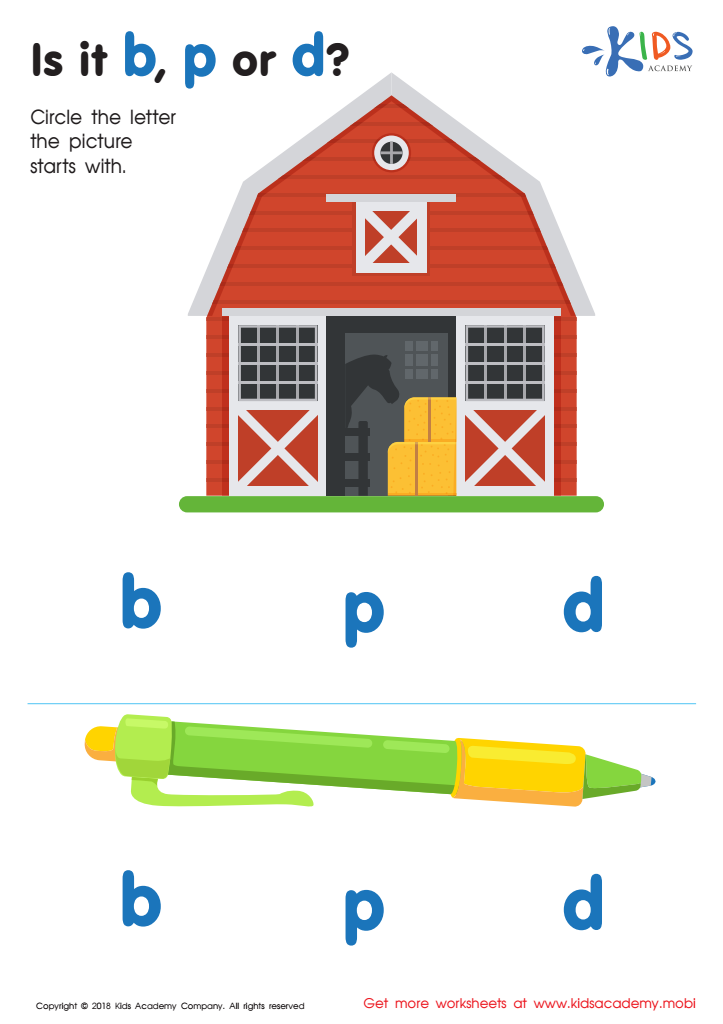
Is it b, p or d? Worksheet
Test your child's identification skills with this worksheet. They must identify the image and then circle the letter it begins with: 'b', 'p', or 'd' (e.g. an image of the sun would mean they circle 's').
 Assign to My Students
Is it b, p or d? Worksheet
Worksheet
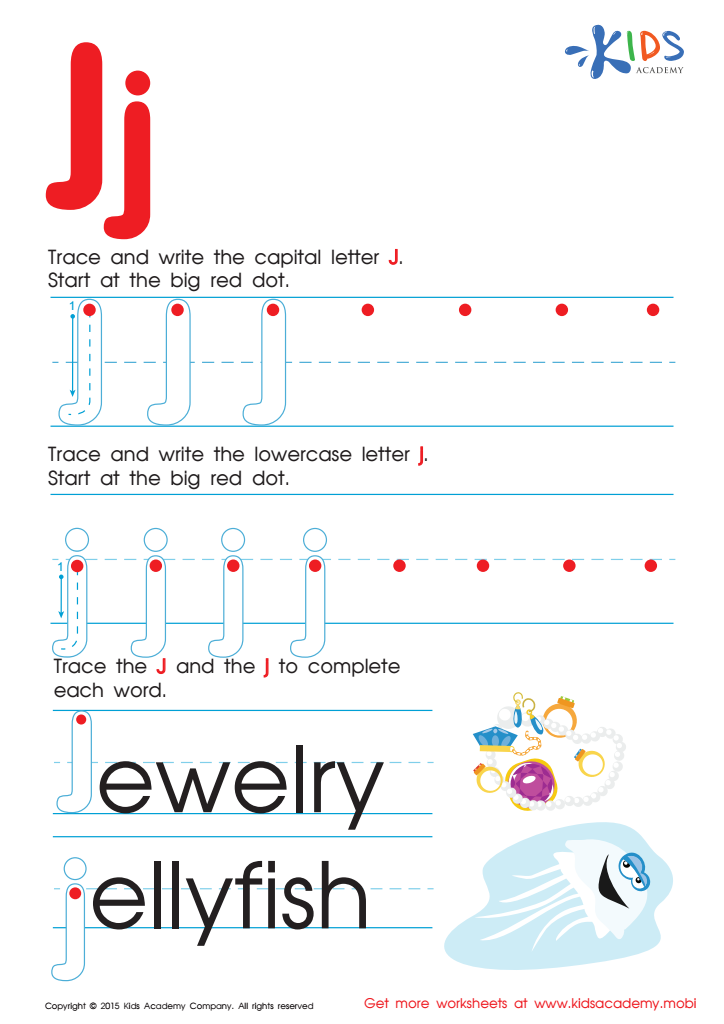
Letter J Tracing Page
Trace and write the letter "J" with our ABC worksheet - start at the big red dot! Have fun completing words like jewelry, jellyfish and more. Check out our kindergarten activities for more alphabet practice.
Letter J Tracing Page
Worksheet
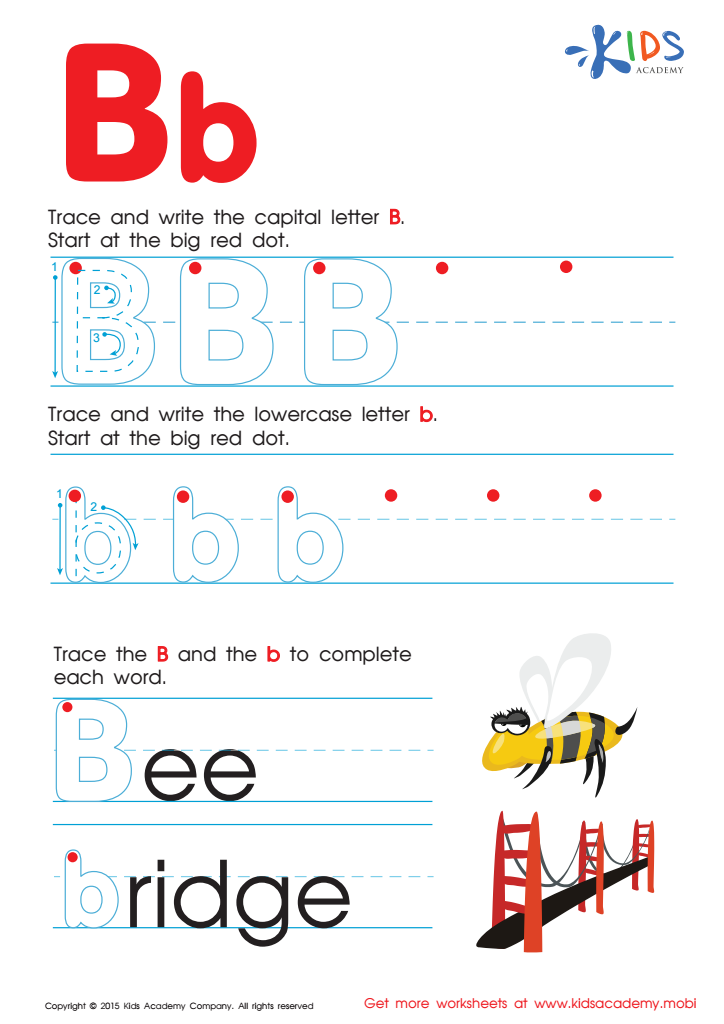
Letter B Tracing Page
Ready to learn the Alphabet? Put your pencil on the red dot and trace & write both capital & lowercase "B". Then have a look at the pictures. Catch the bee, cross the bridge & write the letters to complete the words. More ABC worksheets for kindergarten available!
Letter B Tracing Page
Worksheet
Join Kids Academy for Free
Who is primarily going to use this learning content?








Handwriting improvement and normal letter recognition for ages 6-8 are crucial components of early childhood education. At this stage, children are transitioning from preschool to more structured learning environments, requiring foundational skills that set the tone for future academic success. Firstly, legible handwriting facilitates clear communication. When children can write clearly, they are better able to express their ideas, complete assignments, and engage in effective written communication, which is essential for their later academic and professional lives.
Secondly, normal letter recognition is directly linked to reading skills. When children can recognize and correctly form letters, they develop the ability to decode words efficiently, which is a critical step in becoming proficient readers. This skill enhances vocabulary development, reading comprehension, and overall academic performance.
Moreover, improving handwriting and letter recognition enhances fine motor skills and hand-eye coordination. These physical skills are essential not only for writing but also for other activities such as drawing, playing musical instruments, and various sports.
Additionally, proficiency in handwriting and letter recognition boosts self-confidence. Children who struggle in these areas often face frustration and lower self-esteem. By prioritizing handwriting improvement, parents and teachers invest in helping children feel more competent and confident learners.
In essence, focusing on handwriting improvement and normal letter recognition during ages 6-8 establishes a strong educational foundation, imparting lifelong skills and boosting overall academic and personal growth.








