
Letter tracing skills Normal Letter Recognition Worksheets for Ages 6-8
3 filtered results
Difficulty Level
Grade
Age
-
From - To
Subject
Activity
Standards
Enhance your child’s letter recognition and writing abilities with our expertly crafted Letter Tracing Skills worksheets for ages 6-8. These fun and engaging activities transform learning the alphabet into an adventure, helping children master both uppercase and lowercase letters. Each worksheet provides ample practice, encouraging correct formation and steady penmanship. Perfectly suited for early learners, our worksheets not only foster literacy skills but also boost confidence and fine motor control. With colorful designs and easy-to-follow guides, learning letters has never been so enjoyable. Set your child on the path to reading and writing success with our comprehensive letter tracing tools!
Favorites
With answer key
Interactive
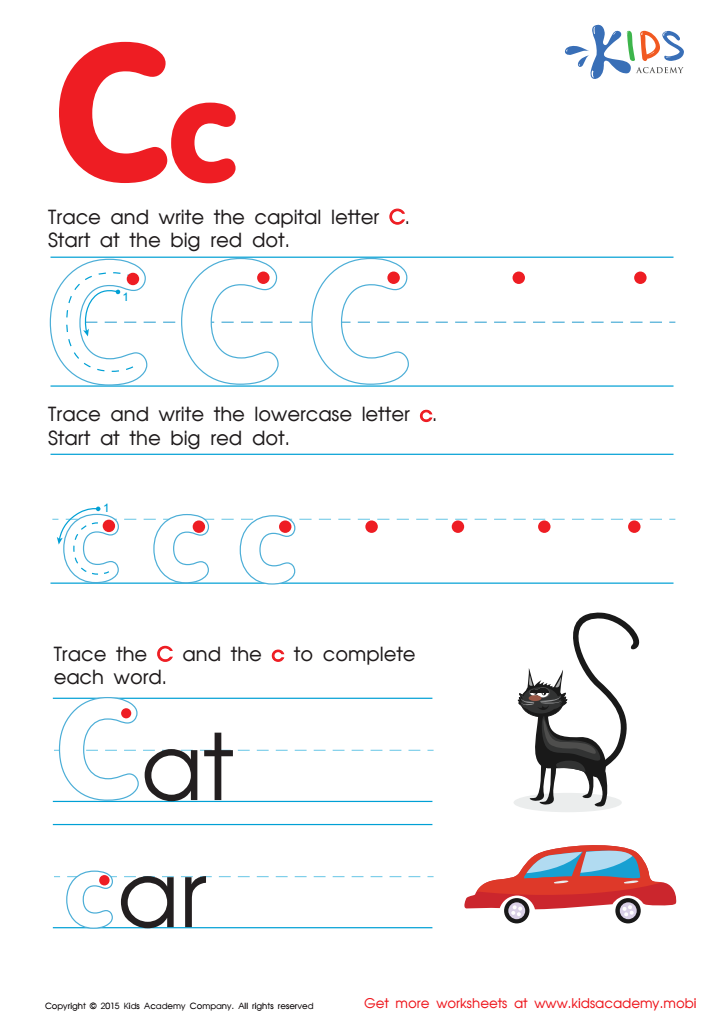
Letter C Tracing Page
Trace and write the letter 'C'! Put the pencil at the red dot then follow the lines – the capital letter first then the lowercase one. Cats love it and so will you! Get more free printables to practice tracing and writing.
Letter C Tracing Page
Worksheet
Letter W Coloring Sheet
Let your child have fun with this letter "W" coloring page! They can use their imagination to color the whale and discover the letter and its sound. Give them a helping hand to make it a whale of a time!
Download (PDF)
 Assign to My Students
Assign to My Students
Letter W Coloring Sheet
Worksheet
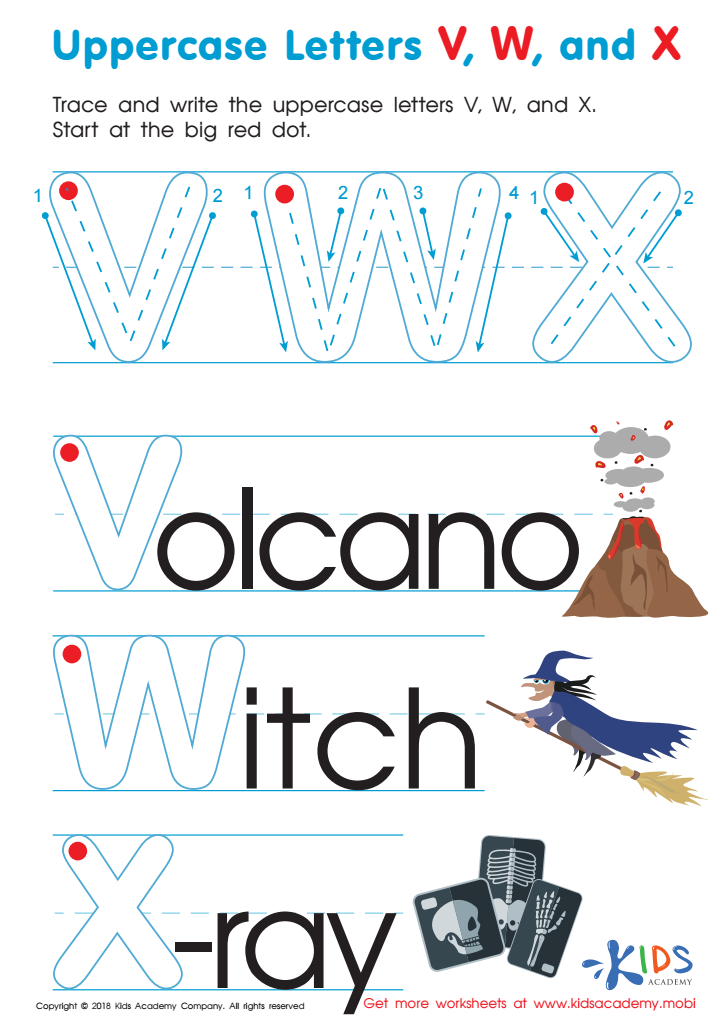
Uppercase Letters V, W, and X Worksheet
This worksheet is perfect for kids struggling to write uppercase letters V, W, and X. Warm up their brains first by having them name words starting with these letters. Then, help them trace and write each letter from the big red dot. With your assistance, they will quickly sharpen their writing skills.
Uppercase Letters V, W, and X Worksheet
Worksheet
Join Kids Academy for Free
Who is primarily going to use this learning content?








Letter tracing and recognition are foundational skills for early learners, particularly important for children aged 6-8. These skills form the bedrock upon which literacy is built and play a crucial role in effective communication.
Firstly, letter tracing helps improve fine motor skills and hand-eye coordination, essential for writing legibly. The repetitive motion of tracing helps children develop the muscle memory needed for fluid writing, making the physical act of writing easier and more automatic.
Secondly, practicing letter recognition ensures that children can identify each letter of the alphabet by its distinct shape and sound, crucial for reading development. At ages 6-8, children transition from ‘learning to read’ to ‘reading to learn.’ If letter recognition isn't well established, this shift becomes challenging, potentially hindering academic progress across all subjects.
Furthermore, familiarity with letters boosts children’s confidence. When kids can effortlessly recognize and write letters, they are more likely to engage with reading and writing activities positively. These skills also contribute to their ability to spell, as recognizing patterns in letters leads to better understanding and memorization of words.
Lastly, cultivating these skills early sets a solid foundation for lifelong learning. Parents and teachers who prioritize letter tracing and recognition invest in their children’s educational future, ensuring they have the tools needed for academic success and effective communication.








