Lowercase letter writing Normal Letter Recognition Worksheets for Ages 6-8
3 filtered results
-
From - To
Develop your child's writing skills with our "Lowercase Letter Writing Normal Letter Recognition Worksheets for Ages 6-8." Specifically tailored for young learners, these engaging printable worksheets focus on mastering the alphabet through fun and interactive activities. Each carefully designed sheet targets lowercase letter recognition and writing accuracy, forming the foundation for fluent reading and strong literacy skills. Perfect for home and classroom use, these resources support early education by combining play with practice, ensuring kids enjoy learning the essentials of writing in a manner that's both effective and enjoyable. Start their journey toward excellent penmanship today!
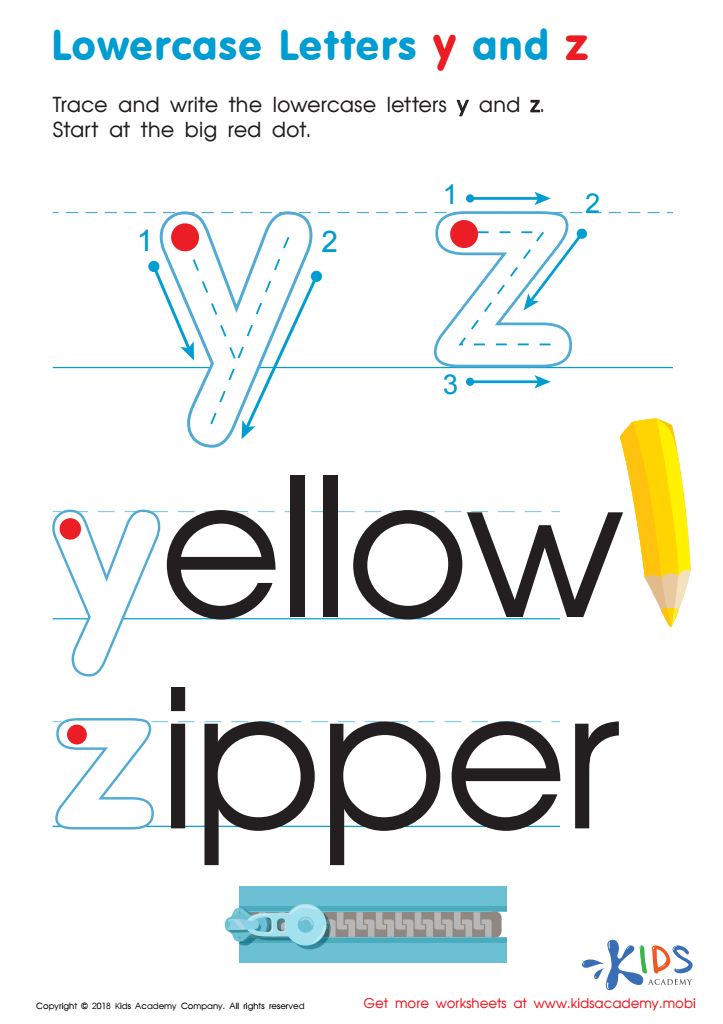
Lowercase Letters y z Worksheet
 Assign to My Students
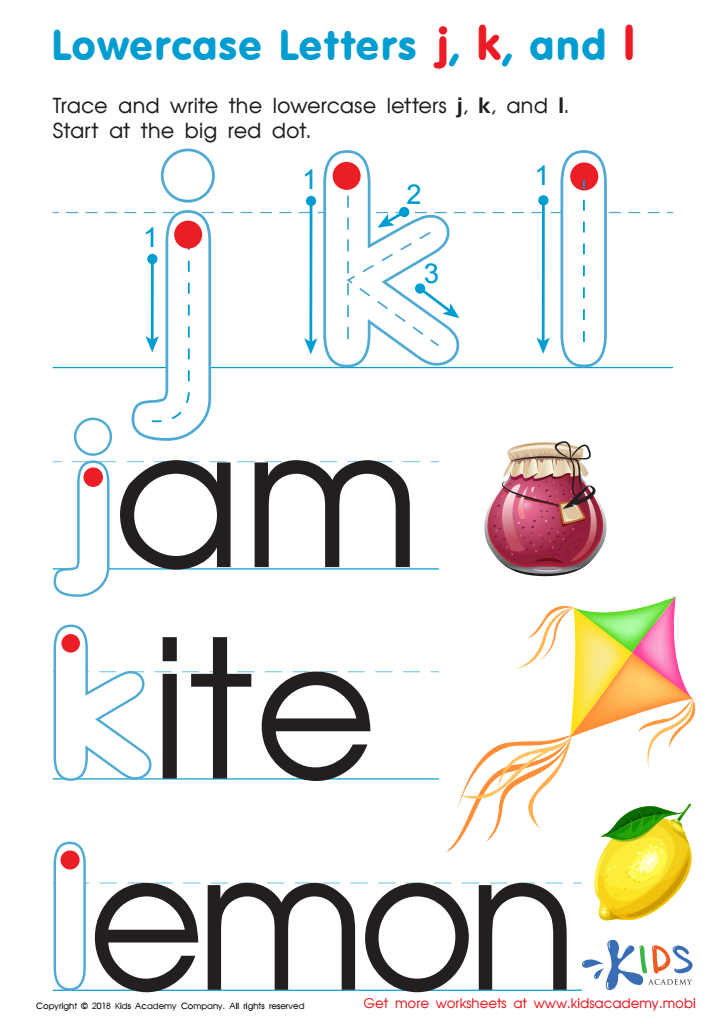
Lowercase Letters j k l Worksheet
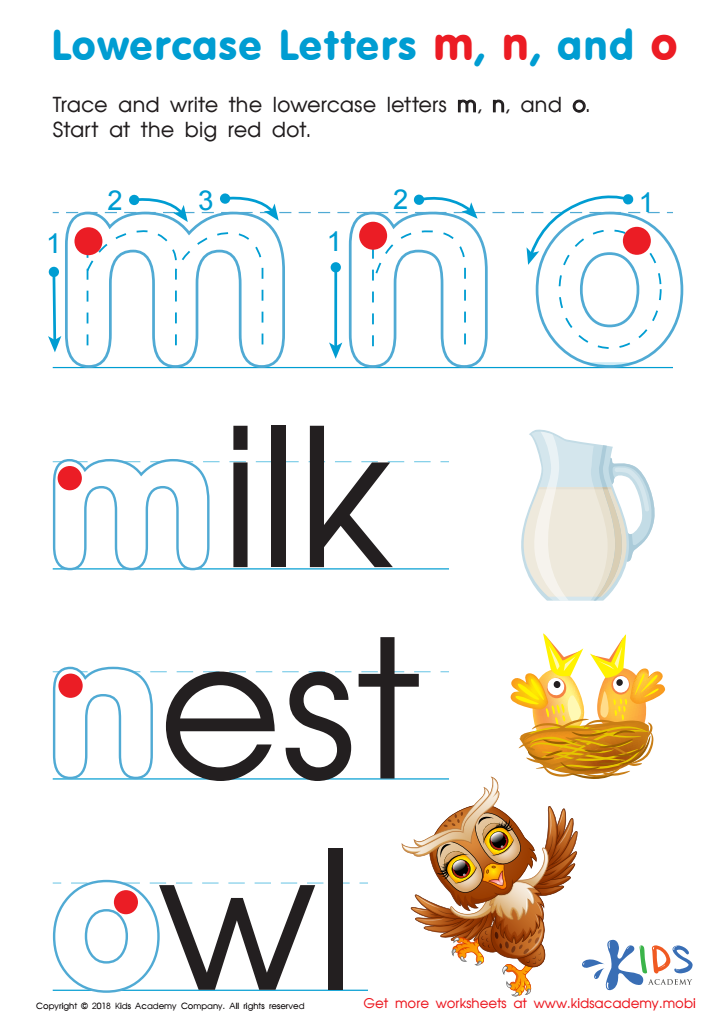
Lowercase Letters m n o Worksheet








Mastering lowercase letter writing and normal letter recognition during ages 6-8 is fundamental for children's academic success. Lowercase letters are used more frequently in texts than uppercase letters, accounting for around 95% of written language. Proficiency with these letters directly influences reading fluency, allowing children to effortlessly recognize and interpret words, sentences, and paragraphs. Early adeptness fosters confidence and enthusiasm in reading, crucial for all future learning.
Furthermore, writing and recognizing lowercase letters enhances fine motor skills and hand-eye coordination necessary for neat handwriting. Consistent practice develops muscle memory, making writing a smoother, faster process that promotes effective communication.
Phonological awareness is tightly linked to letter recognition. Knowing lowercase letters helps children decode sounds and blend them into words, a cornerstone of spelling and vocabulary skills. Misrecognition can impede reading comprehension and fluency, leading to challenges in all academic areas given the emphasis on literacy as foundational.
Early childhood teachers and parents play a pivotal role. Structured support in recognizing and practicing lowercase letters at this critical stage can set the groundwork for academic achievement, boosting self-esteem, and creating lifelong learners capable of navigating texts with ease and enjoyment. Thus, focused attention on this skill is crucial for holistic educational development.








