
Visual discrimination Normal Letter Recognition Worksheets for Ages 6-8
4 filtered results
Difficulty Level
Grade
Age
-
From - To
Subject
Activity
Standards
Unlock essential literacy skills with our Visual Discrimination Normal Letter Recognition Worksheets for Ages 6-8! Designed to enhance young learners' ability to identify and differentiate between letters, these engaging worksheets make learning fun and interactive. Children will develop critical visual skills as they work through various activities tailored to reinforce alphabet recognition. Each worksheet encourages focus and attention to detail, fostering confidence in letter identification. Perfect for classrooms or at-home learning, our worksheets support early reading development, ensuring that children build a strong foundation for future success. Explore our comprehensive resources to help your child thrive in their literacy journey!
Favorites
With answer key
Interactive
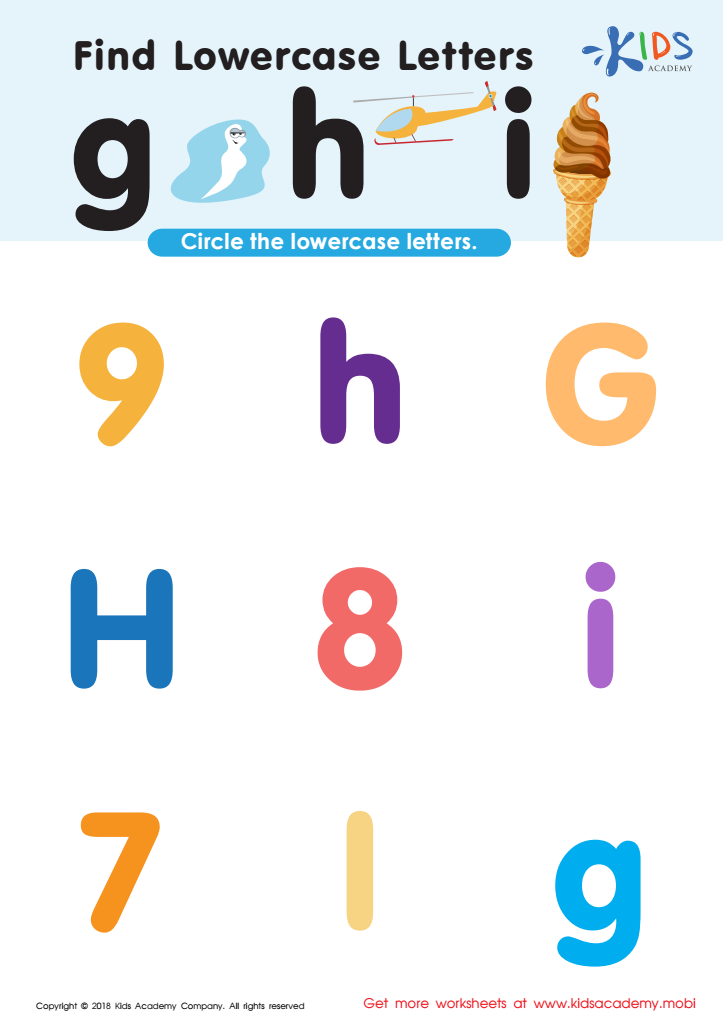
Find Lowercase Letters g h i Worksheet
Turn learning into a fun journey with your child! Use this free worksheet to find and circle the lowercase letters hidden amongst uppercase letters and numbers. Your child will understand what you're teaching them as they enjoy the search.
 Assign to My Students
Find Lowercase Letters g h i Worksheet
Worksheet
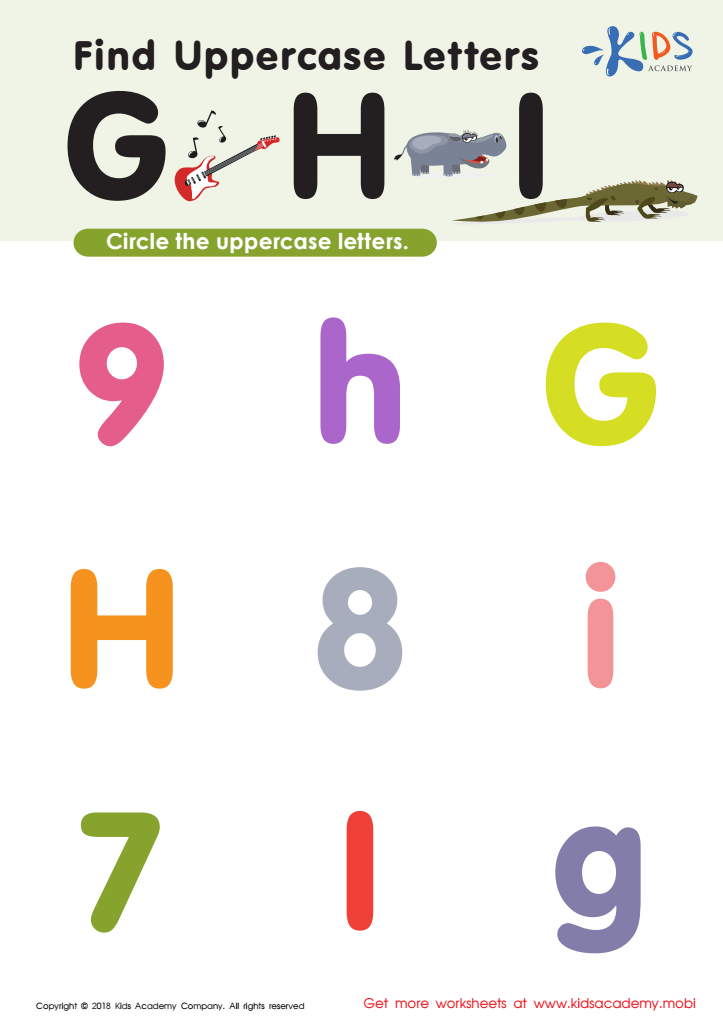
Find Uppercase Letters G, H, and I Worksheet
Find G, H, and I in uppercase with this downloadable worksheet! Numbers are included to challenge your kindergartener's letter recognition skills. Plus, practice G, H, and I sounds using the cute graphics. Perfect for learning letter case recognition!
Find Uppercase Letters G, H, and I Worksheet
Worksheet
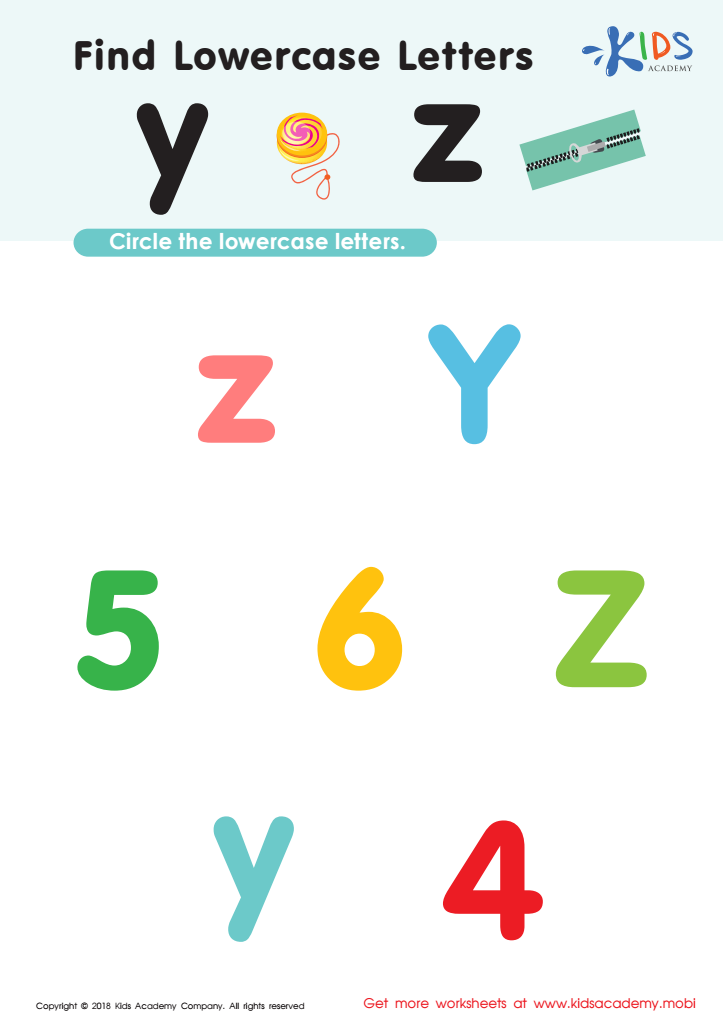
Find Lowercase Letters y z Worksheet
Help your kid learn the alphabet. Before they can move on to words and reading, they must first know the lower and uppercase letters. Show them how to find the letters y and z in this worksheet, which is filled with uppercase letters and numbers. Together, find and circle them.
Find Lowercase Letters y z Worksheet
Worksheet
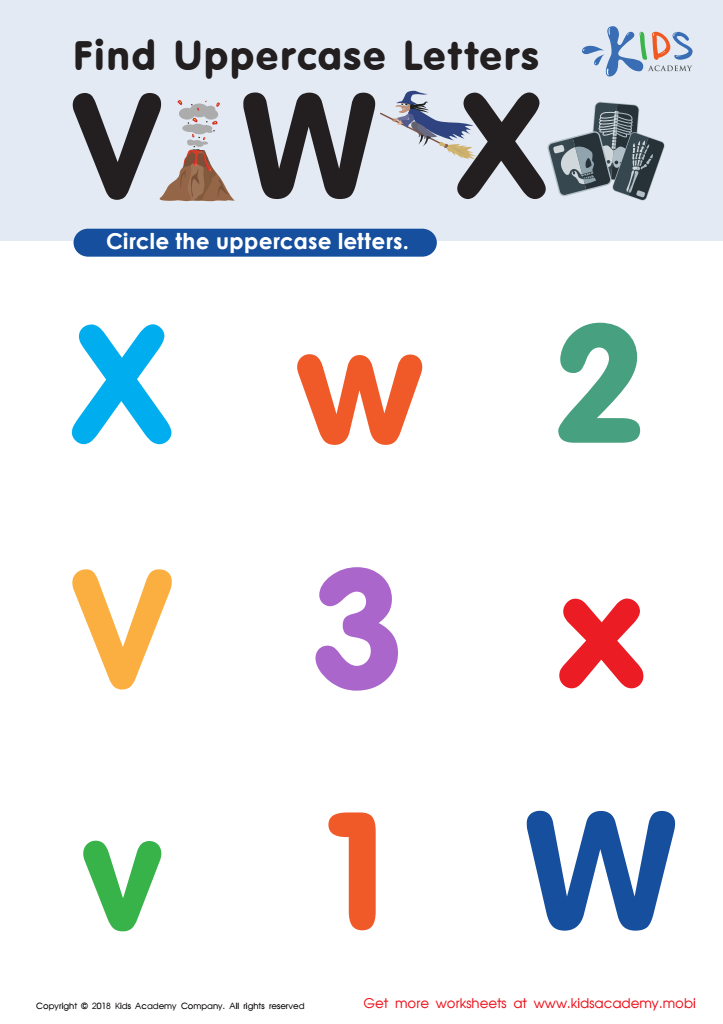
Find Uppercase Letters V, W, X Worksheet
Ask your kids if they can spot the uppercase letters V, W and X hidden in the lowercase letters and numbers, then have them circle them. After that, ask them to give you examples of words beginning with those letters. This worksheet will help them get started.
Find Uppercase Letters V, W, X Worksheet
Worksheet
Join Kids Academy for Free
Who is primarily going to use this learning content?








Visual discrimination and letter recognition are pivotal components of early literacy skills crucial for children aged 6-8. During this developmental stage, children are refining their ability to differentiate between similar-looking letters and words, which lays the foundation for successful reading and writing.
Parents and teachers should care about visual discrimination as it directly impacts a child's reading fluency and comprehension. When children can easily distinguish between letters like 'b' and 'd' or 'p' and 'q', they are less likely to make errors during reading and writing tasks. This skill helps to build their confidence and motivation to engage with texts.
Moreover, fostering visual discrimination and normal letter recognition enhances a child's overall classroom experience. Children who struggle with these skills may face challenges in following lessons, completing assessments, and participating in discussions. This can lead to frustration and disengagement from learning.
By supporting the development of these essential skills, parents and educators contribute to a child's academic success and love for learning. Early intervention strategies, such as targeted practice and engaging activities, can ensure that children gain the necessary competencies to thrive in their educational journey, equipping them for future literacy challenges.








