Phonics recognition Normal Letter Sounds Worksheets for Ages 6-8
3 filtered results
-
From - To
Explore our Phonics Recognition Normal Letter Sounds Worksheets designed for children ages 6-8! These engaging worksheets aim to enhance phonemic awareness by helping young learners recognize and practice the sounds associated with each letter of the alphabet. Through interactive activities, your child will develop essential reading skills while building a strong foundation in phonics. With colorful illustrations and age-appropriate exercises, these worksheets make learning fun and effective. Perfect for the classroom or at home, they cater to various learning styles and ensure your child is ready for early literacy success. Start your phonics journey today!
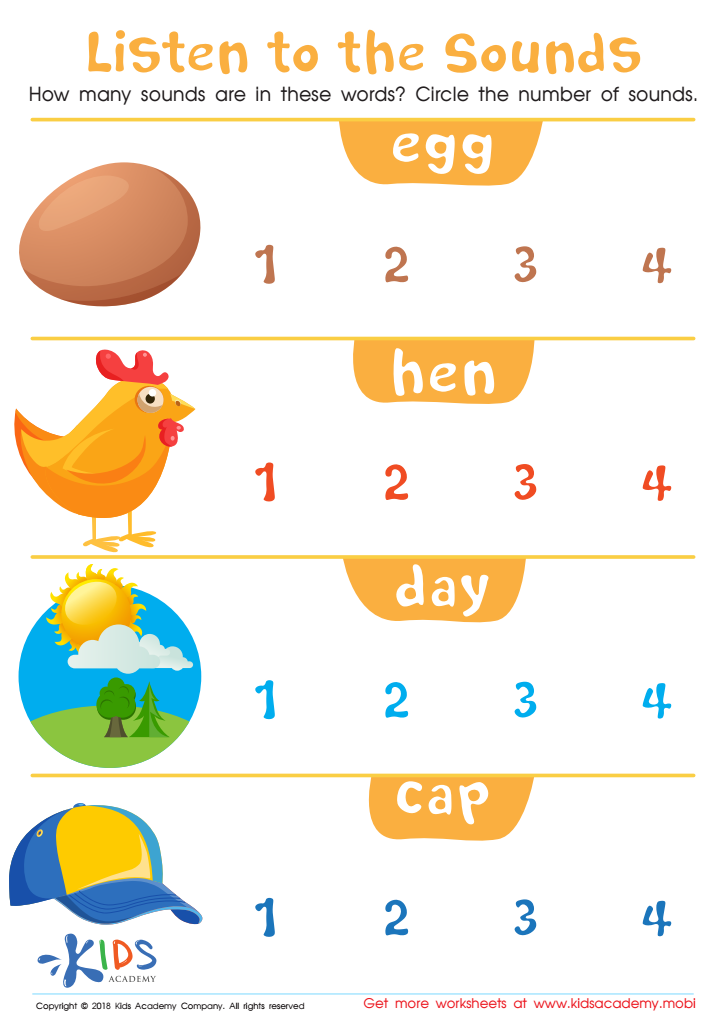
Listen to the Sounds Worksheet
 Assign to My Students
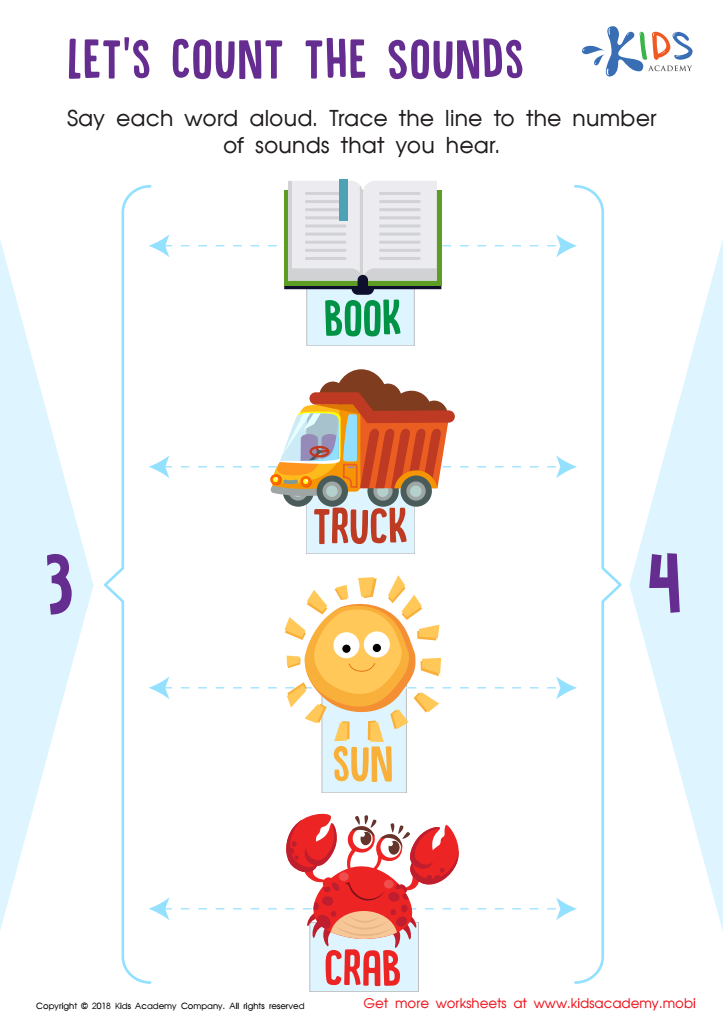
Let's Count the Sounds Worksheet
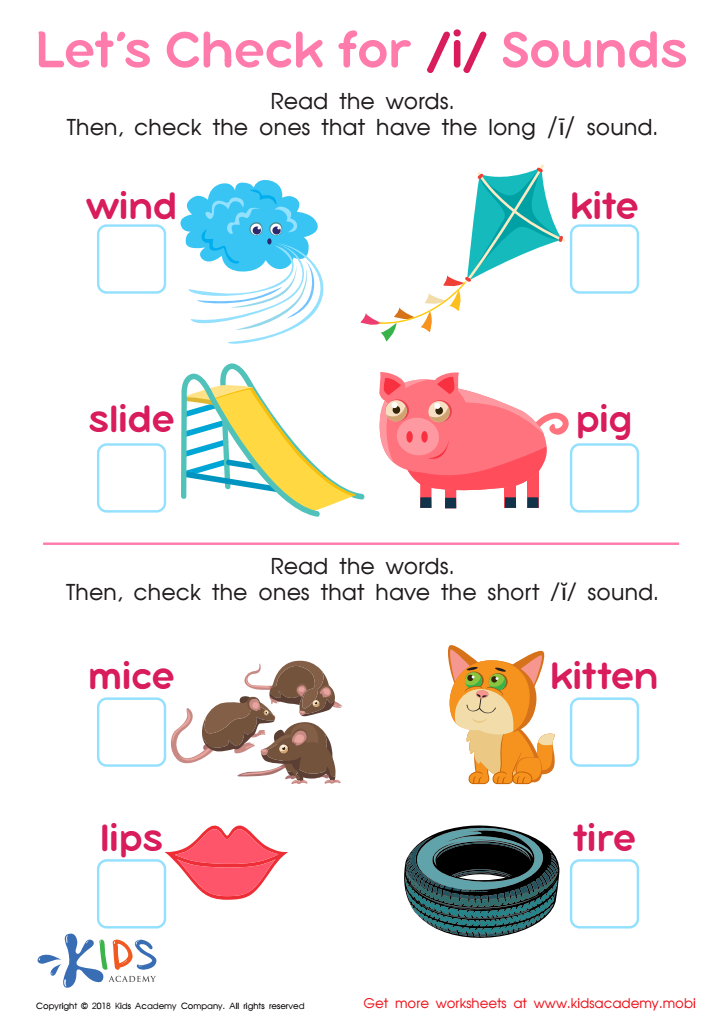
Let's Check for «i» Sounds Worksheet








Phonics recognition and normal letter sounds are crucial components in early literacy development for children aged 6-8. During this formative stage, children are transitioning from learning to read to reading to learn, making phonics instruction vital.
Firstly, a solid understanding of phonics helps children decode words, which is essential for reading proficiency. When children recognize letter sounds, they can blend those sounds to read unfamiliar words, boosting their confidence and encouraging a love for reading.
Additionally, phonics skills facilitate better spelling and writing. As children learn to associate sounds with letters, they become adept at spelling words phonetically, which is foundational for effective written communication.
Moreover, phonics contributes to overall language development. Strong phonics skills enhance vocabulary acquisition, as children are better equipped to understand new words they encounter in texts.
Teachers and parents should care about phonics because it lays the groundwork for academic success in all subjects, not just reading and writing. By fostering these skills, they ensure that children become competent, enthusiastic readers, setting the stage for lifelong learning and achievement. Thus, emphasizing phonics recognition can significantly impact children’s educational journeys, empowering them to navigate an increasingly literate world.






