Filters

7 filtered results

Clear all filters
Favorites
With answer key
Interactive

7 filtered results

Difficulty Level

Grade


Boost your child's reading skills with our engaging Normal Rhyming Worksheets tailored for kids aged 6-8. Designed to enhance reading comprehension, these worksheets incorporate fun rhymes to capture your child's interest while promoting literacy. Each activity encourages critical thinking and helps students identify rhyme patterns and meaning through interactive exercises. Perfect for classrooms or home learning, these resources foster a love for reading and support developmental milestones. With colorful visuals and age-appropriate challenges, they're ideal for strengthening foundational skills featured in your child's early education. Explore our collection today and make reading a joyful learning experience!

Check out this FREE Trial Lesson on Rhyming for age 6-8!

Recognize Words that Rhyme

Favorites
With answer key
Interactive
  • 6-8
  • Reading comprehension
  • Rhyming
  • Normal
Rhyming Words: Assessment Worksheet

Rhyming Words: Assessment Worksheet

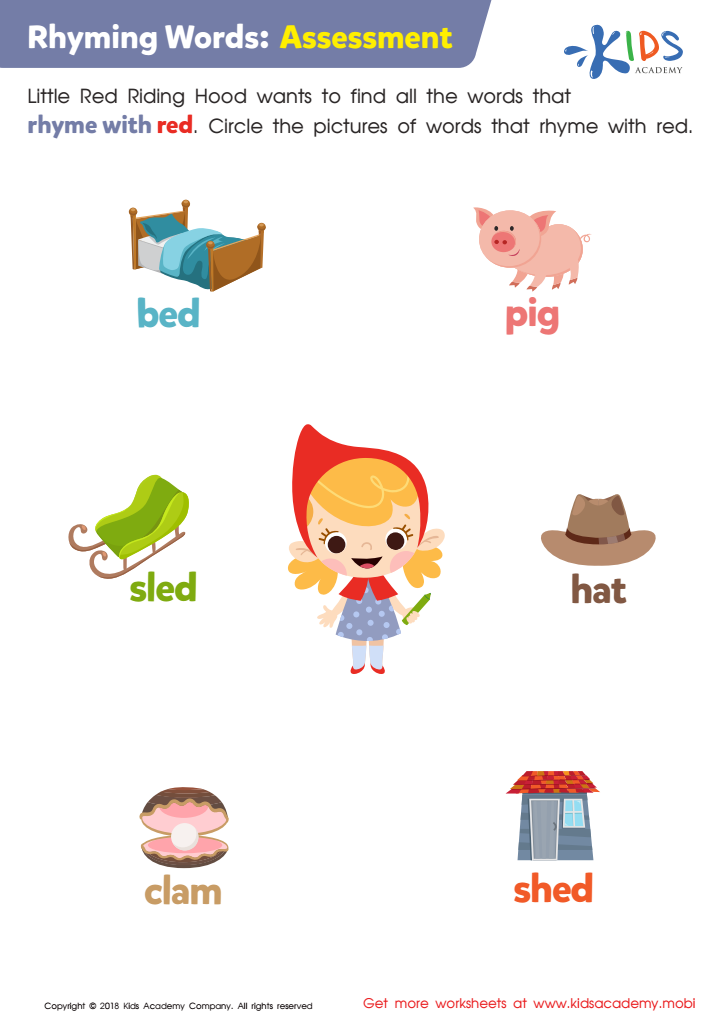
Help Little Red Riding Hood find rhyming words with "red". Download and print this worksheet. Have your child circle the rhyming words and pictures. Get them to say each word out loud and compare it to the word "red". When they're done, review the answers and talk about any words that don't rhyme.
Rhyming Words: Assessment Worksheet
Worksheet
Rhymes in Poems Worksheet

Rhymes in Poems Worksheet

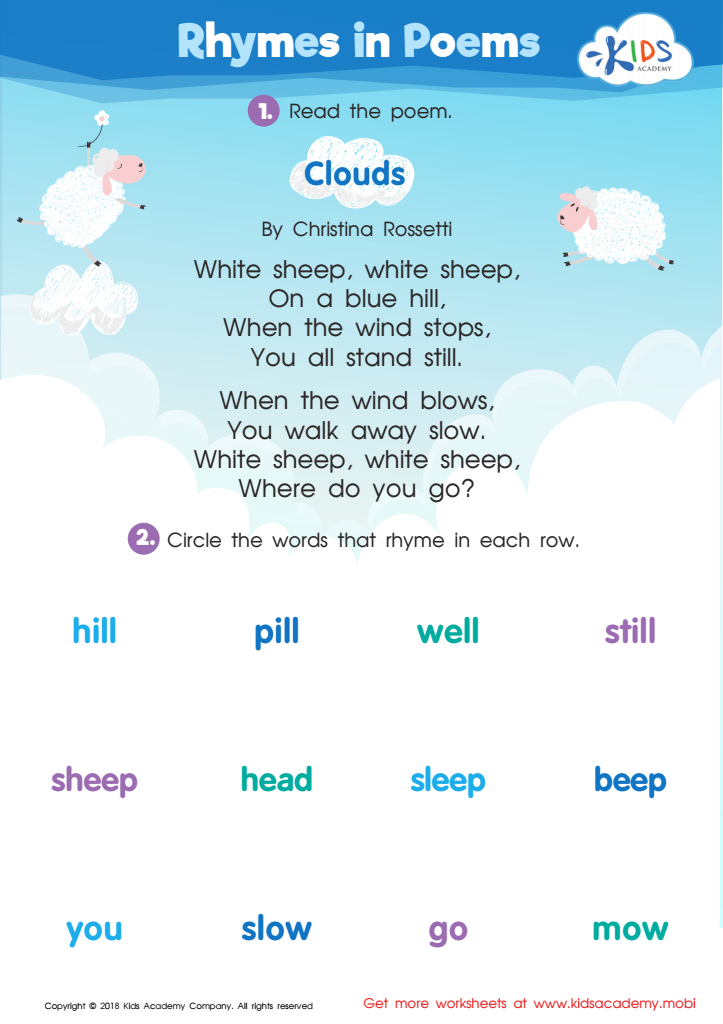
Poems are lovely works of literature; some with rhymes, and some without. This poem for kids is full of rhymes and tells the tale of a sheep. Read it aloud to your kids, then help them circle the rhyming words.
Rhymes in Poems Worksheet
Worksheet
Rhyming Words Worksheet PDF

Rhyming Words Rhyming Worksheet

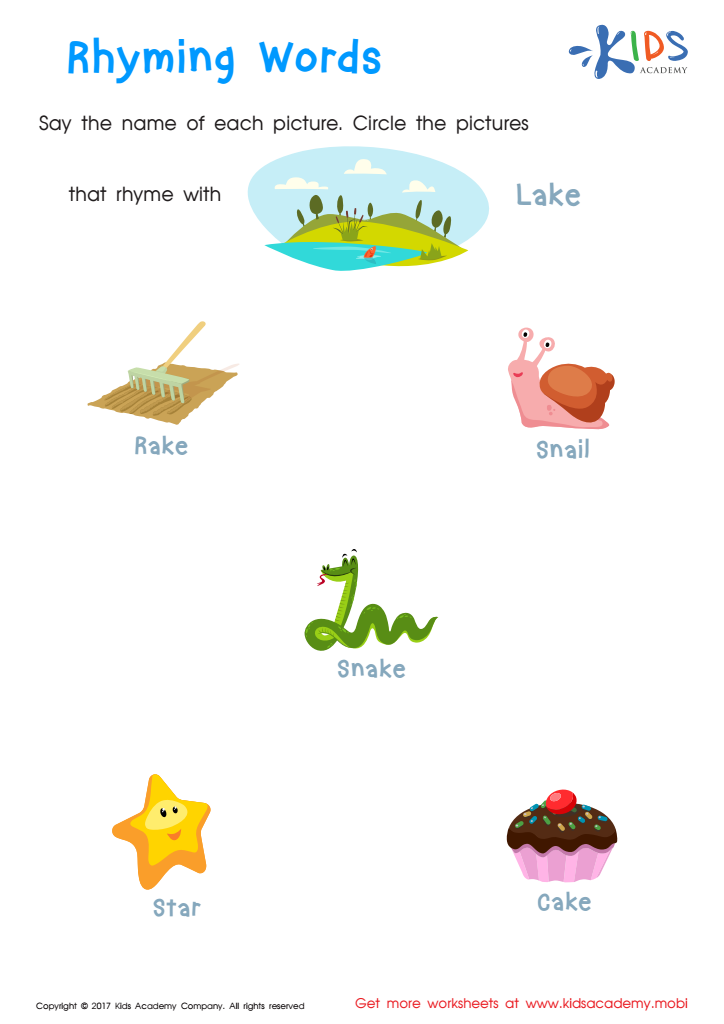
This worksheet is great for honing pre-reading skills. It helps kids make connections between pictures and written words, use problem-solving, and recognize sounds and words that rhyme. Have fun exploring rhyming words with your child, and they'll be rhyming in no time!
Rhyming Words Rhyming Worksheet
Worksheet
Rhyming Bells Worksheet

Rhyming Bells Worksheet

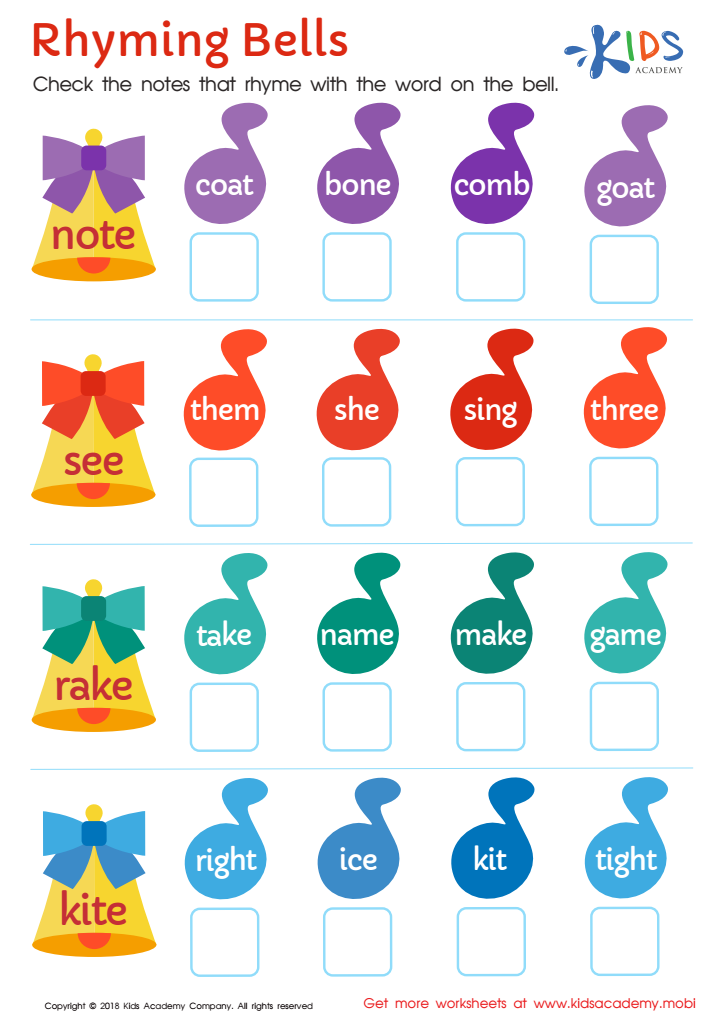
This printable worksheet helps students recognize rhyming words. Read a word, then pick the 4 words that rhyme. Look out for words with different spellings but same ending sound. It's a great exercise to improve understanding of rhyming words.
Rhyming Bells Worksheet
Worksheet
Picture Rhymes Printable

First Words: Picture Rhymes Worksheet
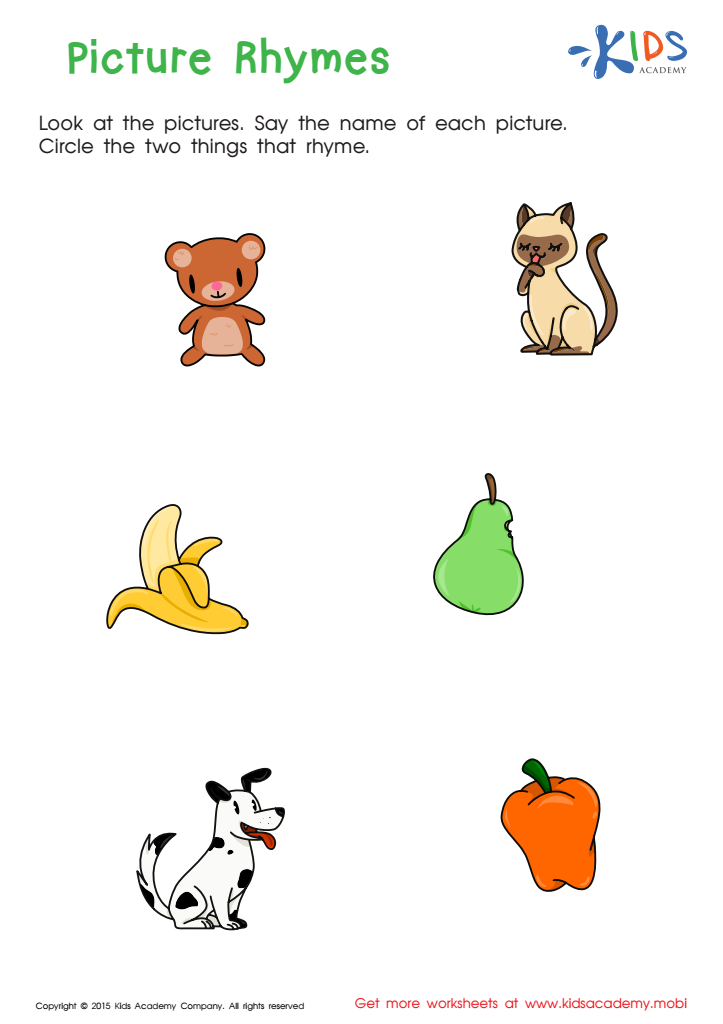
Rhyming helps kids understand language, read and write better. This printable worksheet boosts problem-solving and cognitive skills with vibrant pictures. It teaches kids to identify words, recognize rhymes, complete mental tasks and write words. An extra activity: show them how rhyming words share some of the same letters.
First Words: Picture Rhymes Worksheet
Worksheet
Rhyming Words Worksheet for Kindergarten

Time to Rhyme Rhyming Worksheet

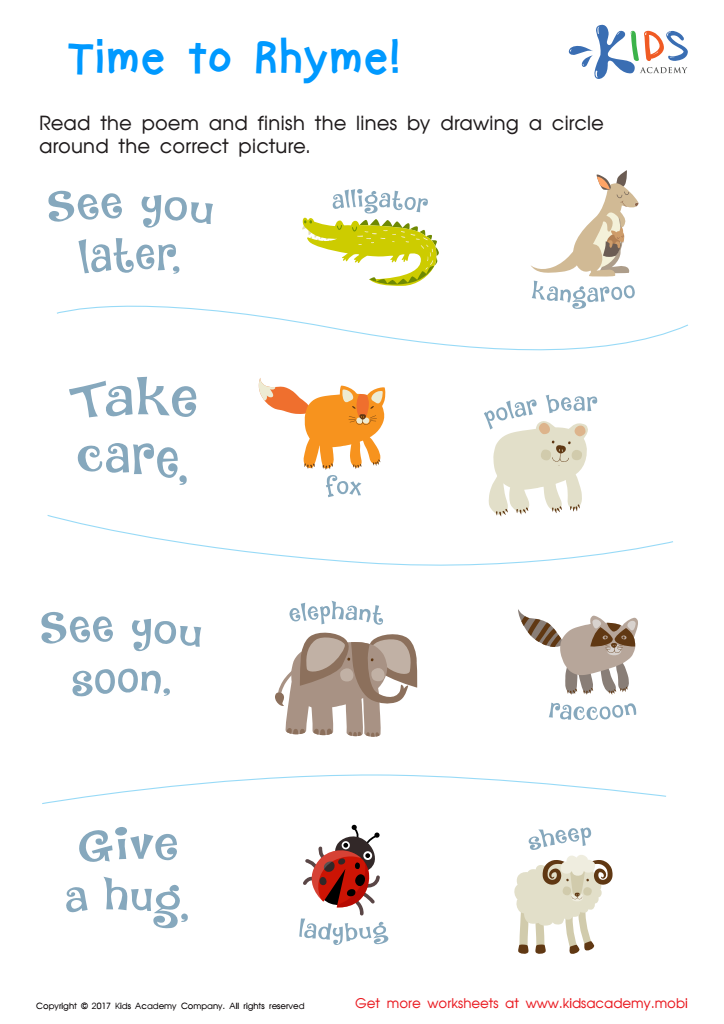
This worksheet helps kids learn catchy sayings with rhymes, notice words and sounds that rhyme, and use problem solving to solve expressions. By using these expressions in everyday talk, kids gain the repetition needed to internalize the skills they've learned. Check out our nursery rhymes to further support them!
Time to Rhyme Rhyming Worksheet
Worksheet
Poem: Cats and Dogs Worksheet


Poem: Cats and Dogs Worksheet

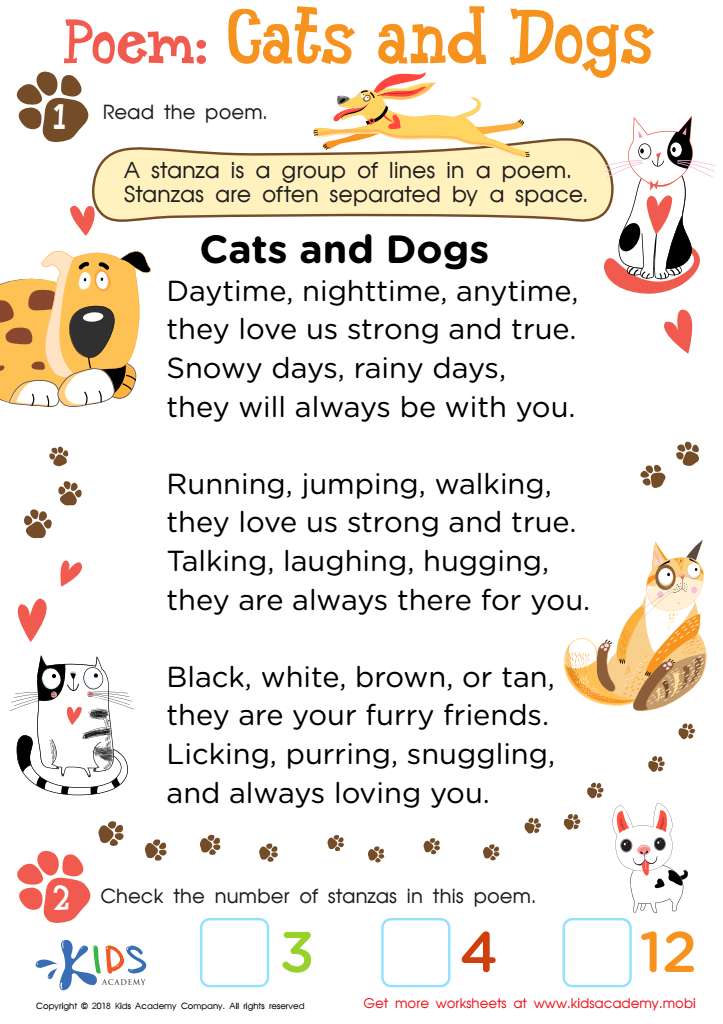
Read the poem to your child and point out where each stanza ends. Ask if they know what a stanza is (if not, explain it's a group of lines in a poem). Help them answer the question at the bottom of the printout. This simple, sweet poem about cats is easy for your child to relate to.
Poem: Cats and Dogs Worksheet
Worksheet


Reading comprehension is crucial for children aged 6-8 as it forms the foundation for their literacy skills and overall academic success. During this stage, children are transitioning from learning to read to reading to learn. Comprehension goes beyond recognizing words; it involves understanding and interpreting texts, which is essential for engaging with a variety of subjects.

Normal Rhyming plays a significant role in developing reading comprehension as it supports phonemic awareness. When children recognize rhymes, they become attuned to the sounds within words, which aids in decoding and fluency. Engaging with rhyming texts can make reading enjoyable, fostering a love for literature that motivates kids to read more.

Moreover, rhyming texts often employ repetitive patterns and rhythm, making it easier for young learners to predict and infer meaning. This predictability enhances their comprehension skills, as they learn to use context clues to derive understanding.

Teachers and parents should prioritize activities that promote reading comprehension through rhyming, such as listening to rhyming stories, encouraging creative rhyming games, or even writing simple rhymes together. Supporting children in this way not only improves their reading abilities but also builds confidence and critical thinking skills that will serve them throughout their academic journey.