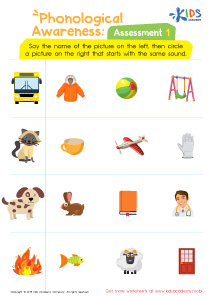
Reading comprehension Normal Three Letter Words Phonics Worksheets for Ages 6-8
3 filtered results
Difficulty Level
Grade
Age
-
From - To
Subject
Activity
Standards
Boost your child's reading skills with our "Reading Comprehension Normal Three Letter Words Phonics Worksheets" for ages 6-8! These expertly designed worksheets are perfect for early readers, enabling them to practice and improve phonics through engaging three-letter word exercises. Each worksheet focuses on building phonemic awareness and reading comprehension, helping your child recognize and accurately read short words. These printables offer a fun and educational way to enhance their literacy skills at home. Encourage learning and boost confidence with our comprehensive, easy-to-use phonics resources crafted by educational experts. Download now and watch your child thrive!
Favorites
With answer key
Interactive
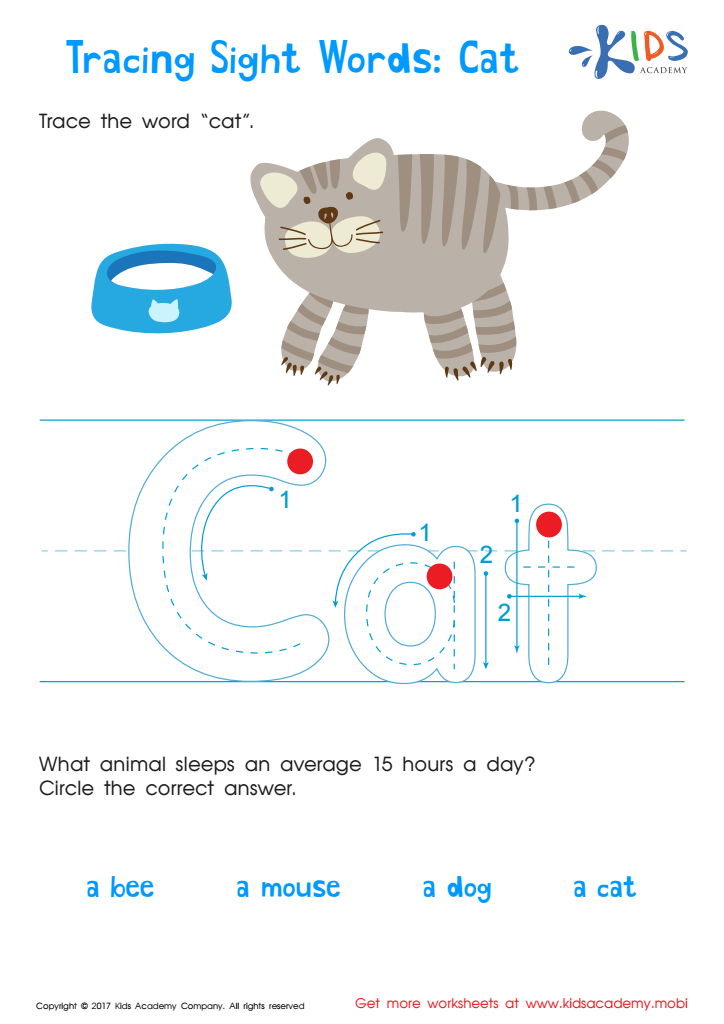
Cat Printable Sight Words Worksheet
Encourage your child's literacy with this fun sight words worksheet: cat PDF! It helps build a solid foundation for reading, featuring activities such as reading and tracing the word cat, and finding it amongst other sight words. With its cute cat, Kids Academy makes learning to read a delight!
 Assign to My Students
Cat Printable Sight Words Worksheet
Worksheet
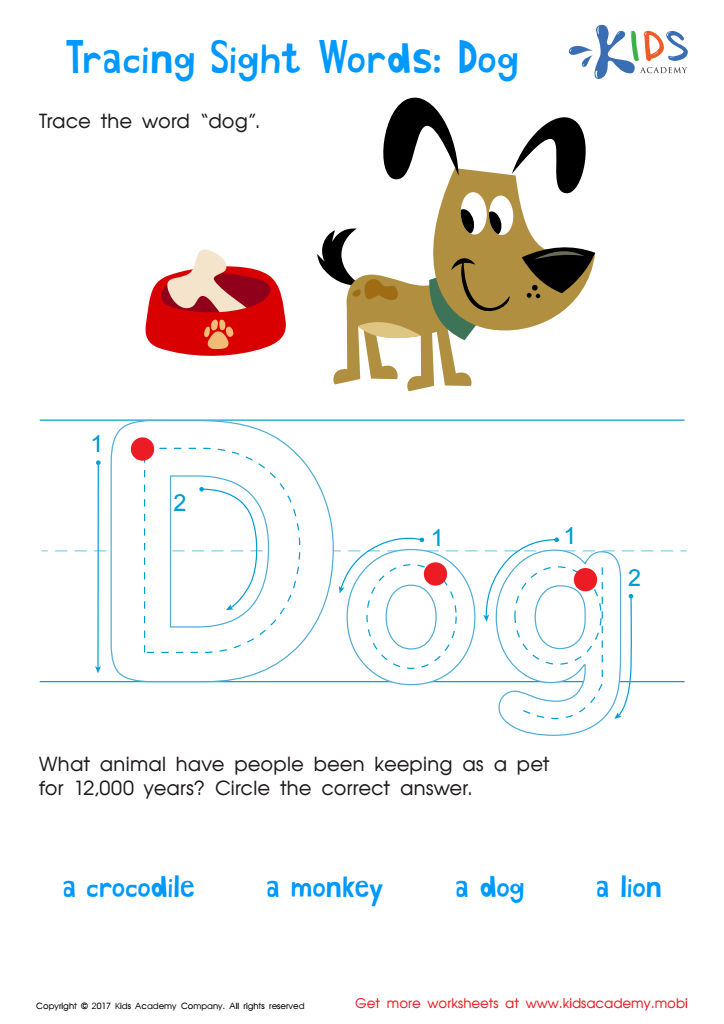
Dog Worksheet Sight Words Worksheet
Get your kids excited to read with our dog-themed sight words worksheet!
Excite your child to read with our sight words worksheet: dog edition! Featuring a lovable dog character to put a smile on any kid's face, this worksheet helps kids practice reading and writing the word "dog". Build a library of words they can read quickly and promote increasing literacy skills with early fluency! Get them ready for reading with our dog-themed sight words worksheet!
Dog Worksheet Sight Words Worksheet
Worksheet
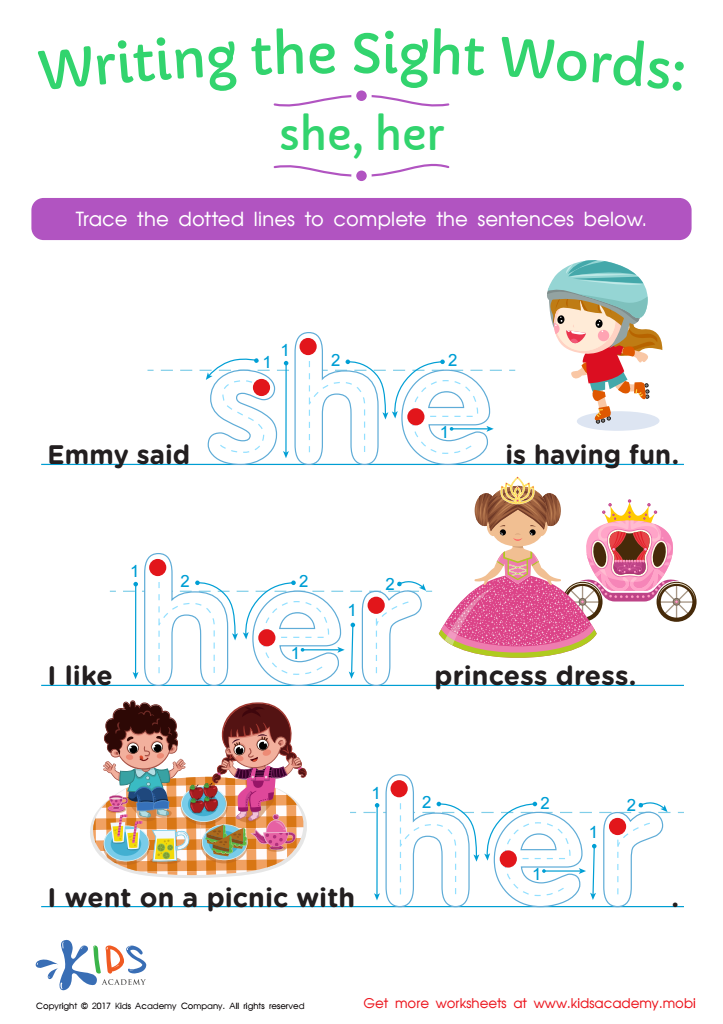
She, Her Printable Sight Words Worksheet
Help your child build literacy with daily sight word tracing! Have them read and trace the words 'she' and 'her' for a fun, focused practice. It's a great way to develop reading and writing skills.
She, Her Printable Sight Words Worksheet
Worksheet
Join Kids Academy for Free
Who is primarily going to use this learning content?




Reading comprehension of normal three-letter words is crucial for children ages 6-8 as it lays the foundation for their lifelong literacy and academic success. At this developmental stage, young learners are transitioning from recognizing letters and sounds to blending them into simple words, which is pivotal for reading fluency. Phonics instruction helps children understand the relationship between letters and sounds, enabling them to decode new words with confidence. Comprehension, in turn, allows them to derive meaning from the text, promoting critical thinking and an appreciation for reading.
When children master three-letter words through phonics, their ability to tackle more complex words and sentences improves, fostering anticipatory reading and greater self-reliance. This positive reading experience can inspire a love for reading, resulting in enhanced vocabulary, better communication skills, and improved academic performance across subjects. Moreover, efficient reading comprehension reinforces listening and speaking abilities—key components for classroom participation and social interaction.
Parents and teachers who prioritize mastery of three-letter words through phonics are effectively equipping children with the essential tools to decode language, interpret context, and build a solid literacy foundation. By supporting this critical learning phase, they are investing in the child's future academic achievements and nurturing a confident, curious, and engaged learner.