Uppercase identification Normal Upper & Lowercase Letters Worksheets for Ages 6-8
5 filtered results
-
From - To
Help your child master uppercase letter identification with these engaging and educational Uppercase Identification Normal Upper & Lowercase Letters Worksheets, designed for ages 6-8. Perfectly tailored to young learners, these worksheets provide a variety of activities that encourage kids to recognize and differentiate between uppercase and lowercase letters. Each worksheet combines fun, interactive exercises with effective learning strategies to enhance your child's alphabet knowledge and reading skills. Ideal for both classroom settings and homeschooling, these printable worksheets ensure that practicing and mastering uppercase letters is enjoyable and effective. Start building strong literacy foundations today with these invaluable learning aids!
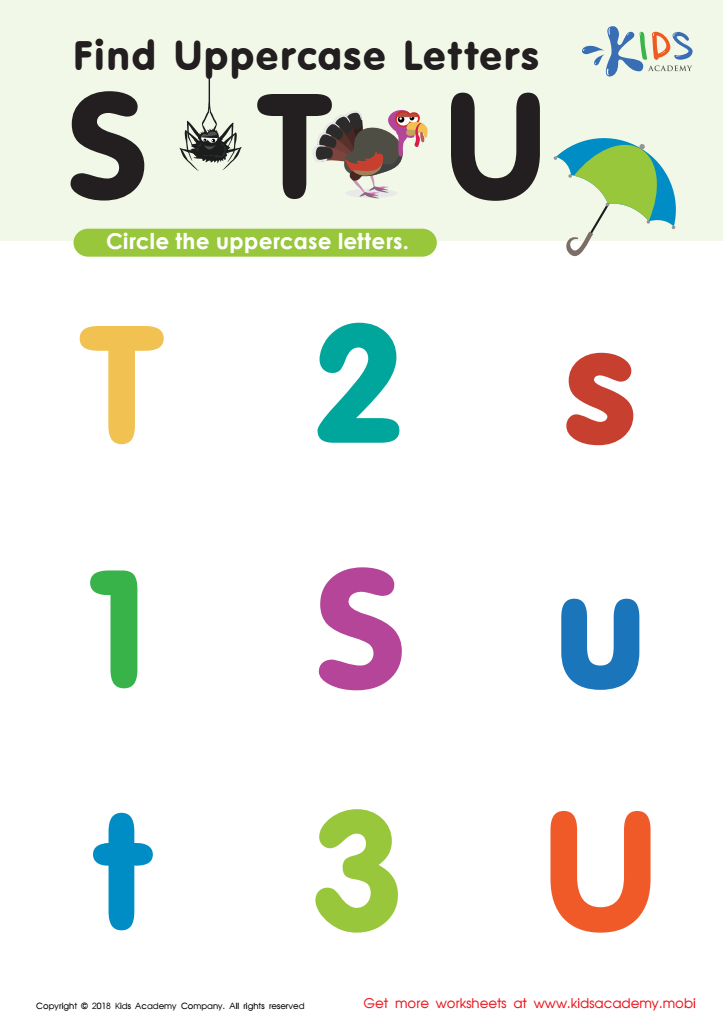
Find Uppercase Letters Worksheet
 Assign to My Students

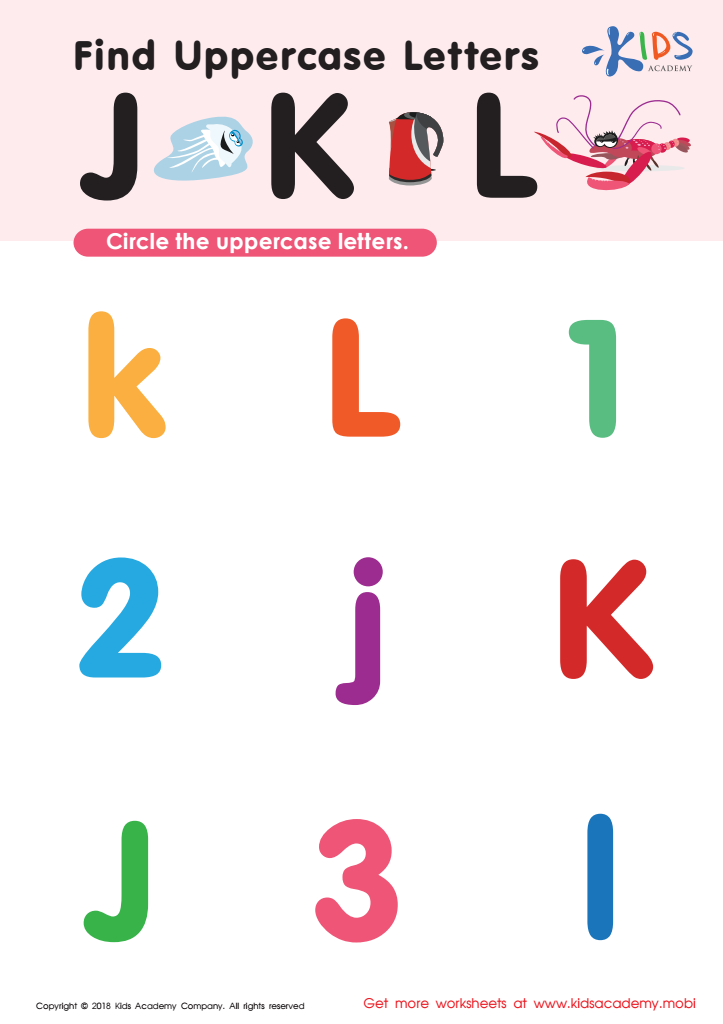
Find Uppercase Letters J, K, and L Worksheet

Find Uppercase Letters A, B, and C Worksheet
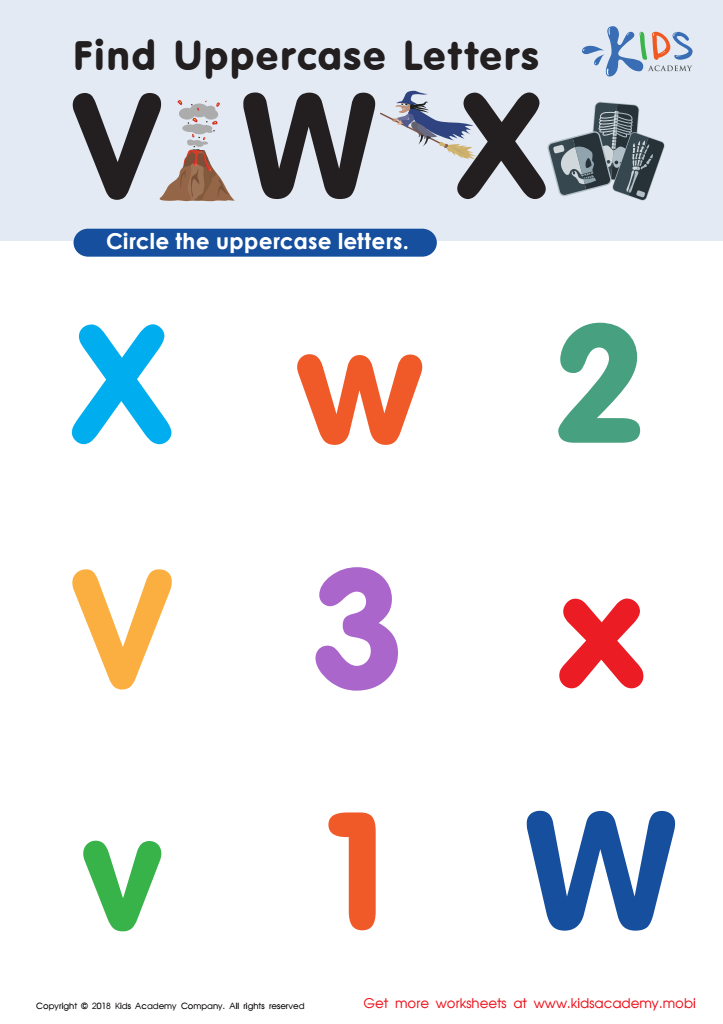
Find Uppercase Letters V, W, X Worksheet
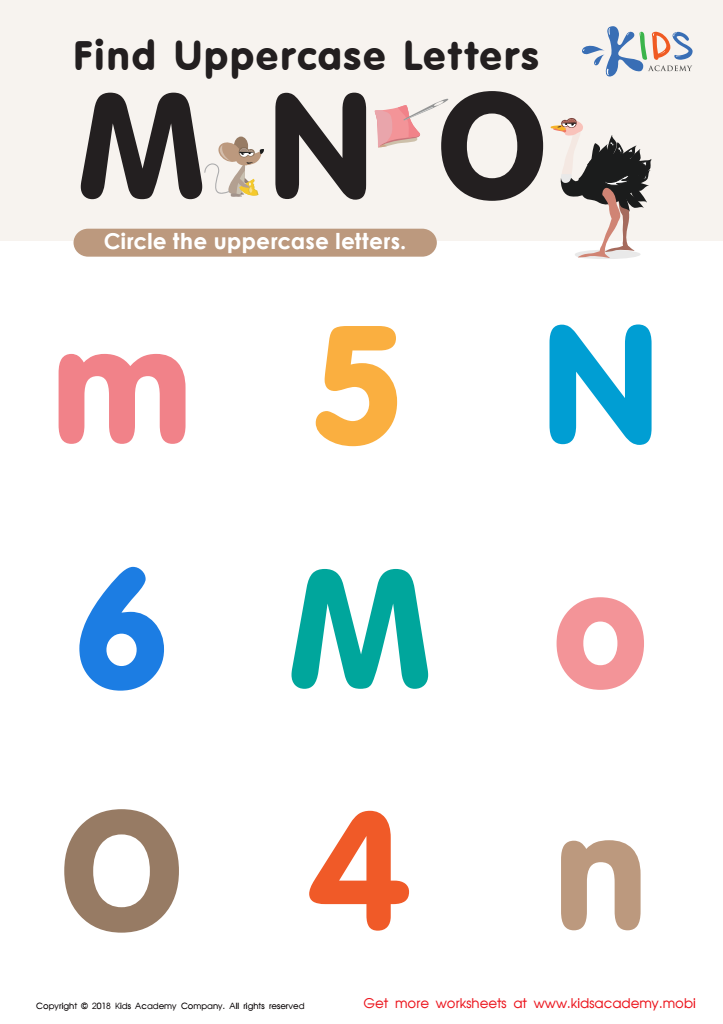
Find Uppercase Letters M, N, and O Worksheet






Understanding uppercase and lowercase letter identification for children aged 6-8 is crucial for several key reasons. Firstly, this skill lays the foundation for reading and writing proficiency. At this age, children transition from recognizing and writing single letters to reading sentences and paragraphs. Recognizing different cases enhances their ability to read accurately and fluently.
Secondly, comprehending the use of uppercase and lowercase letters helps in distinguishing the meanings of words and sentences, as some words might have different meanings depending on whether they are capitalized or not (e.g., ‘Polish’ vs. ‘polish’). Proper use of capitalization promotes grammar and syntax skills, helping children construct and understand sentences correctly.
Additionally, fostering these abilities aligns with literacy standards in school curricula, ensuring children meet expected academic milestones. Early confidence in these skills contributes to a positive attitude towards learning, mitigating potential frustrations and future difficulties in more complex language tasks.
Encouraging proper letter recognition can also aid in word recognition, phonics, and other foundational literacy skills. This fosters a holistic approach to language learning that will serve them well throughout their academic journey. Hence, it’s imperative for parents and teachers to emphasize the importance of uppercase and lowercase letter identification in early education to ensure a strong literacy foundation.







