Counting practice Normal Building Vocabulary Worksheets for Ages 6-8
3 filtered results
-
From - To
Enhance your child’s foundational math skills with our "Counting Practice Normal Building Vocabulary Worksheets for Ages 6-8." These engaging and educational printable worksheets are designed to develop essential counting abilities while also expanding vocabulary knowledge. Through fun activities, kids will learn to recognize, count, and write numbers, improving their number sense and arithmetic skills. Perfect for early learners, our sheets support children in building a solid mathematical foundation while introducing new words that boost their reading and comprehension abilities. Ideal for both classroom and home practice, these worksheets make learning an enjoyable experience for young minds!
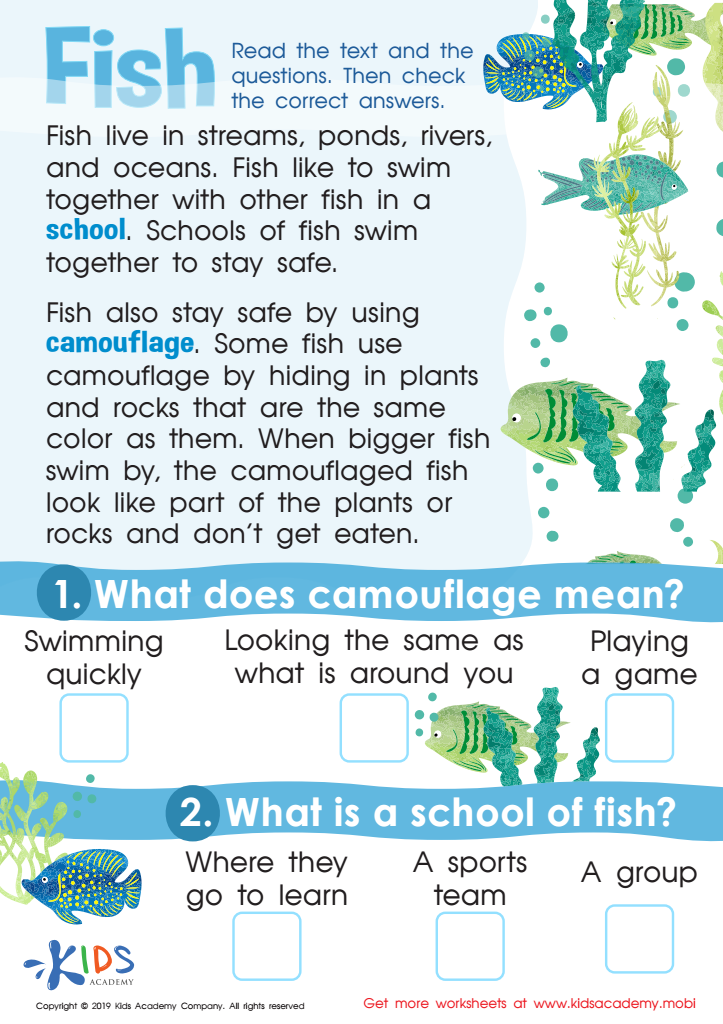
Fish Worksheet
 Assign to My Students












The Dog and His Bone Worksheet
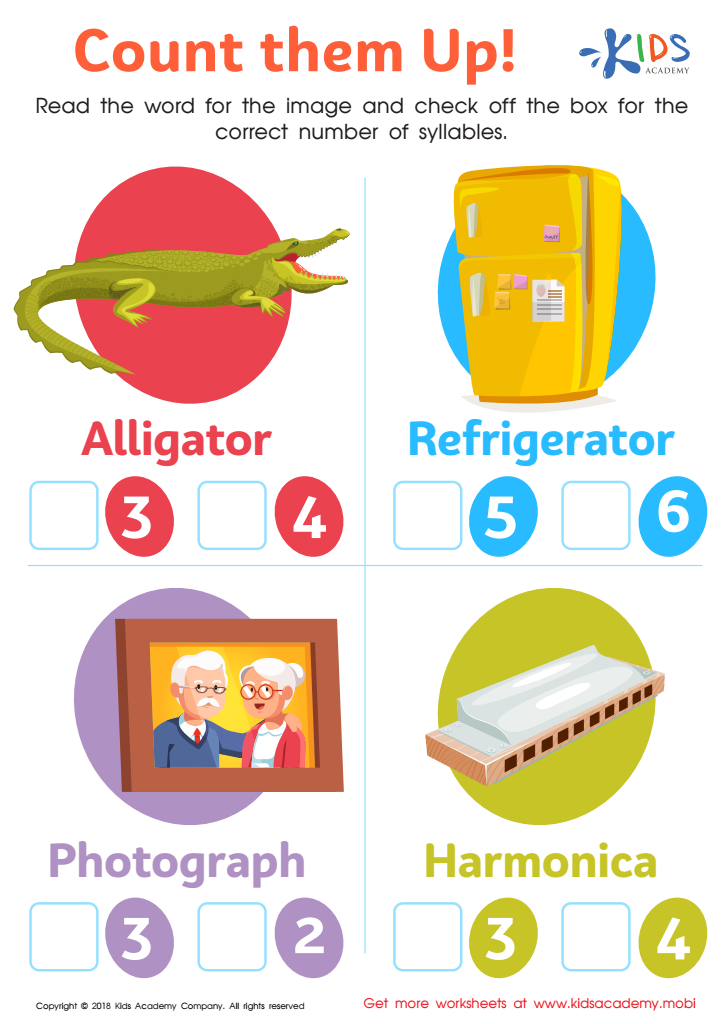
Count Them Up Worksheet


.jpg)





Parents and teachers play a crucial role in nurturing foundational skills during early childhood. At ages 6-8, children are in a critical development window for language and mathematical understanding, which form the basis of academic success and everyday life skills.
Counting practice is essential because it helps children develop number sense, an understanding of quantities, and the ability to perform basic arithmetic operations. These early math skills are pivotal for problem-solving and logical thinking, which are not only vital in school but also in real-world scenarios like shopping or time management.
Additionally, building a strong vocabulary is equally important. A robust vocabulary enhances reading comprehension, communication skills, and overall cognitive development. With a richer vocabulary, children are better equipped to express their thoughts, understand instructions, and engage in more complex learning tasks.
Together, counting practice and vocabulary building reinforce each other. For example, understanding words like "more," "less," "equal," and "estimate" in math discussions helps solidify numerical concepts. Supporting children in these areas means setting the foundation for their future academic achievements, social interactions, and problem-solving abilities. By actively engaging in these practices, parents and teachers can ensure children are well-prepared for lifelong learning.








