
Phonics Skills Normal Building Vocabulary Worksheets for Ages 6-8
5 filtered results
Difficulty Level
Grade
Age
-
From - To
Subject
Activity
Standards
Boost your child's literacy with our Phonics Skills Normal Building Vocabulary Worksheets designed for ages 6-8! These engaging, printable materials focus on enhancing phonics skills, helping young learners decode words and build a robust vocabulary. Each worksheet is crafted with age-appropriate content, featuring fun activities that reinforce phonemic awareness. As children practice letter sounds, blending, and word recognition, they gain confidence in their reading abilities. Ideal for home or classroom use, these worksheets support key developmental skills and make learning enjoyable. Empower your child’s academic journey and foster a love for reading with our resources today!
Favorites
With answer key
Interactive
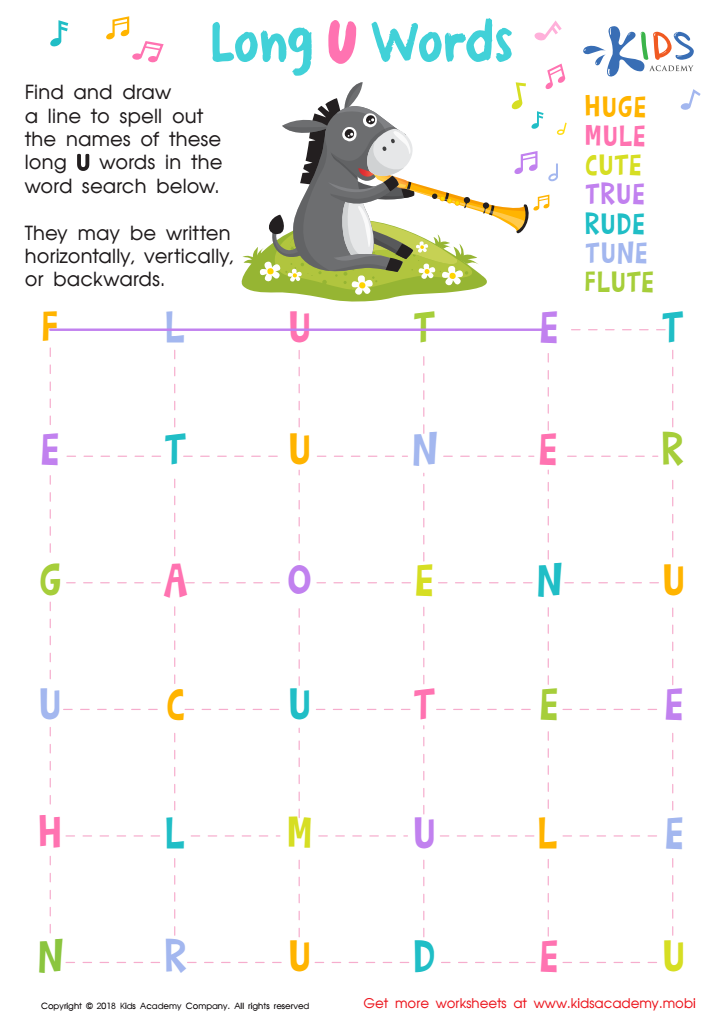
Long /u/ Words Worksheet
Your child needs to learn phonetics to enunciate and differentiate words. This fun worksheet encourages them to find and draw lines connecting the long 'U' words in the word search. Help them read the words on the right side of the picture, then look for them in the word search (horizontally, backwards or vertically).
 Assign to My Students
Long /u/ Words Worksheet
Worksheet











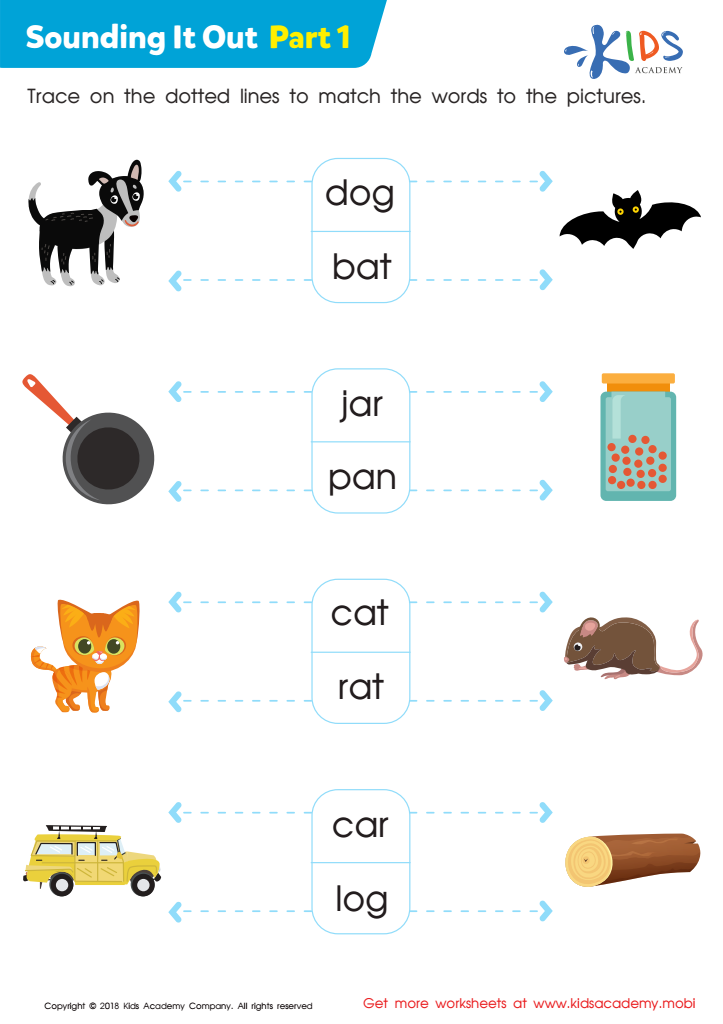
Sounding it Out: Part 1 Worksheet
Help kids learn to read with this fun worksheet! Kids use picture clues to sound out words and trace the dotted lines to match each word to its corresponding image. Stimulating and interactive, this printable is a great way for little learners to practice phonics.
Sounding it Out: Part 1 Worksheet
Worksheet
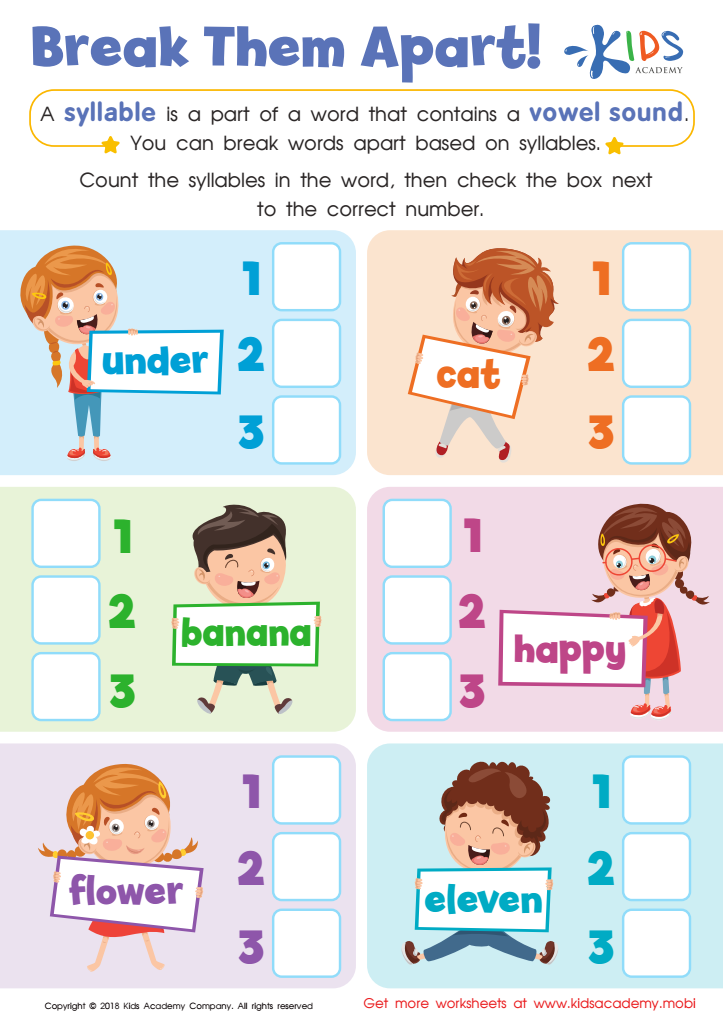
Reading: Break Them Apart Worksheet
See if students understand syllables with this fun worksheet. It teaches them that a syllable is a word part with a vowel sound. Kids read each word and choose how many parts it has. Doing this often helps them decode new words and gain confidence.
Reading: Break Them Apart Worksheet
Worksheet
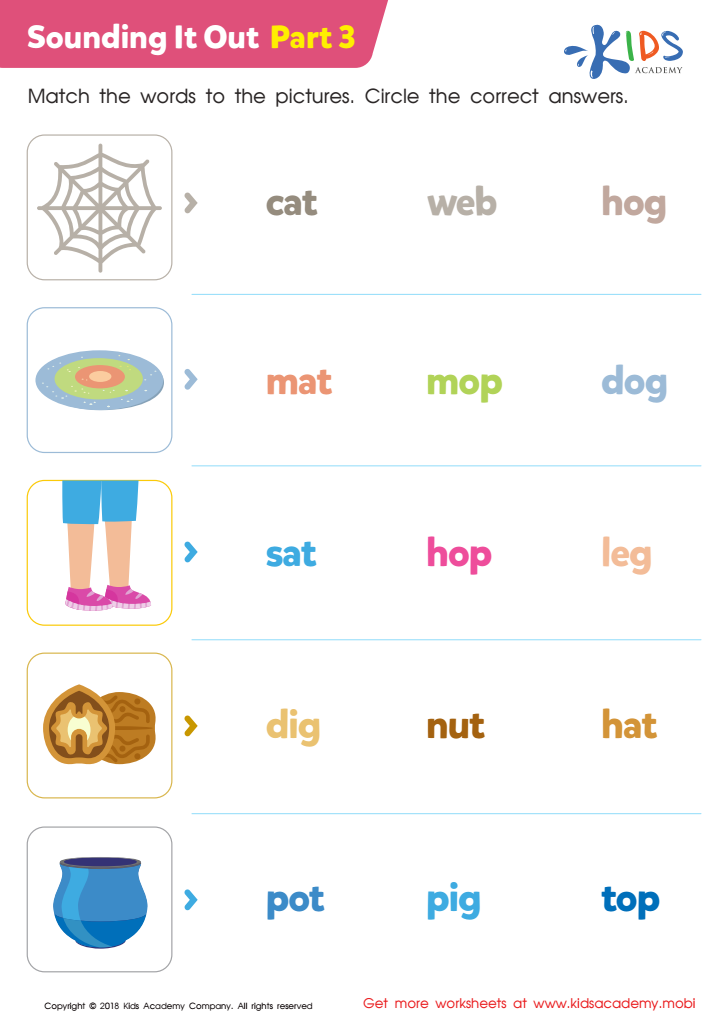
Sounding it Out: Part 3 Worksheet
Once Parts 1 and 2 are complete, this printable phonics worksheet will help kids take their reading skills to the next level! As they gain confidence, give them hints less often and direct their attention to three words in a row. Ask them to read and circle the correct word to complete!
Sounding it Out: Part 3 Worksheet
Worksheet
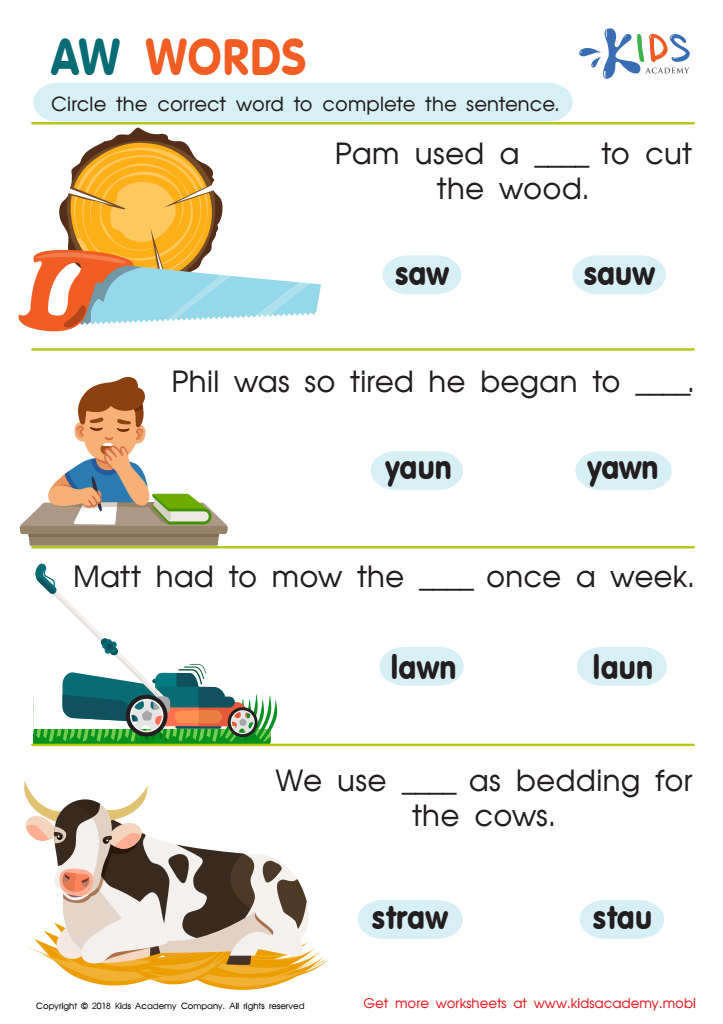
Reading: AW Words Worksheet
Practice decoding the /aw/ digraph with this printable. Students read sentences and select the word with the correct spelling to complete each one. Note, /aw/ is sometimes spelled /au/, so this worksheet helps prevent confusion. Have fun, and practice hard!
Reading: AW Words Worksheet
Worksheet
Join Kids Academy for Free
Who is primarily going to use this learning content?








Phonics skills are foundational elements of literacy that significantly impact vocabulary development in children aged 6-8. At this age, children are transitioning from learning to read to reading to learn. Effective phonics instruction enhances their ability to decode words, which in turn aids comprehension and vocabulary expansion. When children understand the relationship between letters and sounds, they can tackle unfamiliar words with confidence, fostering a love for reading.
Moreover, a robust vocabulary becomes essential during these formative years as it enhances communication, critical thinking, and overall academic success. Parents and teachers should prioritize phonics skills because they serve as the building blocks of language and literacy. Children equipped with strong phonics skills will have a rich vocabulary, enabling them to express their thoughts and engage meaningfully with the world around them.
Additionally, early phonics mastery reduces the risk of future reading difficulties and builds a strong educational foundation. By fostering a supportive environment that emphasizes phonics, parents and teachers help children thrive academically and develop essential lifelong skills. Investing in phonics skills now pays dividends, paving the way for successful readers who can navigate more complex texts and concepts in later grades.








