Shape Recognition Normal Science Worksheets for Ages 6-8
3 filtered results
-
From - To
Discover our engaging Shape Recognition Normal Science Worksheets tailored for children aged 6-8! These interactive resources are designed to enhance early science learning by helping students identify and understand various shapes in a fun and exciting way. Each worksheet comes with vibrant illustrations and intriguing activities that stimulate critical thinking and develop observational skills. Perfect for both classroom use and homeschooling, these worksheets promote independent learning while reinforcing essential concepts in geometry and science. Equip your young learners with the confidence to explore their world by mastering shape recognition. Download your worksheets today and watch their curiosity thrive!
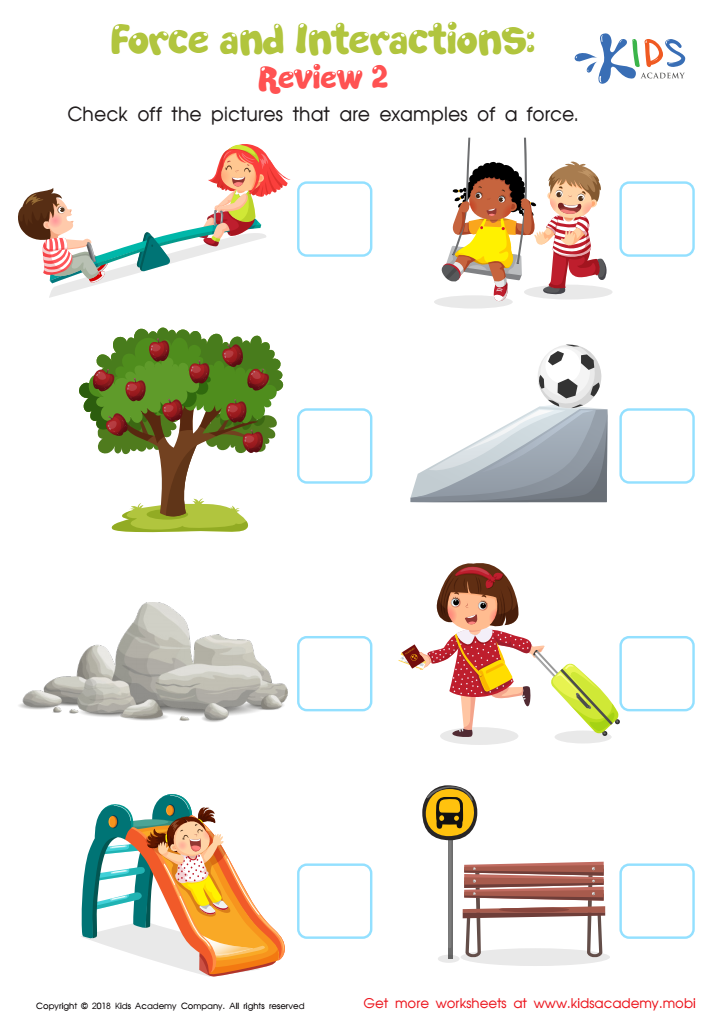
Force and Interactions: Review 2 Worksheet
 Assign to My Students
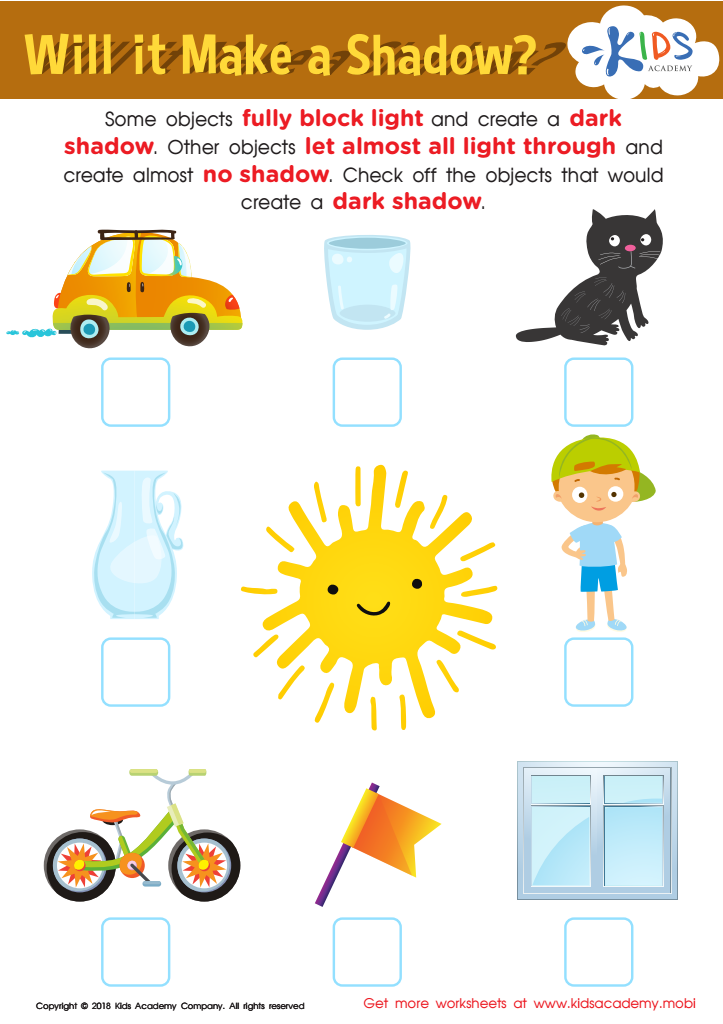
Will It Make a Shadow? Worksheet
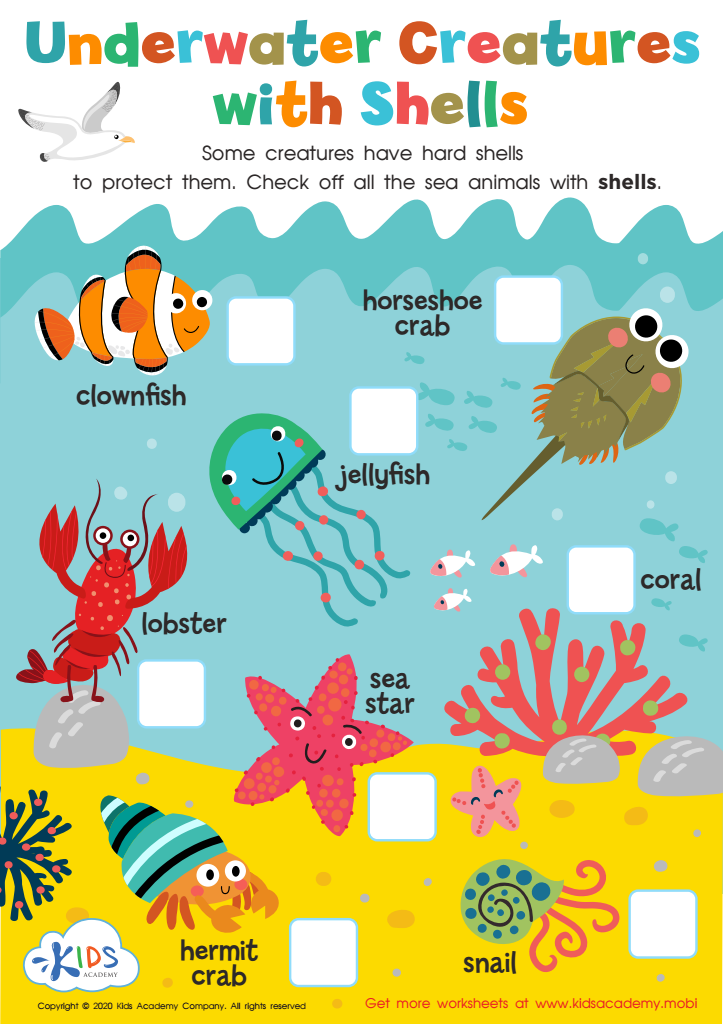
Underwater Creatures with Shells Worksheet








Shape recognition is a crucial aspect of early childhood education, especially for children aged 6-8. At this formative stage, children are refining their cognitive and motor skills, and understanding shapes lays a foundation for various future learning experiences. Shape recognition supports mathematical concepts, as children learn to categorize, compare, and manipulate shapes, which is essential for geometry, measurement, and spatial awareness.
Additionally, recognizing shapes enhances critical thinking and problem-solving skills. When children identify and differentiate shapes, they practice observational skills and develop their ability to think analytically. This learning also fosters creativity; by understanding the properties of shapes, children gain the tools to design and create in art and engineering activities.
Furthermore, early exposure to shape recognition can positively impact literacy skills. Many letters and numbers have distinct shapes, and recognizing these motifs can help facilitate reading and writing.
For parents and teachers, promoting shape recognition goes beyond academics. It encourages interactive play and collaboration, aiding social development. Engaging with shapes can ignite curiosity and enjoyment in learning, making it a vital component of a well-rounded educational journey. Ensuring children acquire this skill will empower them for future challenges in both learning and everyday life.







