Vowel Recognition Normal ABC Letters Worksheets for 6-Year-Olds
3 filtered results
-
From - To
Our "Vowel Recognition Normal ABC Letters Worksheets for 6-Year-Olds" are designed to help young learners master the crucial skill of identifying vowels. These engaging and educational worksheets offer a variety of fun activities including coloring, matching, and tracing exercises. Each worksheet is carefully crafted to reinforce vowel sounds and their corresponding letters, giving children the confidence they need to excel in reading and writing. Tailored specifically for 6-year-olds, these resources aim to make learning vowels an enjoyable experience, paving the way for future literacy success. Download today and watch your child's vowel recognition skills soar!
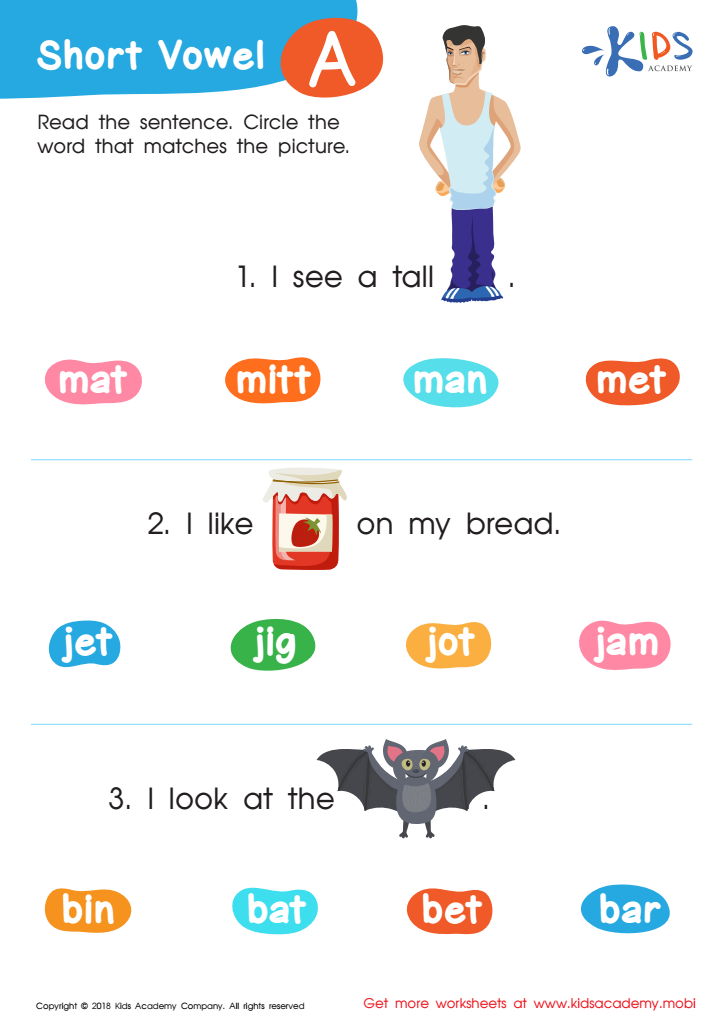
Short Vowel /a/ Worksheet
 Assign to My Students



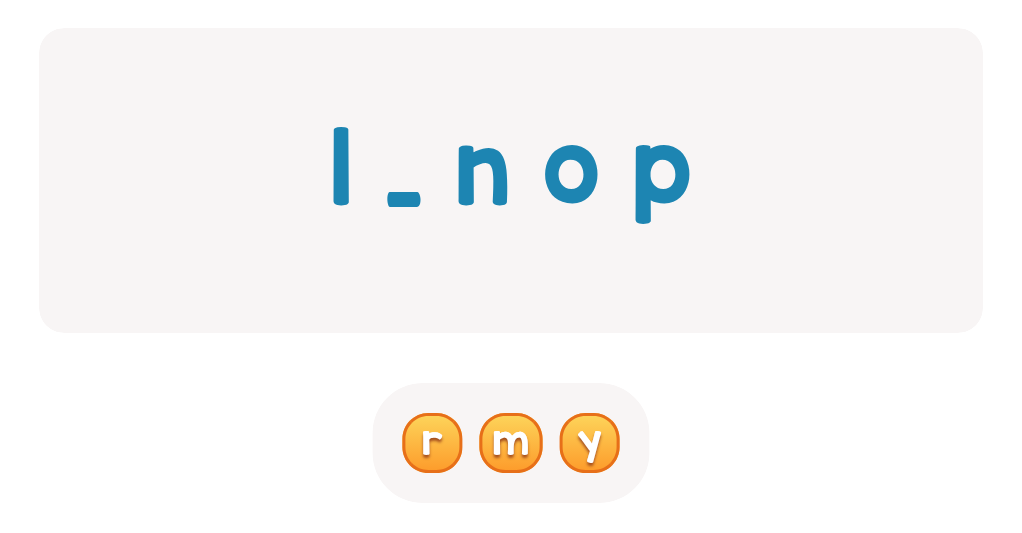




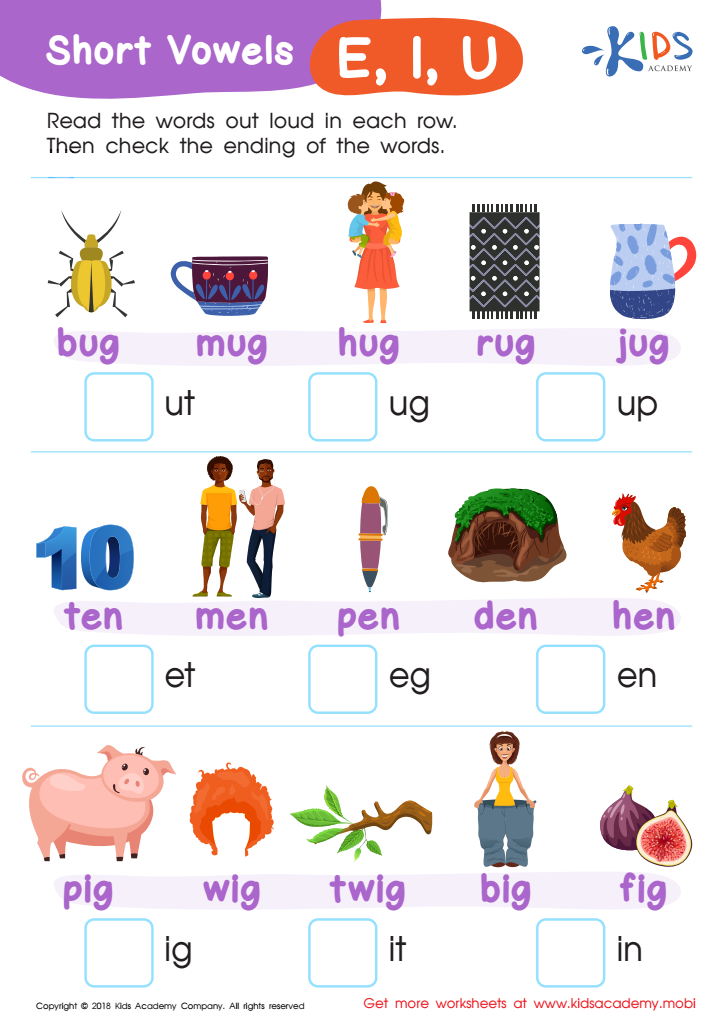
Short Vowels /e/, /i/, and /u/ Worksheet
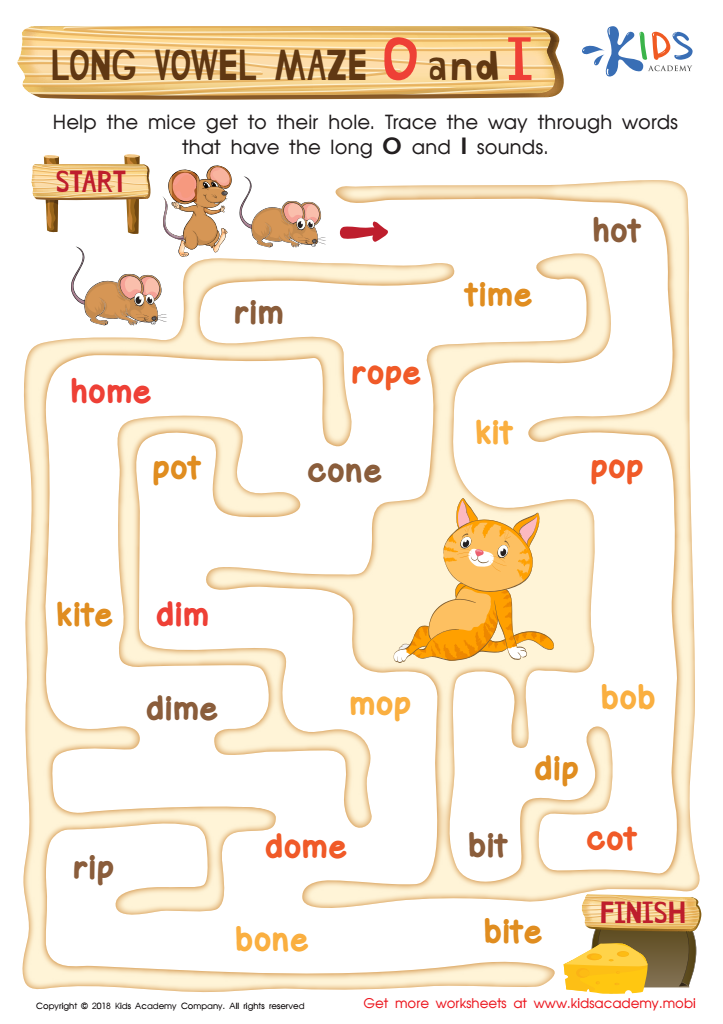
Long Vowel Maze /o/ and /i/ Worksheet







Vowel recognition in the normal ABC letters is a cornerstone of early literacy, especially for 6-year-olds who are in the critical period of language development. At this age, children are honing their phonemic awareness, which is the ability to hear, identify, and manipulate phonemes, the smallest units of sound. Vowels, comprising 'a,' 'e,' 'i,' 'o,' 'u,' and sometimes 'y,' play a crucial role in word formation and pronunciation. Without a firm grasp of vowels, children may struggle with reading fluency, decoding unfamiliar words, and spelling, all of which are fundamental skills for academic success.
Parents and teachers should prioritize vowel recognition because it directly impacts a child's ability to comprehend and engage with texts. Recognizing vowels helps children pronounce words correctly and understand word patterns, enabling more efficient and confident reading. Additionally, mastering vowels early improves writing skills, as children can craft words and sentences more accurately and creatively.
Incorporating activities that focus on vowels, such as vowel games, flashcards, and reading sessions, can make learning more engaging and effective. By supporting vowel recognition, parents and teachers lay a strong literacy foundation, ensuring children are better prepared for more complex reading and writing tasks in subsequent grades, ultimately promoting lifelong learning and academic achievement.







