Writing practice Normal Alphabet Coloring Pages Worksheets for 6-Year-Olds
3 filtered results
-
From - To
Our "Writing Practice Normal Alphabet Coloring Pages Worksheets for 6-Year-Olds" provide an engaging way for young learners to develop essential writing skills. These worksheets combine the fun of coloring with practical writing exercises, helping children recognize letters, improve hand-eye coordination, and strengthen fine motor skills. Each page features a letter with corresponding fun images for coloring, keeping kids entertained while they learn. Perfect for at-home or classroom use, these educational worksheets offer both practice and creativity to boost early literacy in an enjoyable format. Give your child a head start on the path to writing proficiency with our delightful alphabet coloring pages.
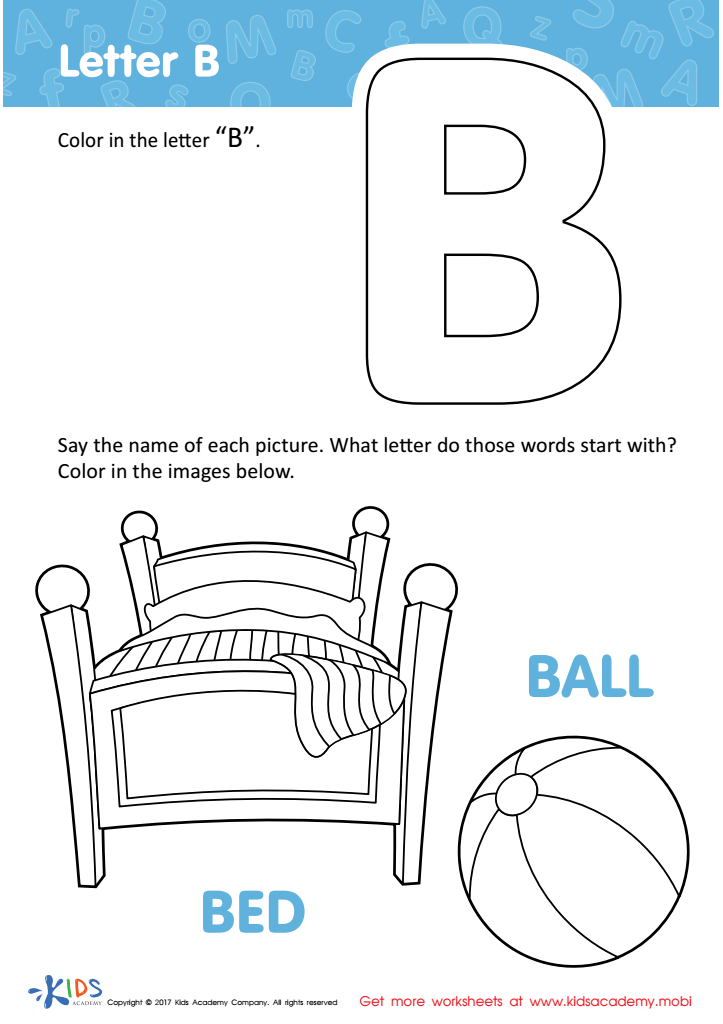
Letter B Coloring Sheet
 Assign to My Students
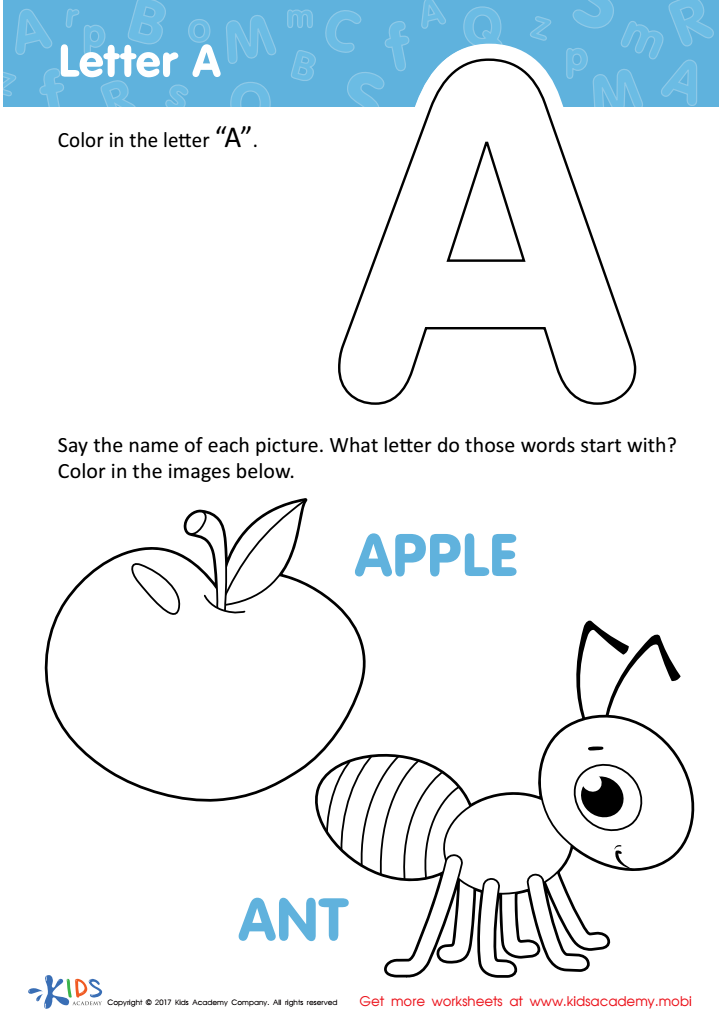
Letter A Coloring Sheet
Assign to My Students
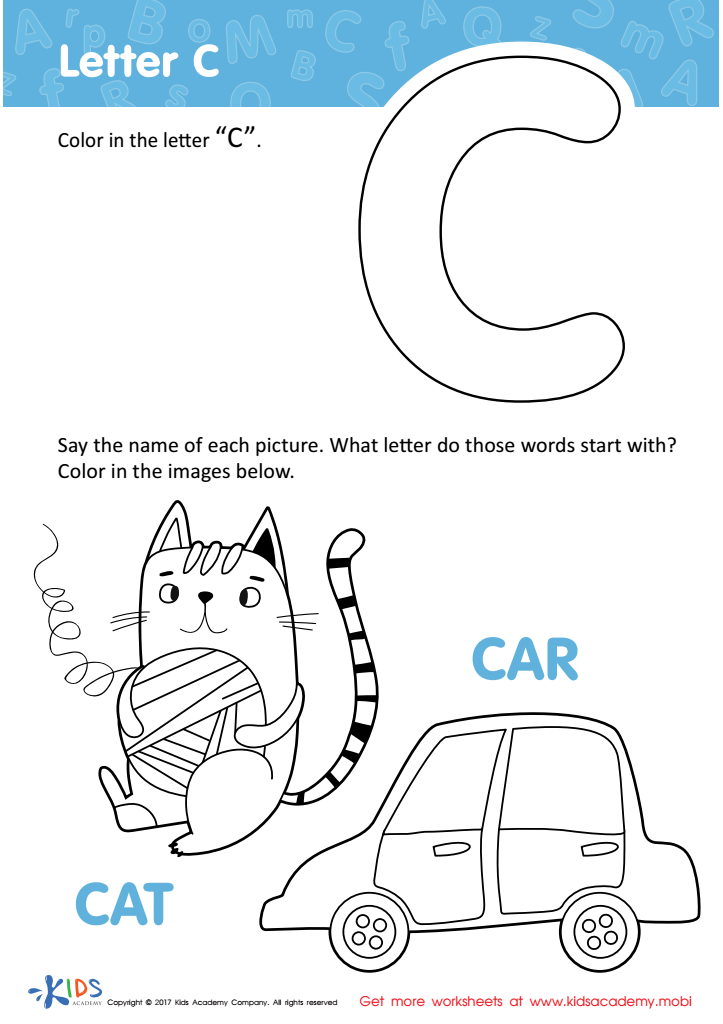
Letter C Coloring Sheet
Assign to My Students





Writing practice and normal alphabet coloring pages are valuable tools for stimulating the development of 6-year-olds. Firstly, engaging in these activities enhances fine motor skills. As children practice writing letters and coloring within lines, they're honing the small muscles in their fingers and hands, essential for daily tasks and academic success.
Secondly, writing practice is vital for literacy development. At this age, children are typically in the early stages of learning to read and write. Repeated exposure to letters through writing and coloring helps solidify recognition and recall, forming a foundation for literacy. It also aids in developing their understanding of the correlation between written and spoken language.
Moreover, these activities encourage focus and patience. Completing a writing task or a coloring page requires sustained attention, contributing to cognitive development and better concentration.
Creativity also flourishes through coloring pages. Choosing colors and staying within lines promotes self-expression and decision-making skills.
For educators and parents, incorporating these simple yet effective tools addresses key areas like dexterity, literacy, cognitive growth, and creativity. By providing structured yet enjoyable learning activities, parents and teachers can better support a child’s foundational skills, setting them up for future academic achievements and broader developmental milestones.







