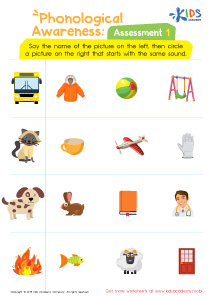
Vocabulary expansion Normal Beginning Sounds Worksheets for 6-Year-Olds
4 filtered results
-
From - To
Enhance your child's vocabulary with our "Vocabulary Expansion Normal Beginning Sounds Worksheets for 6-Year-Olds." These expertly crafted worksheets are designed to help young learners identify the initial sounds of words, fostering early language skills and phonemic awareness. Through engaging activities, children will develop critical reading foundations necessary for literacy success. Our age-appropriate printable worksheets make learning fun and interactive, keeping your child excited about word discovery. Perfect for both classroom use and at-home practice, these resources will seamlessly complement your child’s reading journey. Unlock the power of words and set your 6-year-old on the path to reading fluency today!
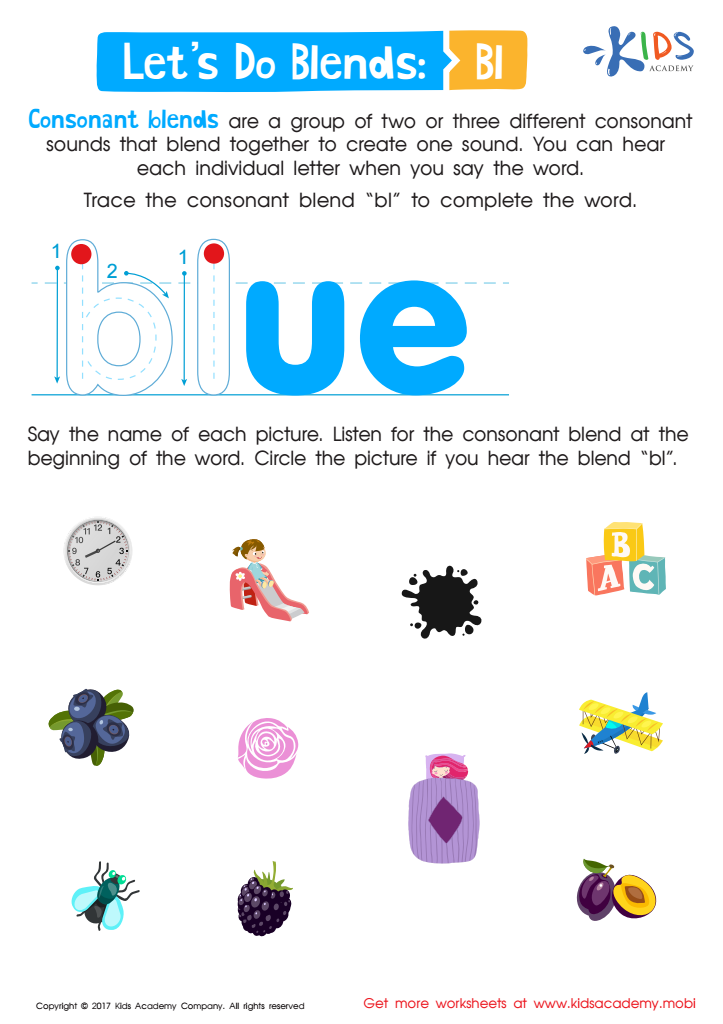
Beginning Blends: "Bl" Words Worksheet
 Assign to My Students
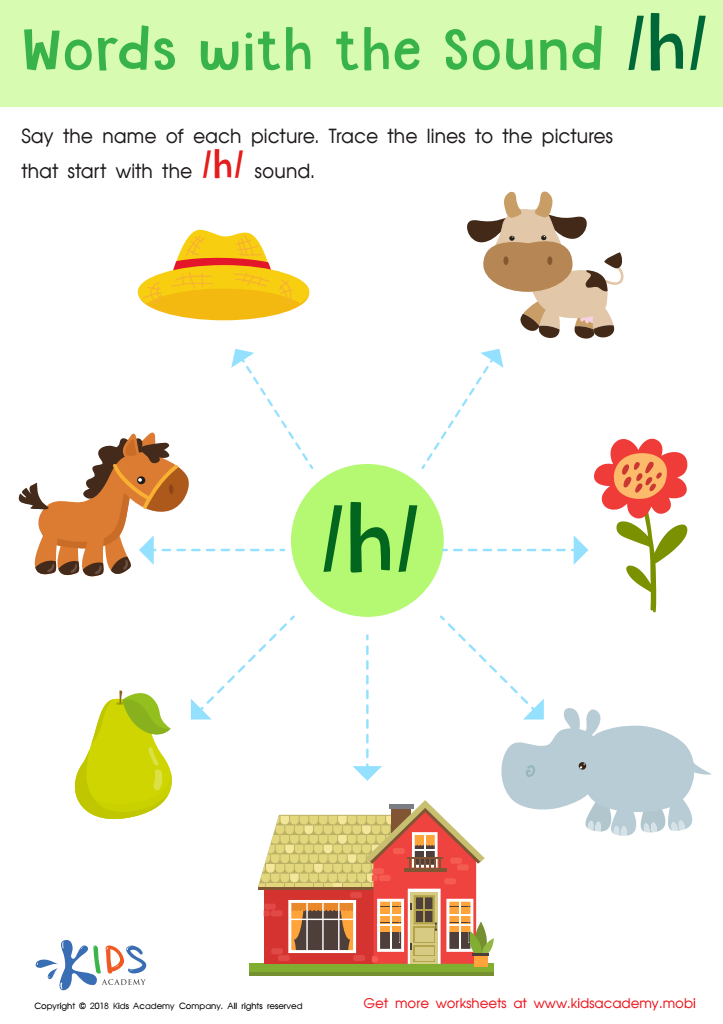
Words with sound h Reading Worksheet
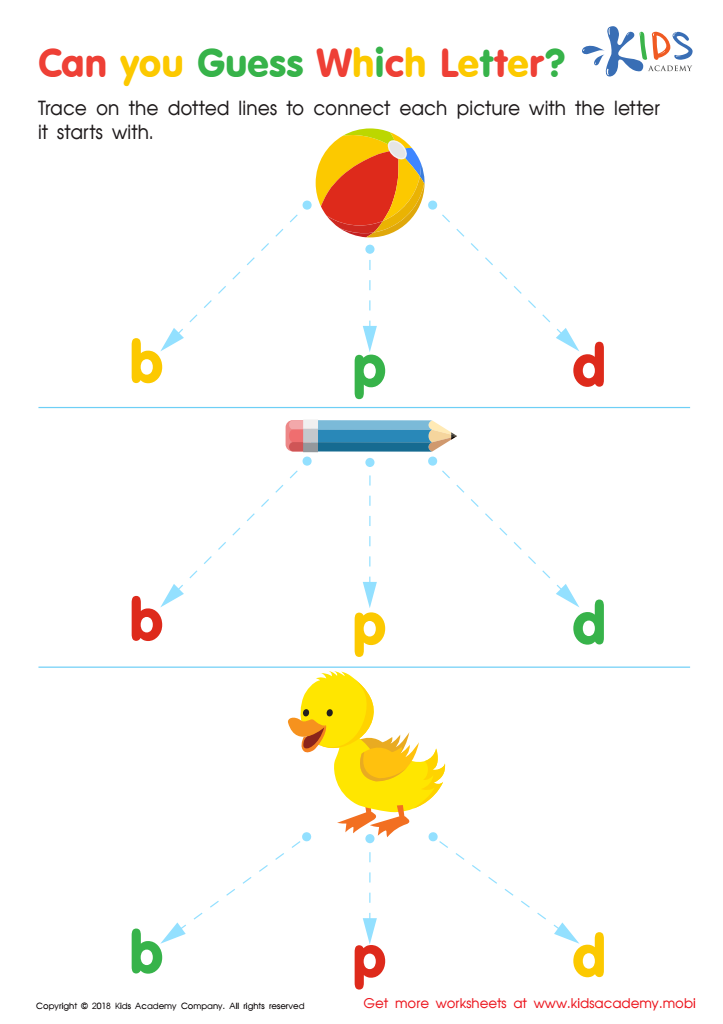
Can you Guess Which Letter? Worksheet
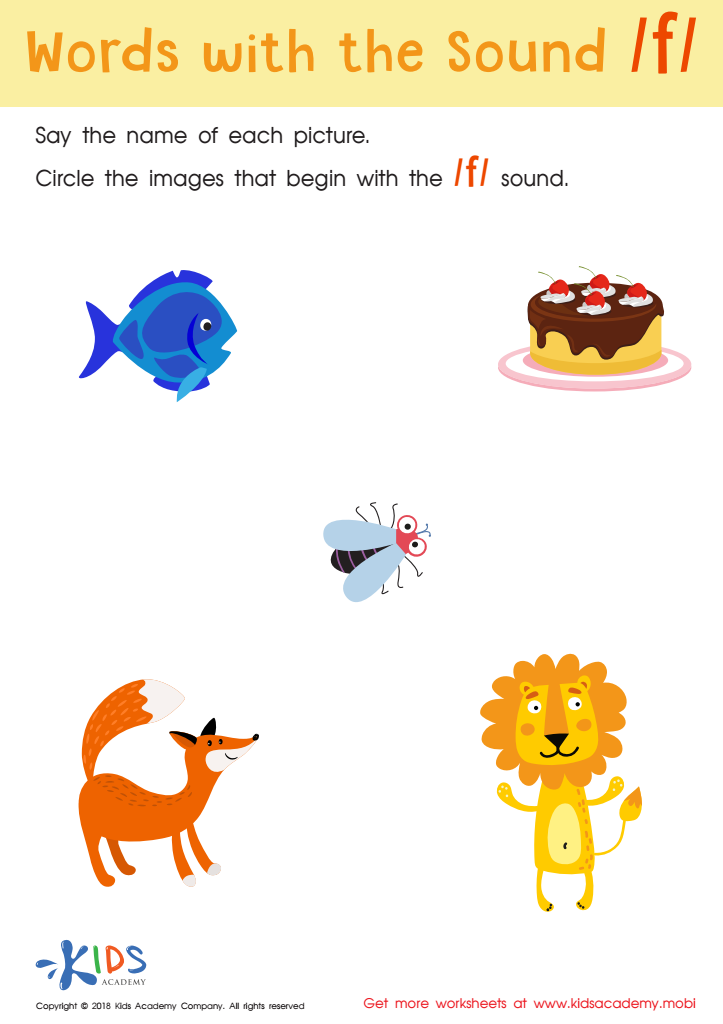
Words with sound f Reading Worksheet








Vocabulary expansion, including the development of phonemic awareness such as normal beginning sounds, is crucial for 6-year-olds for several reasons. First and foremost, a rich vocabulary is directly linked to improved reading and comprehension skills. When children can recognize the beginning sounds of words, it helps them decode and understand new words more effectively. This foundational skill sets the stage for fluent reading, which is essential for academic success across all subjects.
Moreover, vocabulary expansion boosts communication skills. Children with a broader vocabulary can express themselves more clearly and with greater nuance, which enhances their ability to interact with peers and adults. This not only improves social relationships but also builds self-esteem and confidence.
Investing in vocabulary skills also supports cognitive development. The process of learning new words and sounds stimulates the brain, fostering better critical thinking and problem-solving abilities. The ability to discern beginning sounds is part of phonological awareness, a key predictor of literacy success.
Finally, a strong vocabulary enables better academic performance. Children who enter school with well-developed language skills, including the understanding of beginning sounds, perform better in literacy tasks and are more likely to enjoy reading. Therefore, prioritizing vocabulary expansion for 6-year-olds is essential for their overall development and future success.