Spelling practice Normal Alphabet Worksheets for 6-Year-Olds - Page 2
26 filtered results
-
From - To
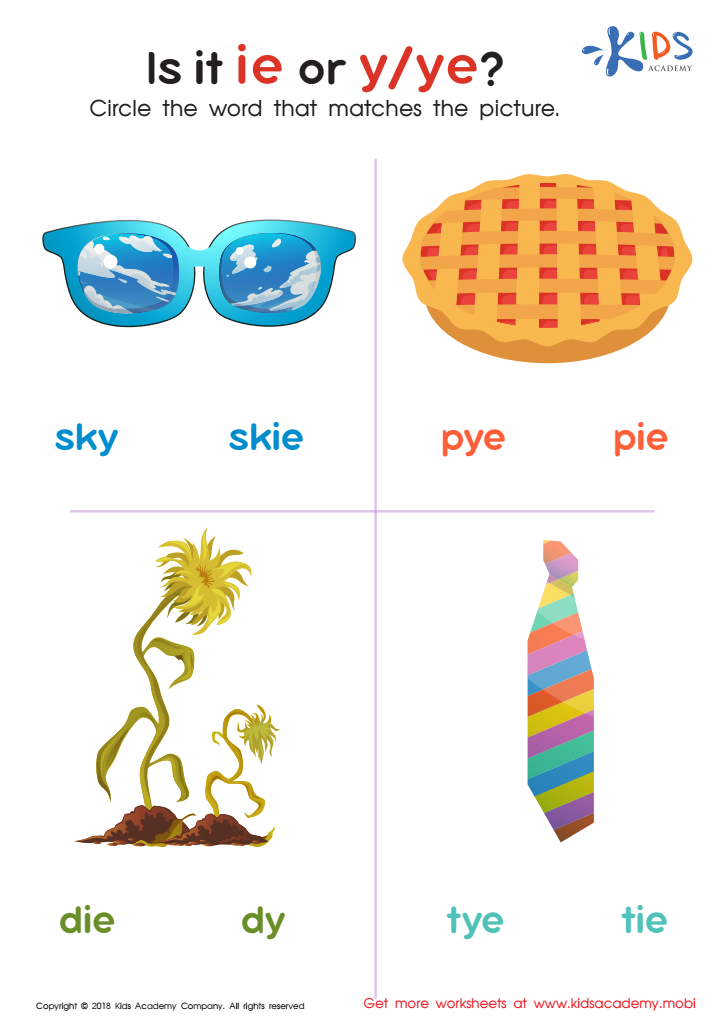
Is It IE or Y/Ye? Worksheet
 Assign to My Students
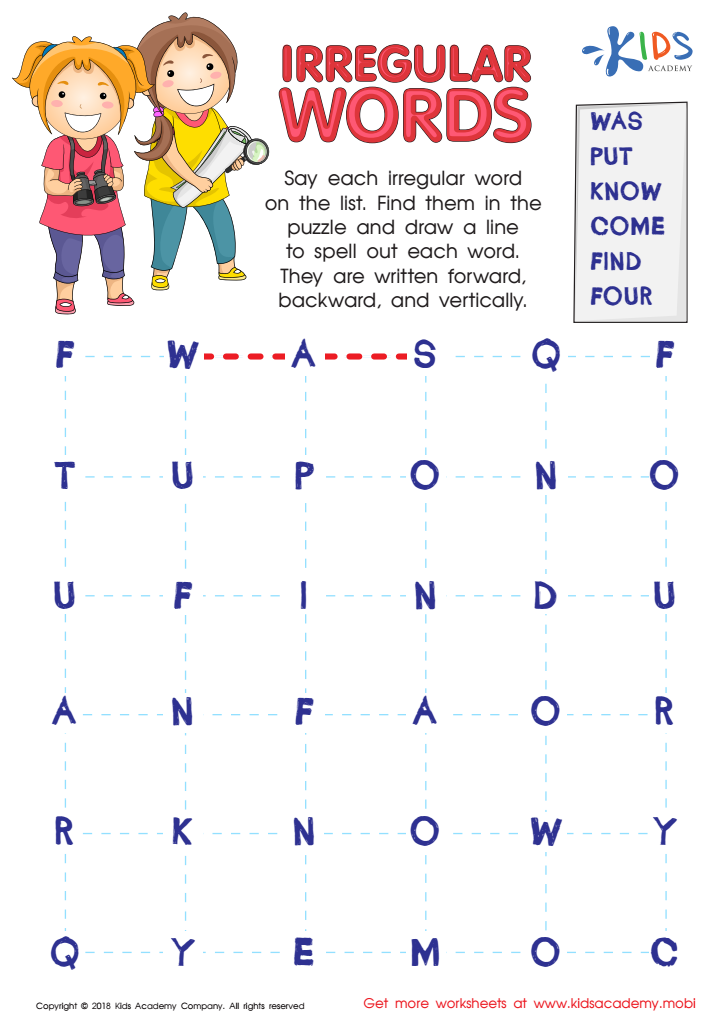
Irregular Words Worksheet





Spelling practice using the normal alphabet for 6-year-olds is fundamental for several key reasons. Firstly, it supports their foundational literacy skills. At this age, children are beginning to understand the relationships between sounds and letters, known as phonics. Regular spelling practice reinforces this, helping them to decode new words and boosting their reading fluency.
Secondly, it enhances vocabulary growth. By practicing spelling, children encounter words repeatedly, which aids in expanding their vocabulary and understanding of word meanings. This is crucial for their overall language development and ability to communicate effectively.
Thirdly, spelling practice improves writing skills. As children become more familiar with how words are spelled, they can write more accurately and with greater confidence. This leads to more coherent and competent written communication, which is important for academic success.
Moreover, spelling practice nurtures concentration and memory skills. Learning to spell requires focus and memorization, skills that benefit children throughout their educational journey and beyond.
Lastly, it fosters a sense of achievement and confidence in young learners. Mastering spelling words gives 6-year-olds a sense of accomplishment, which can motivate them to tackle other learning challenges with enthusiasm.
In summary, regular spelling practice with the normal alphabet is critical for developing literacy skills, expanding vocabulary, improving writing, enhancing cognitive abilities, and building confidence in young learners.







