Fine motor skills development Normal Letter Recognition Worksheets for 6-Year-Olds
3 filtered results
-
From - To
Unlock your child's potential with our "Fine Motor Skills Development Normal Letter Recognition Worksheets" designed specifically for 6-year-olds! These engaging worksheets blend letter recognition and fine motor skill activities, providing a fun and interactive way for young learners to enhance their writing, gripping, and hand-eye coordination. Each worksheet features distinct letters of the alphabet, encouraging children to trace, color, and connect letters while boosting their cognitive and motor skills. Perfect for classroom or home learning, these worksheets make mastering letter recognition enjoyable and effective. Support your child's early education journey today with our thoughtfully designed materials! Explore and watch them thrive!
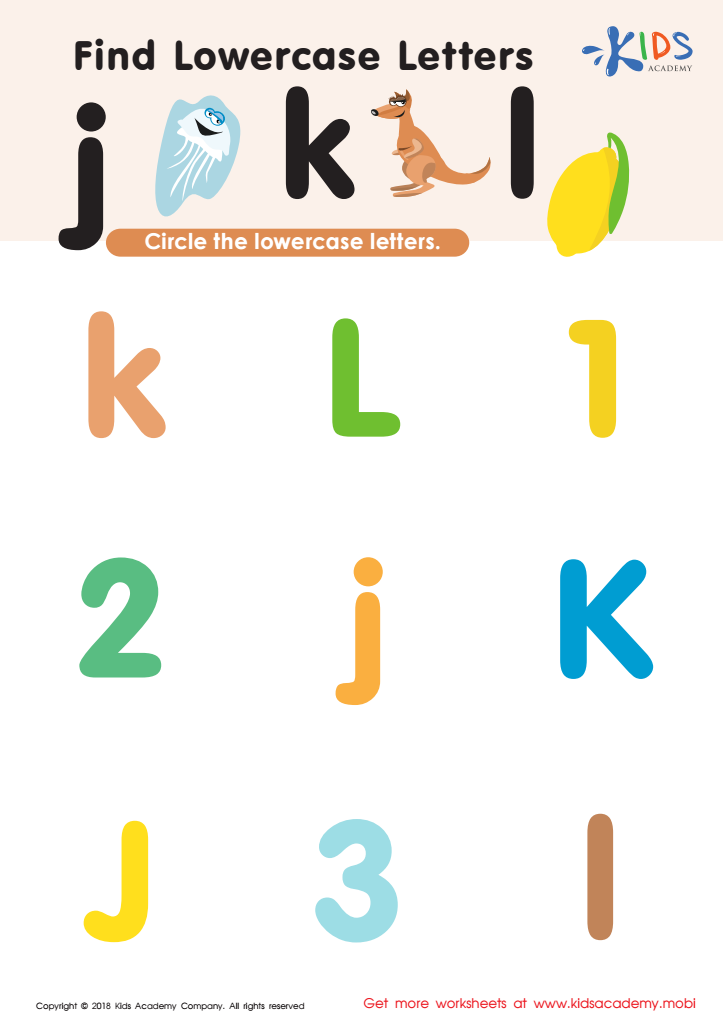
Find Lowercase Letters j k l Worksheet

Letter J Tracing Page
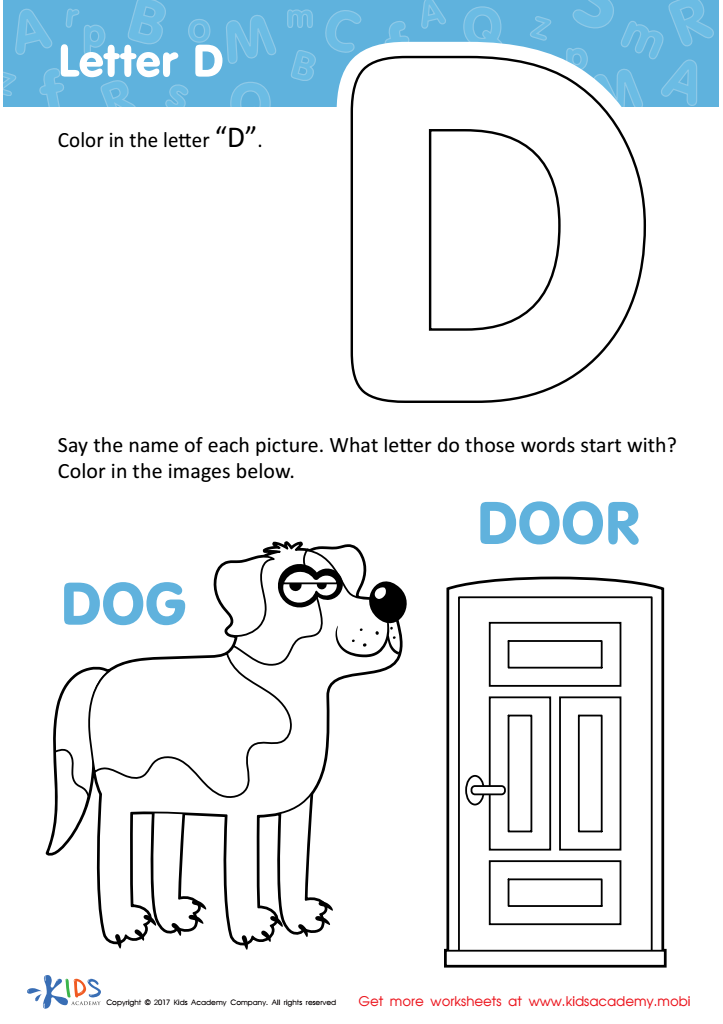
Letter D Coloring Sheet
 Assign to My Students








Fine motor skills and letter recognition are vital for the overall development of 6-year-olds, influencing their academic success and everyday functioning. Fine motor skills involve the use of small muscles in the hands and fingers, essential for tasks like writing, cutting, and buttoning. By fostering these skills, parents and teachers help children develop coordination and dexterity, laying the groundwork for skills needed in later academic tasks, such as handwriting and art projects.
Normal letter recognition, the ability to identify and distinguish letters, is foundational for reading and writing. At this age, children transition from pre-reading to decoding words. Mastering letter recognition boosts their confidence and promotes a love for reading, setting the tone for lifelong learning habits.
Supporting fine motor skills and letter recognition improves cognitive function and boosts self-esteem. This holistic approach encourages persistence and problem-solving abilities, providing children with tools to navigate challenges.
Parents and teachers play a crucial role in this development through engaging activities, such as coloring, crafting, and interactive games, laying the groundwork for children’s future academic journey. By nurturing these skills, they help ensure children are prepared for success in school and beyond.








