
Phonics practice Normal Letter Recognition Worksheets for 6-Year-Olds
4 filtered results
Difficulty Level
Grade
Age
-
From - To
Subject
Activity
Standards
Enhance your child's reading skills with our Phonics Practice Normal Letter Recognition Worksheets, specifically designed for 6-year-olds. These engaging, age-appropriate worksheets focus on helping young learners recognize letters and their corresponding sounds through fun activities and exercises. By encouraging familiarization with the alphabet, our resources aim to build a strong foundation in literacy. Each worksheet features colorful illustrations and diverse learning formats, making the practice enjoyable and effective. Ideal for home or classroom use, these printable worksheets align with early education standards, ensuring your child is well-prepared for future reading challenges. Help your little learner thrive with our phonics practice tools today!
Favorites
With answer key
Interactive
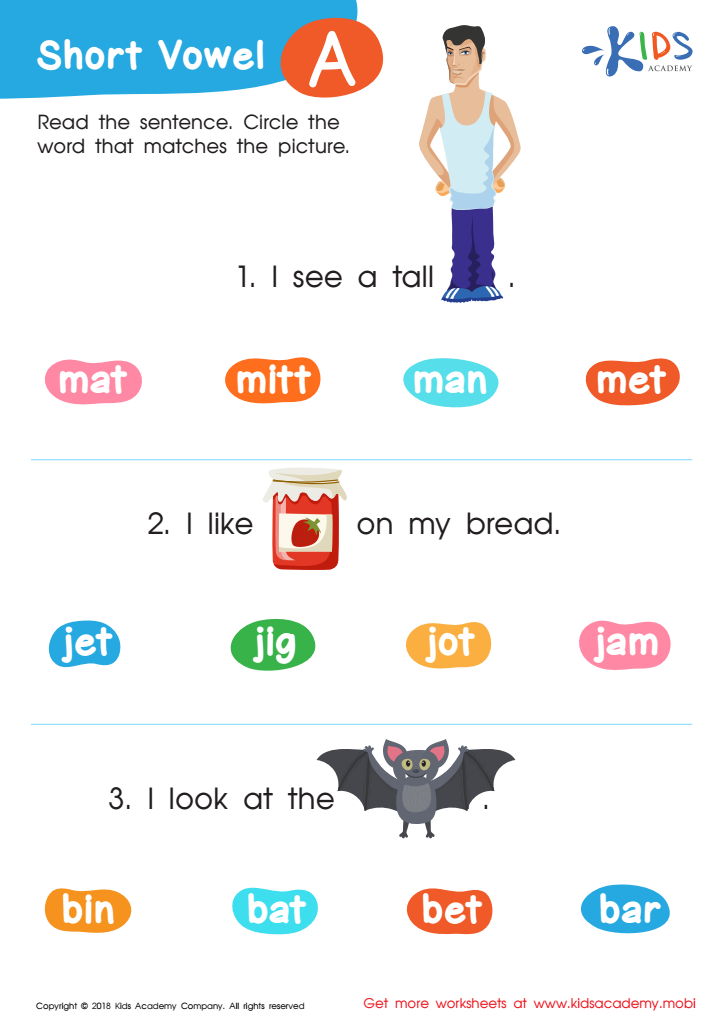
Short Vowel /a/ Worksheet
This free PDF helps new readers use sight words and pictures to read basic sentences. Then, they use accompanying word choices to find the correct word with the short a vowel sound. A key early reading skill, discriminating between short vowel sounds can be tricky in monosyllabic words, so use this PDF to help your reader reinforce it.
Short Vowel /a/ Worksheet
Worksheet
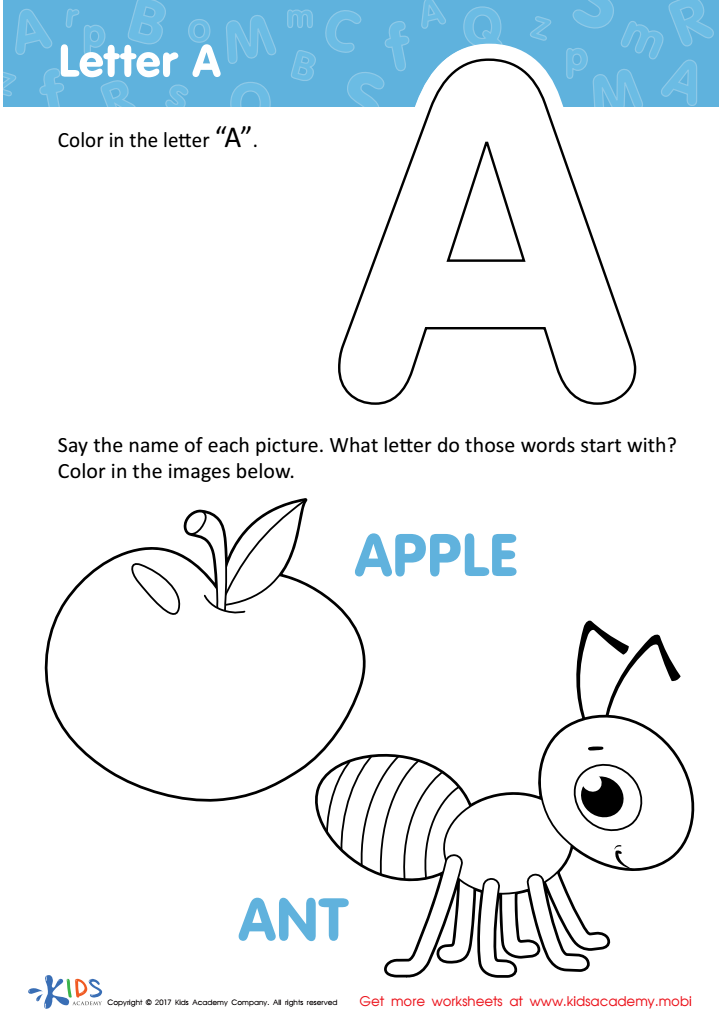
Letter A Coloring Sheet
This letter "A" coloring page is great for introducing kids to the alphabet! Let them exercise their creativity while they learn to recognize letters and sounds - it's a fun and easy way to help them get started.
Download (PDF)
 Assign to My Students
Assign to My Students
Letter A Coloring Sheet
Worksheet
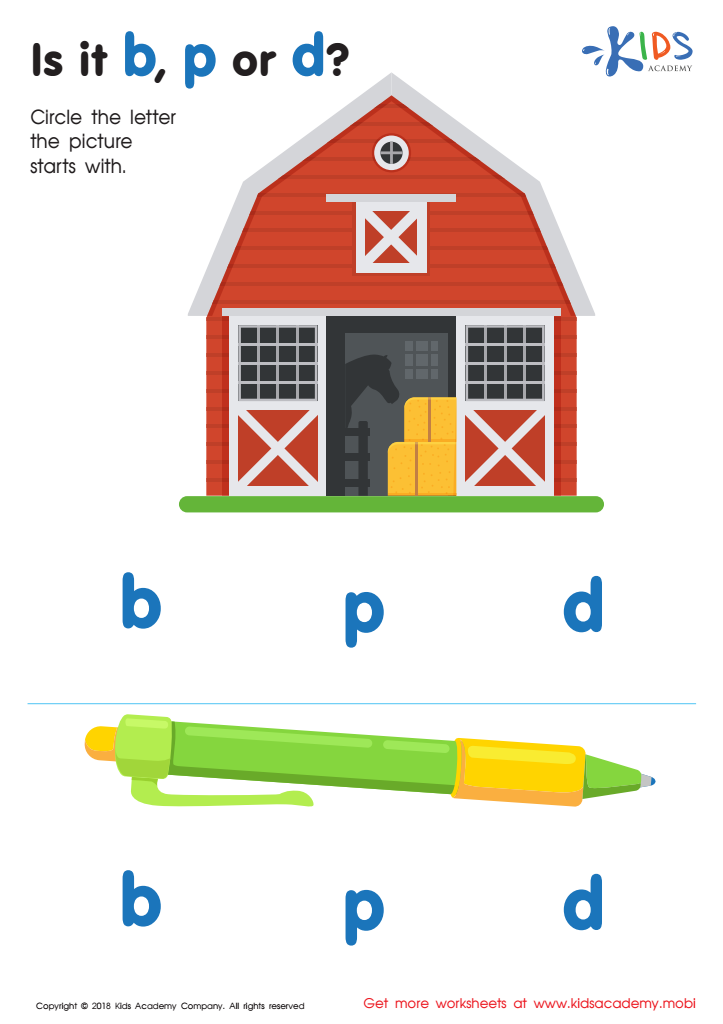
Is it b, p or d? Worksheet
Test your child's identification skills with this worksheet. They must identify the image and then circle the letter it begins with: 'b', 'p', or 'd' (e.g. an image of the sun would mean they circle 's').
Is it b, p or d? Worksheet
Worksheet
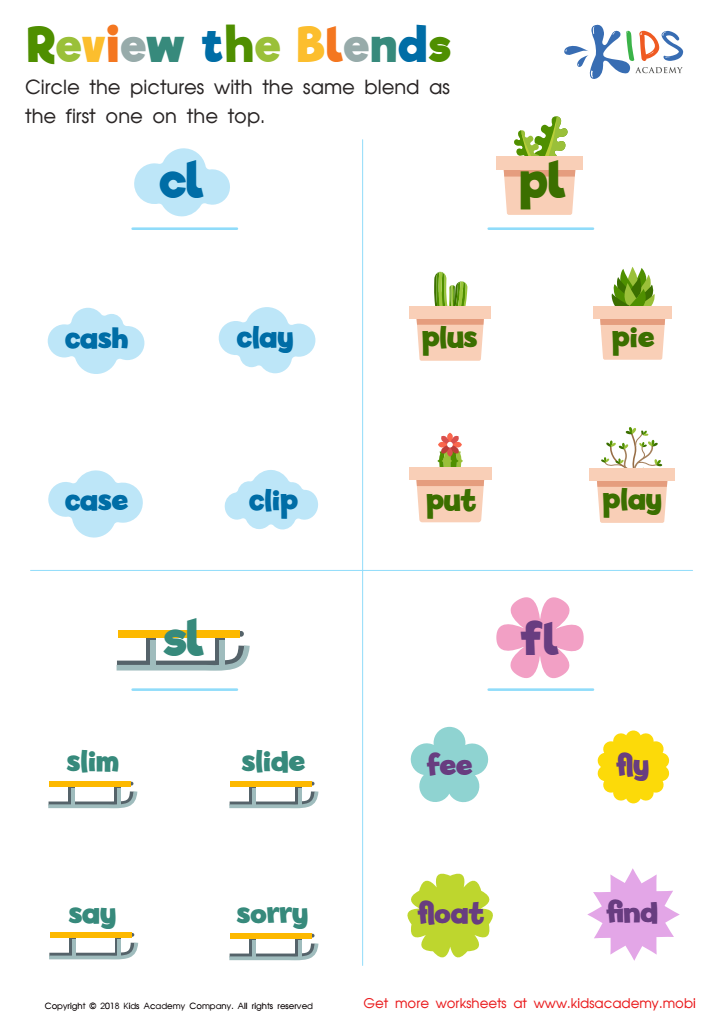
Review the Blends Worksheet
Consonant blends are two or three consonants that make a sound when pronounced together. L-blends like cl, bl, sl, fl and 3-letter blends like str, slp are common. This phonics worksheet helps early readers identify words containing two letter L-blends. Students must circle the words then read them aloud.
Review the Blends Worksheet
Worksheet
Join Kids Academy for Free
Who is primarily going to use this learning content?








Phonics practice and letter recognition are critical components of early literacy development for 6-year-olds. At this age, children are transitioning from the foundations of learning letters to forming words and sentences. Understanding phonetic sounds associated with letters helps youngsters decode words, which is essential for reading fluency and comprehension.
Engaging in phonics practice enables children to recognize letters and the sounds they represent, fostering their ability to read new words independently. This skill not only bolsters their confidence but also enhances their motivation to read, leading to a lifelong love of literature.
Moreover, consistent phonics instruction supports children's cognitive development. It encourages problem-solving as they learn to blend sounds and recognize patterns in language. Parents and teachers who prioritize phonics can significantly impact a child's future academic success, as strong reading skills are linked to overall educational achievement.
Finally, promoting early literacy skills through phonics lays the groundwork for effective communication. Children who excel in reading and writing are better equipped to express their thoughts and ideas clearly. Thus, focusing on phonics and normal letter recognition is vital; it empowers children with essential tools for learning and personal expression.








