
Visual discrimination Normal Letter Recognition Worksheets for 6-Year-Olds
4 filtered results
Difficulty Level
Grade
Age
-
From - To
Subject
Activity
Standards
Boost your child's learning with our Visual Discrimination Normal Letter Recognition Worksheets designed specifically for 6-year-olds! These engaging resources help young learners identify and differentiate letters, enhancing their reading foundation. Through vibrant activities tailored to capture their interest, students will develop essential visual skills while also reinforcing their alphabet knowledge. Perfect for fostering independence and confidence in early literacy, these worksheets offer a fun way to practice pairing, matching, and spotting letters. Ideal for both classroom and home use, our activities promote cognitive development and pave the way for future reading success. Download now and ignite your child's passion for letters!
Favorites
With answer key
Interactive
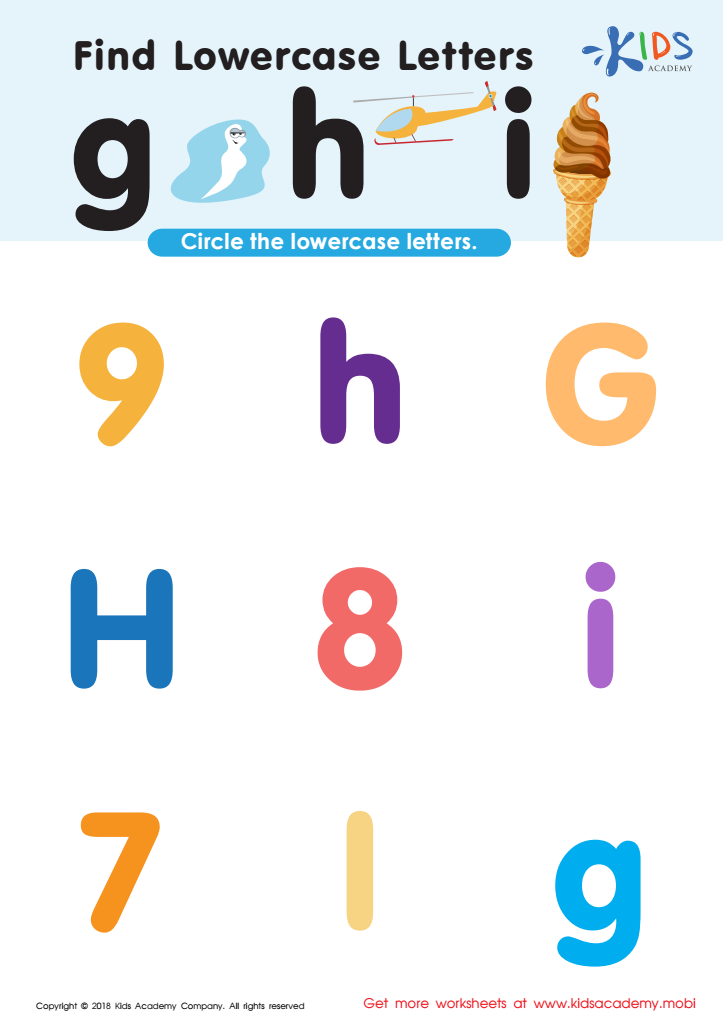
Find Lowercase Letters g h i Worksheet
Turn learning into a fun journey with your child! Use this free worksheet to find and circle the lowercase letters hidden amongst uppercase letters and numbers. Your child will understand what you're teaching them as they enjoy the search.
 Assign to My Students
Find Lowercase Letters g h i Worksheet
Worksheet
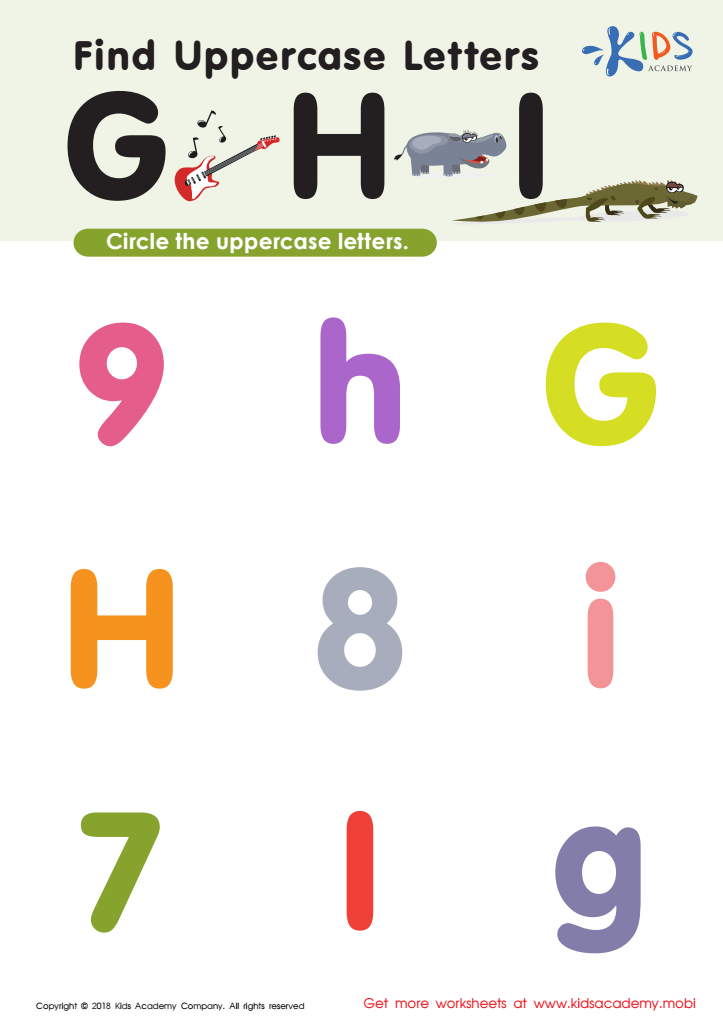
Find Uppercase Letters G, H, and I Worksheet
Find G, H, and I in uppercase with this downloadable worksheet! Numbers are included to challenge your kindergartener's letter recognition skills. Plus, practice G, H, and I sounds using the cute graphics. Perfect for learning letter case recognition!
Find Uppercase Letters G, H, and I Worksheet
Worksheet
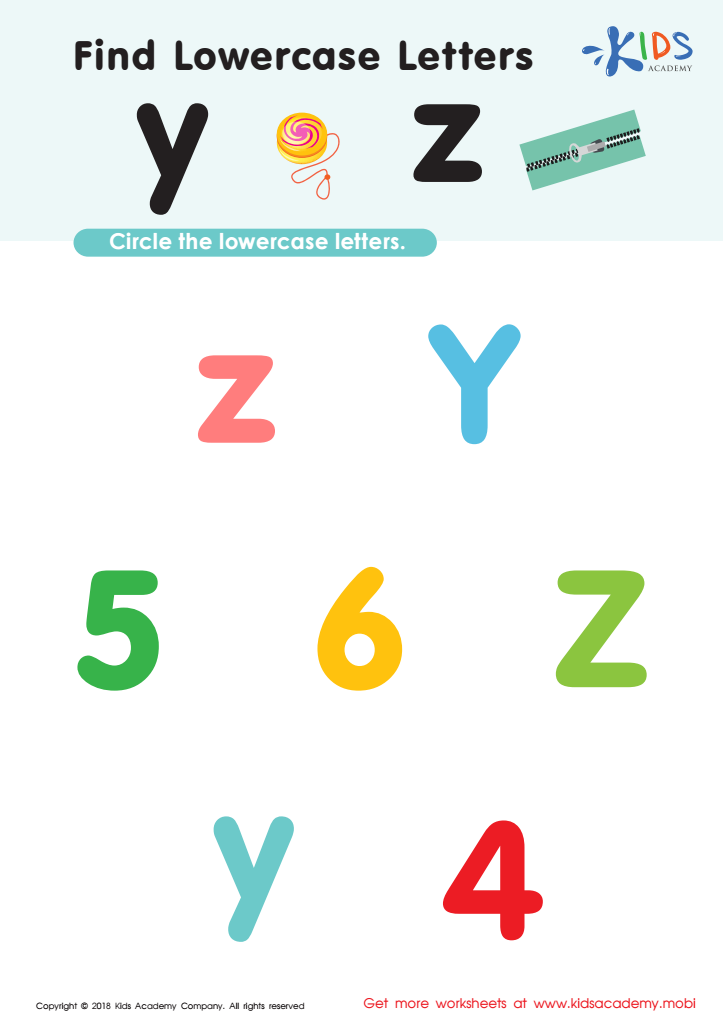
Find Lowercase Letters y z Worksheet
Help your kid learn the alphabet. Before they can move on to words and reading, they must first know the lower and uppercase letters. Show them how to find the letters y and z in this worksheet, which is filled with uppercase letters and numbers. Together, find and circle them.
Find Lowercase Letters y z Worksheet
Worksheet
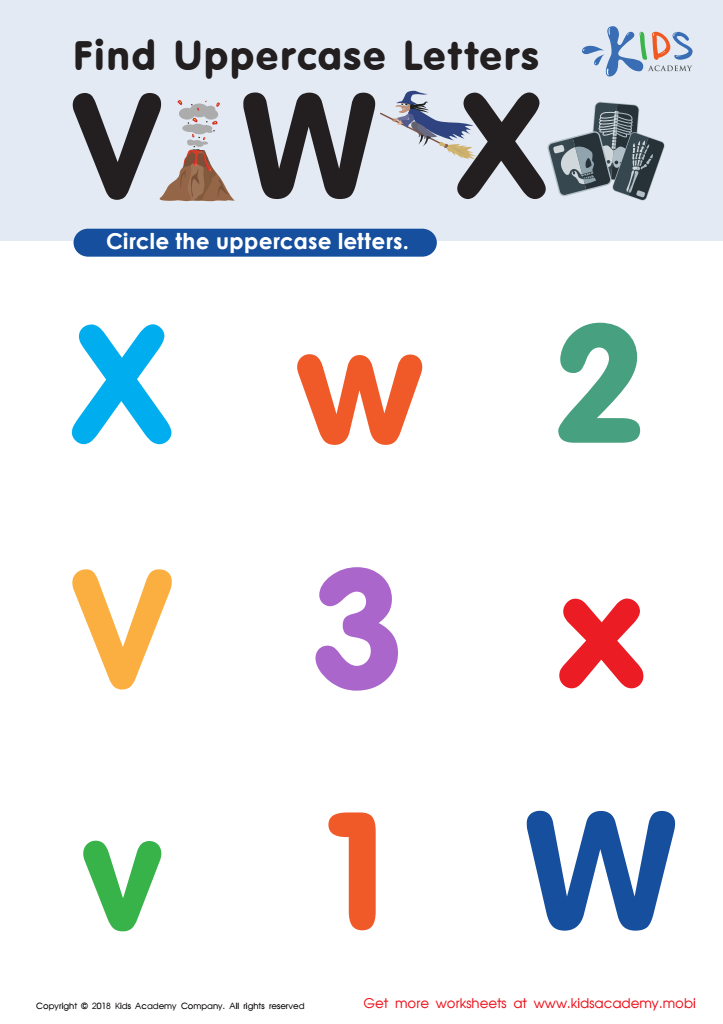
Find Uppercase Letters V, W, X Worksheet
Ask your kids if they can spot the uppercase letters V, W and X hidden in the lowercase letters and numbers, then have them circle them. After that, ask them to give you examples of words beginning with those letters. This worksheet will help them get started.
Find Uppercase Letters V, W, X Worksheet
Worksheet
Join Kids Academy for Free
Who is primarily going to use this learning content?








Visual discrimination and letter recognition are crucial foundational skills for 6-year-olds as they embark on their reading journey. Visual discrimination is the ability to distinguish between different shapes and symbols, essential for identifying letters, words, and other printed materials. Enhanced visual discrimination helps children recognize letters accurately, reducing confusion between similar-looking characters, such as "b" and "d," or "p" and "q." This skill supports overall reading fluency and comprehension, essential tools for academic success.
For parents and teachers, encouraging normal letter recognition during this stage fosters confidence in children's reading abilities. Mastery of letter recognition not only boosts self-esteem but also lays the groundwork for effective spelling and writing skills. When children feel confident in their reading skills, they are more likely to engage with books and develop a love for reading.
Moreover, early attention to visual discrimination can help identify any foundational challenges that might hinder a child’s learning progress. By addressing these needs early on, parents and teachers can intervene with appropriate strategies, ensuring that the child stays on track and builds essential skills for future academic endeavors. Ultimately, nurturing visual discrimination and letter recognition helps children become independent, proficient readers—key to their overall educational development.








