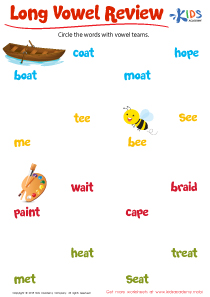
Phonics recognition Normal Letter Sounds Worksheets for 6-Year-Olds
3 filtered results
-
From - To
Our "Phonics Recognition Normal Letter Sounds Worksheets for 6-Year-Olds" are expertly designed to enhance young learners' reading and phonetic skills. These engaging worksheets help children understand the relationship between letters and their sounds, facilitating phonemic awareness and building a strong foundation for reading. Ideal for both classroom and home use, each activity is tailored to maintain your child's interest with fun exercises that make learning enjoyable. Give your child the confidence to read accurately and fluently with this comprehensive collection of printable phonics worksheets from Kids Academy.
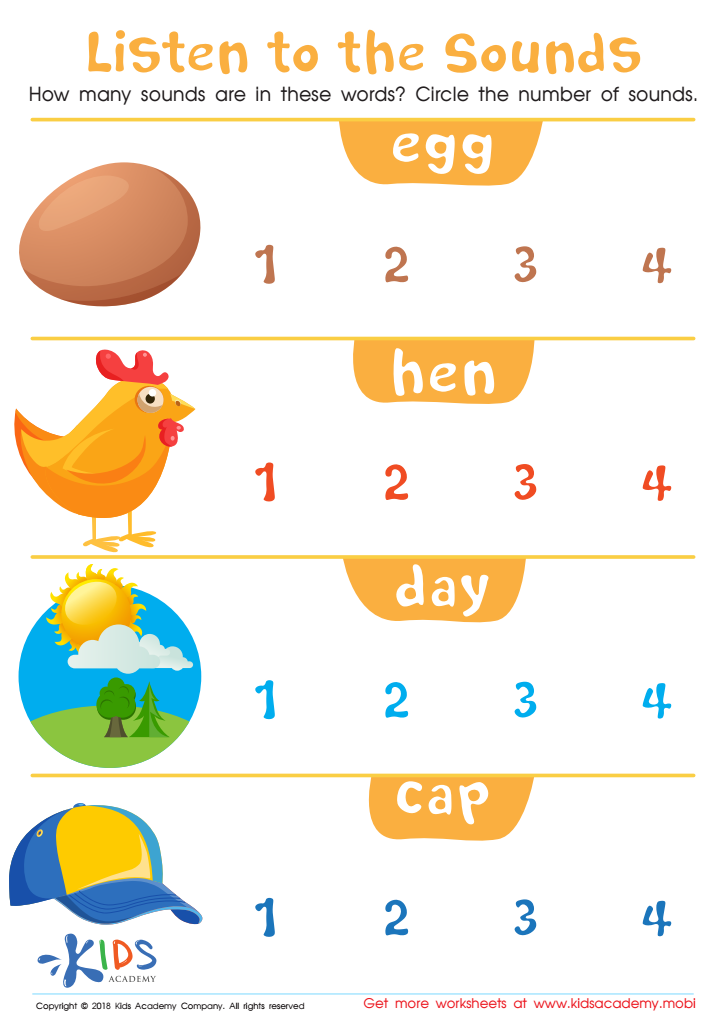
Listen to the Sounds Worksheet
 Assign to My Students
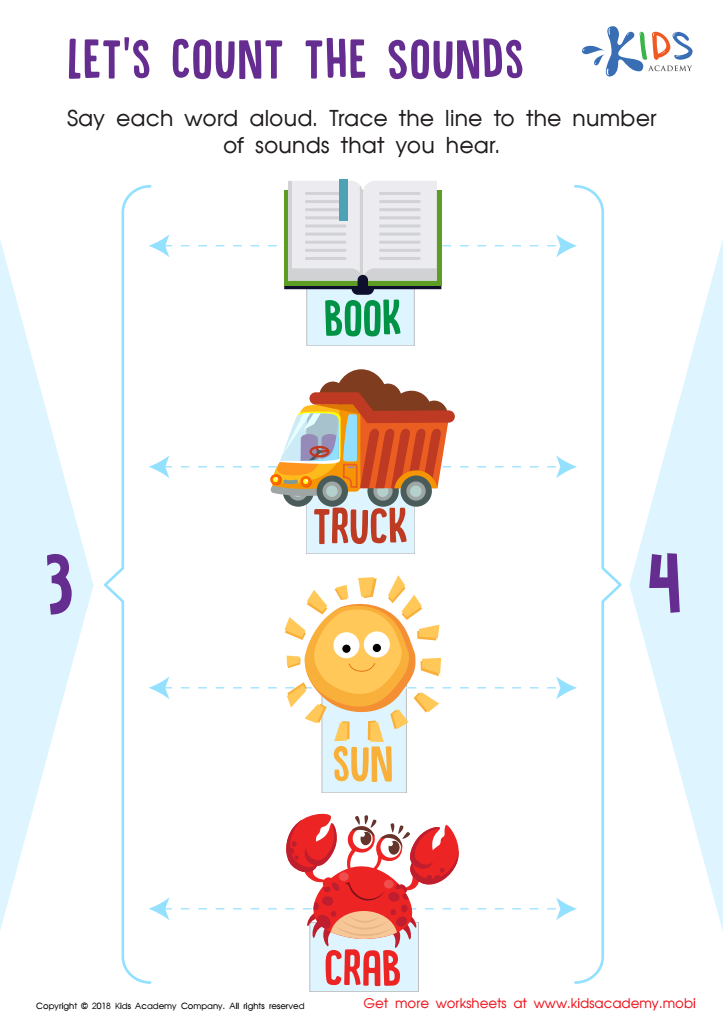
Let's Count the Sounds Worksheet
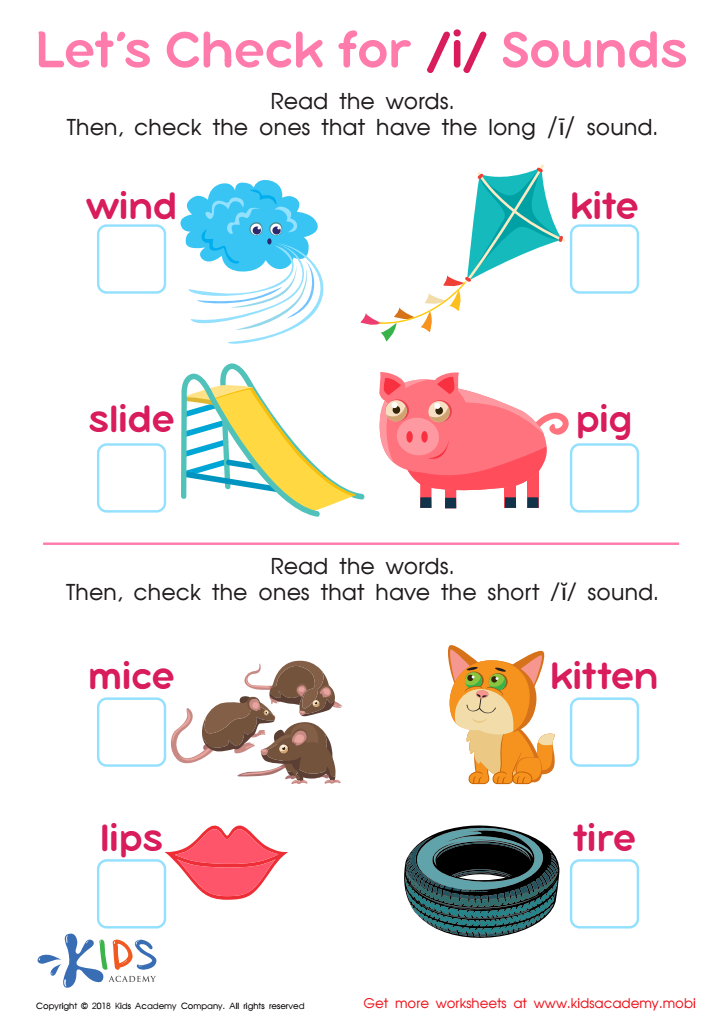
Let's Check for «i» Sounds Worksheet








Phonics recognition and normal letter sounds are fundamental building blocks in a 6-year-old's early literacy development. Phonics involves understanding the relationship between letters and their corresponding sounds, which is essential for decoding written language and achieving reading fluency.
At this formative age, children's brains are exceptionally receptive to learning these patterns. By mastering phonics, they can more easily recognize words and understand text, fostering confidence and enthusiasm in reading. This early competence becomes the cornerstone for more complex reading skills, like fluency, comprehension, and even writing.
Success in reading has a domino effect on a child's overall academic performance. Children who can read well are more likely to excel in other subjects, as they can understand and interact with the curriculum more effectively. Importantly, the sense of pride and achievement from mastering reading supports positive attitudes towards learning and school.
For parents and teachers, fostering strong phonics skills provides a lifetime of benefits. Early intervention ensures that any potential reading difficulties are addressed before they become more significant hurdles. By investing in the development of these skills now, parents and teachers are setting children on a trajectory for long-term educational success and a genuine love of learning.