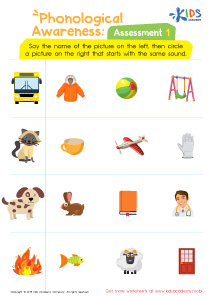
Reading comprehension Normal Rhyming Worksheets for 6-Year-Olds
5 filtered results
-
From - To
Enhance your child's reading skills with our carefully designed Reading Comprehension Normal Rhyming Worksheets for 6-year-olds. These captivating worksheets utilize the power of rhymes to make learning fun and effective. By integrating age-appropriate content, they not only strengthen reading comprehension but also engage young minds in joyful learning. Our vibrant and easy-to-follow worksheets focus on helping children recognize rhyming patterns, which are crucial in developing phonemic awareness. Perfect for home or classroom use, these printable resources will support your child in achieving reading proficiency and enjoying the magic of words. Ideal for young learners building foundational literacy knowledge!
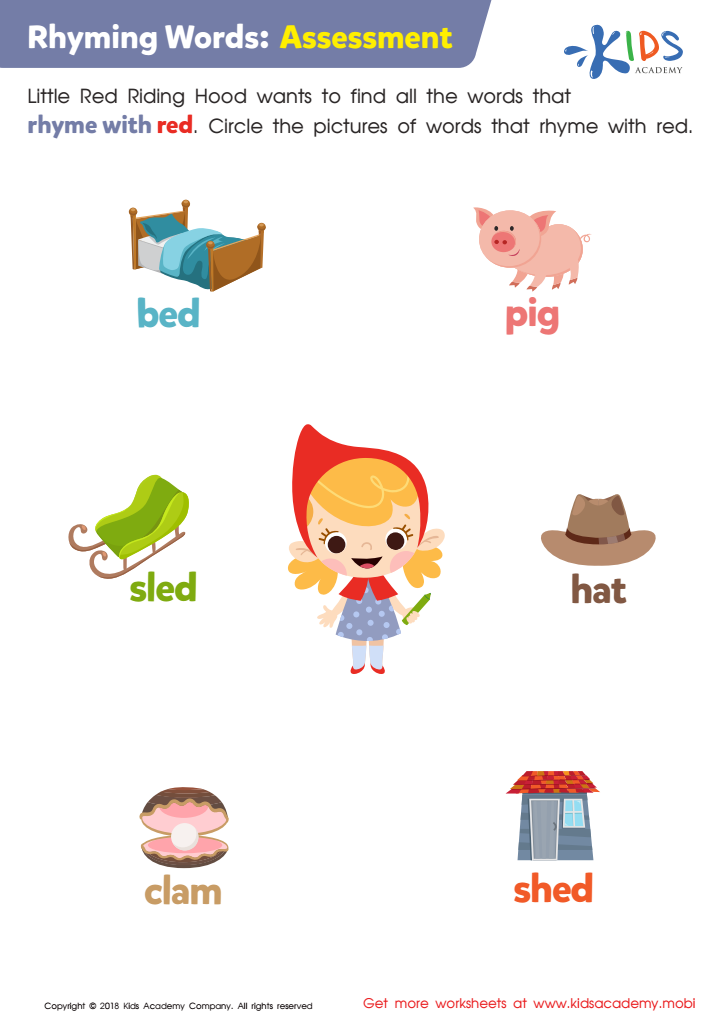
Rhyming Words: Assessment Worksheet
 Assign to My Students
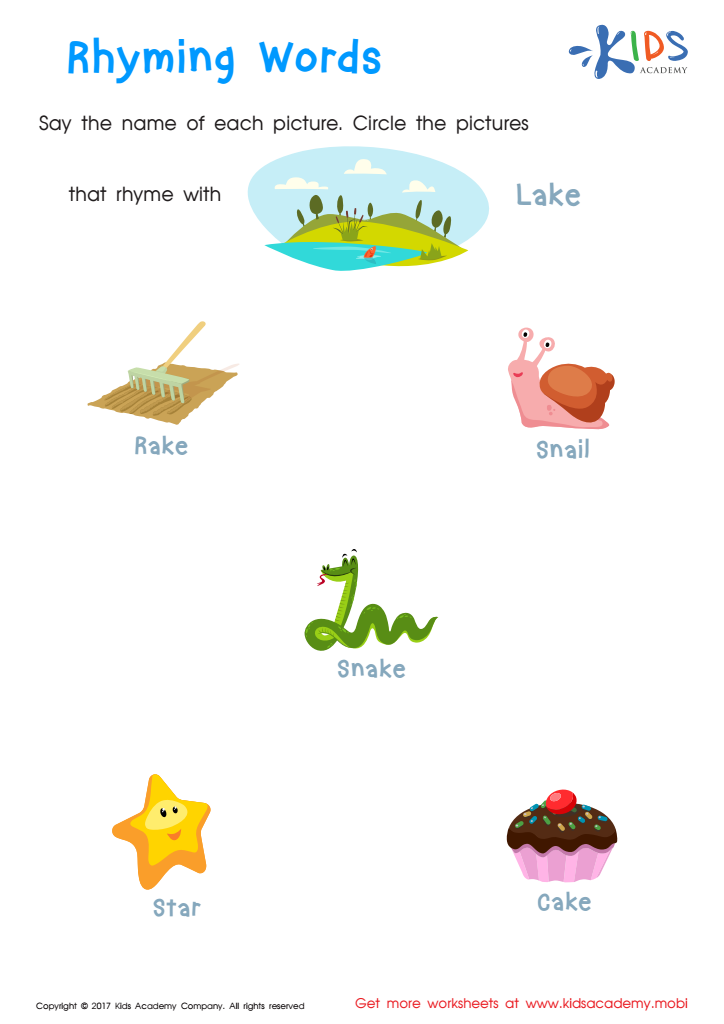
Rhyming Words Rhyming Worksheet
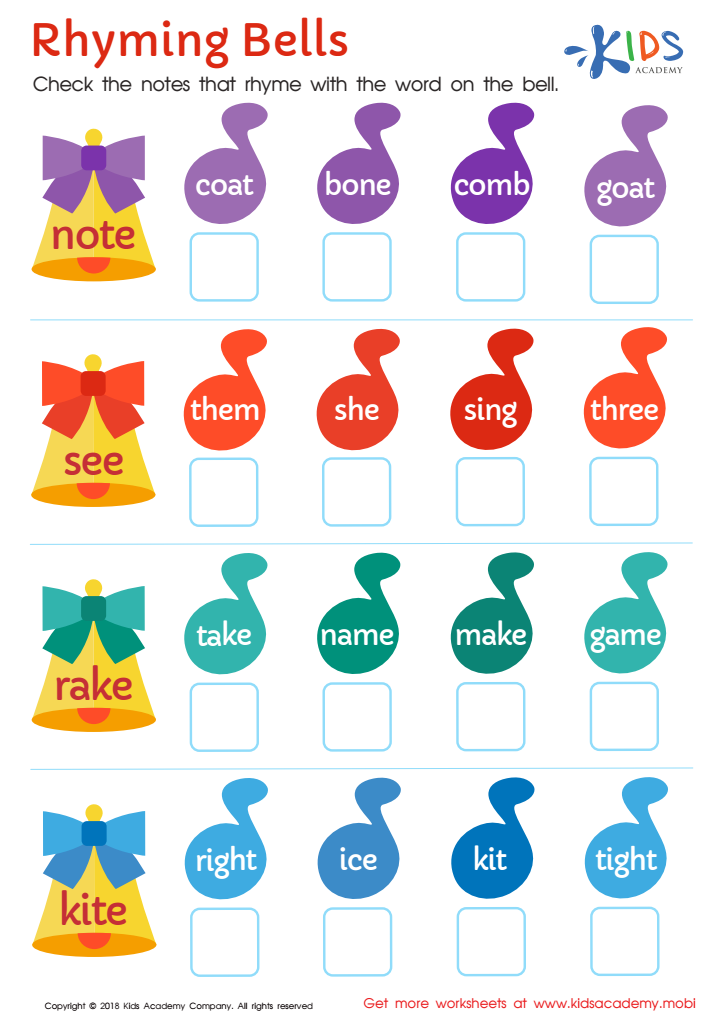
Rhyming Bells Worksheet
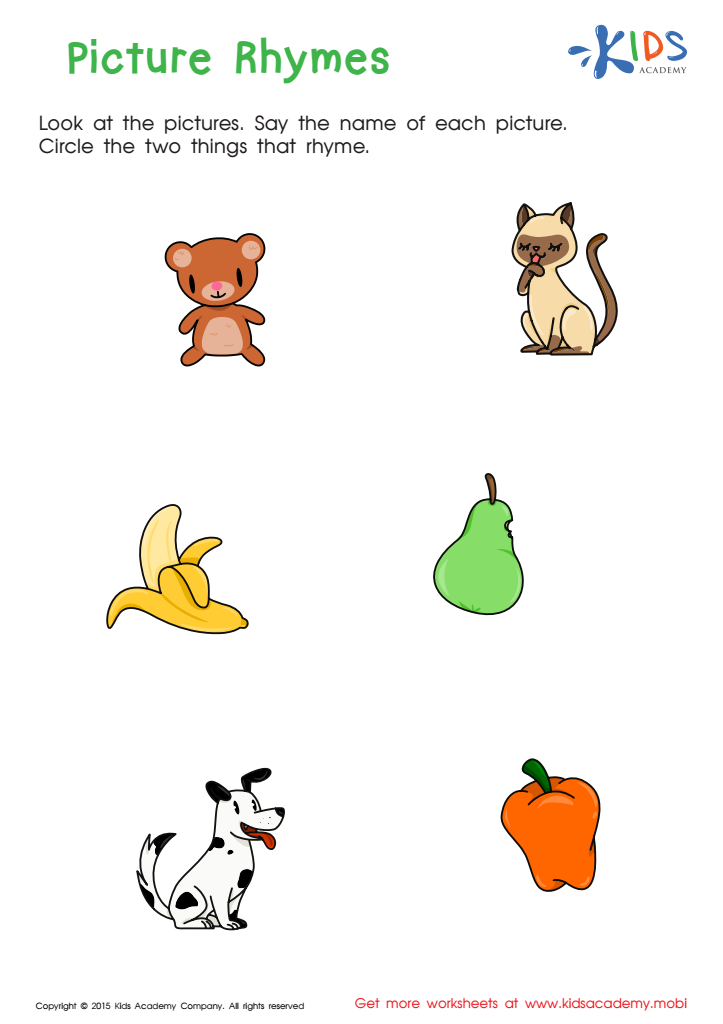
First Words: Picture Rhymes Worksheet
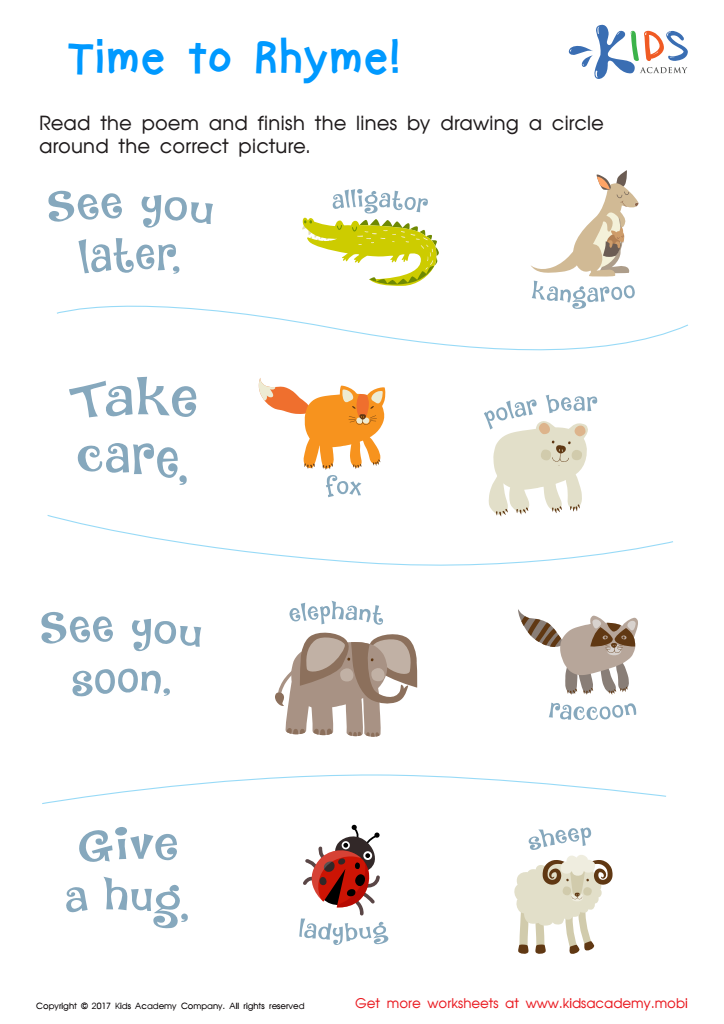
Time to Rhyme Rhyming Worksheet







Parents and teachers should care about reading comprehension and rhyming for 6-year-olds because these skills lay a crucial foundation for future academic success and literacy development. At this age, children are developing the ability to understand and interpret the meaning of texts, which is essential for all areas of learning. Reading comprehension helps children think critically, make connections, and enhance vocabulary, which are fundamental to their overall cognitive development.
Rhyming, in particular, plays a significant role in phonemic awareness, which is the ability to recognize and manipulate the sounds in words. This skill is a strong predictor of later reading success because it helps children understand the relationships between sounds and letters, making it easier to decode new words as they progress in their reading journey.
Moreover, engaging in rhyming activities makes learning fun and can stimulate a love for reading. Fun rhymes and playful language capture children’s interests, making them more motivated to read and participate in literacy activities. This positive attitude toward reading can result in better reading habits, increased reading frequency, and a lifelong love for books.
In summary, focusing on reading comprehension and rhyming fosters essential literacy skills, enhances cognitive development, and helps create an engaging and enjoyable learning environment that encourages a passion for reading.