Lowercase letter writing Normal Tracing Letters Worksheets for 6-Year-Olds
3 filtered results
-
From - To
Help your 6-year-old master lowercase letter writing with our engaging Normal Tracing Letters Worksheets! Designed for early learners, these worksheets provide a fun and interactive way to enhance handwriting skills. Children will trace each letter multiple times, reinforcing proper formation and movement. With vibrant designs and age-appropriate activities, your child will enjoy practicing their letters while developing fine motor skills. Perfect for at-home learning or classroom use, these worksheets support literacy development and encourage a love for writing. Equip your little one with the confidence they need to excel in their writing journey with our thoughtfully crafted tracing worksheets!
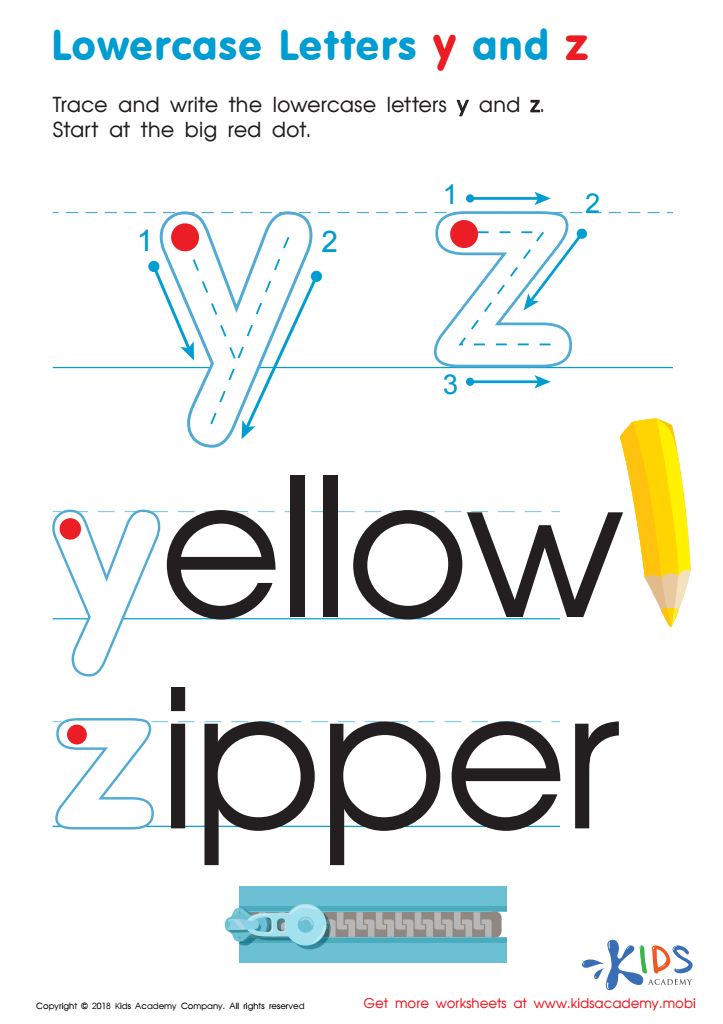
Lowercase Letters y z Worksheet
 Assign to My Students
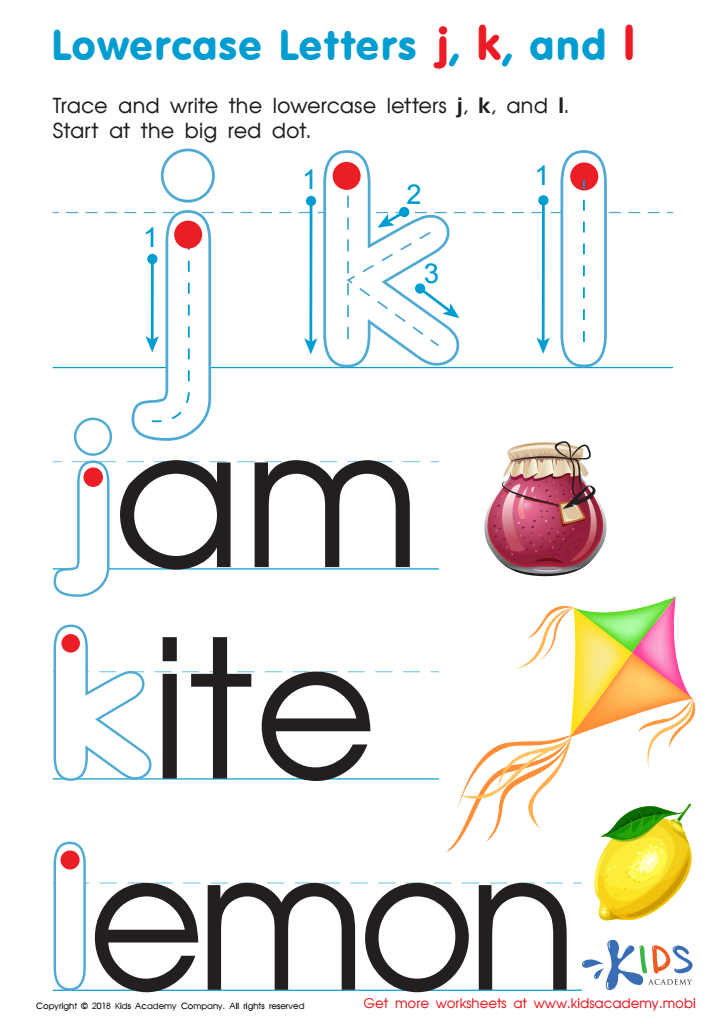
Lowercase Letters j k l Worksheet
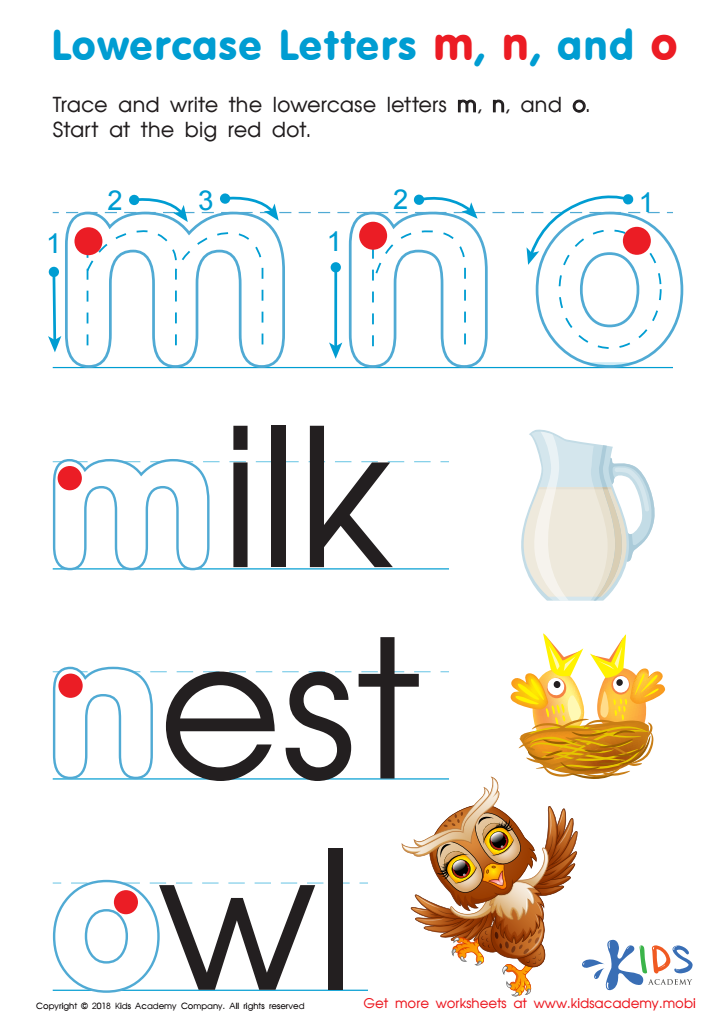
Lowercase Letters m n o Worksheet







Teaching lowercase letter writing through tracing is crucial for the development of 6-year-olds for several reasons. Firstly, mastering lowercase letters forms the backbone of early literacy. Most written communication is in lowercase, so a solid foundation in recognizing and writing these letters helps children engage with text early on, enhancing their reading and writing skills.
Secondly, tracing letters supports fine motor development. As children trace, they improve hand-eye coordination and build the muscle strength required for holding a pencil correctly. This skill is essential not only for writing but also for other tasks like cutting with scissors or buttoning clothes.
Additionally, tracing lowercase letters can enhance cognitive skills. The process allows children to visualize the shapes and strokes of individual letters, aiding memorization and recognition which are critical for developing phonetic awareness. Enhanced awareness of letter formation also cultivates a sense of accomplishment when children see their words coming to life on paper.
Finally, parents and teachers can utilize tracing as a fun, hands-on activity. Incorporating creative touches—like using colorful markers or incorporating games—turns learning into an enjoyable experience, fostering a love for writing and education in young children. It’s an essential step in their academic journey.








